Friday, September 12, 2014

Exercise Lies: Running for Hours = Fat Loss

Over the past few years, one of the most common mistakes by fitness seeking individuals is that running for hours will result in weight loss. This common mistake is often made by people wanting to get fit and achieve their goal of losing body fat percentage. They believe that running for miles upon miles for hours on a treadmill or track will help them achieve this goal. These people will then get frustrated when they lose a little weight, but their percent body fat has not changed. Why is this?
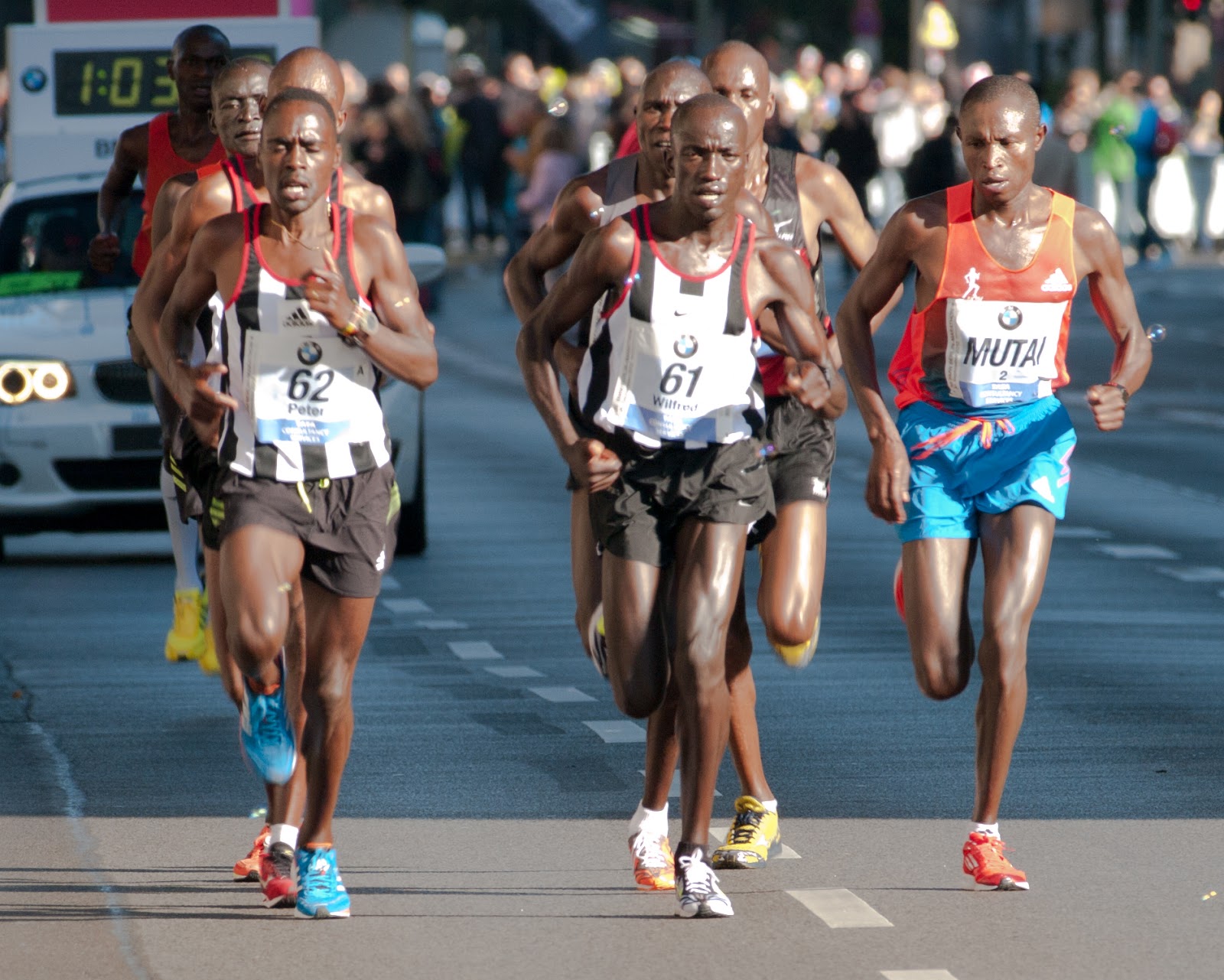

Berlin_marathon_2012_am_kleistpark_between_kilometers_21_and_22_30.09.2012_10-07-07.jpgAerobic energy systems are activated when a person exercises for low to moderate intensity (40-75% of VO₂ Max) for a duration of 60 seconds to 3 hours. During this aerobic exercise oxygen is synthesized and hormones such as cortisol and testosterone are produced the concentration of these hormones is determined by the intensity and duration of the exercise. Cortisol is a hormonal response to stress on the body, which helps to increase the concentration of glucose in our blood so it is a readily available energy system for muscles to utilize. Cortisol can be a good thing, but only when released infrequently and for short periods so that it can help with the body’s threat to internal imbalance. However, if a person is exposed to cortisol for a long period of time (30 minutes or more) under a stressful act, such as running, they may experience long-term consequences.

Osaka07_D2A_Torri_Edwards.jpg
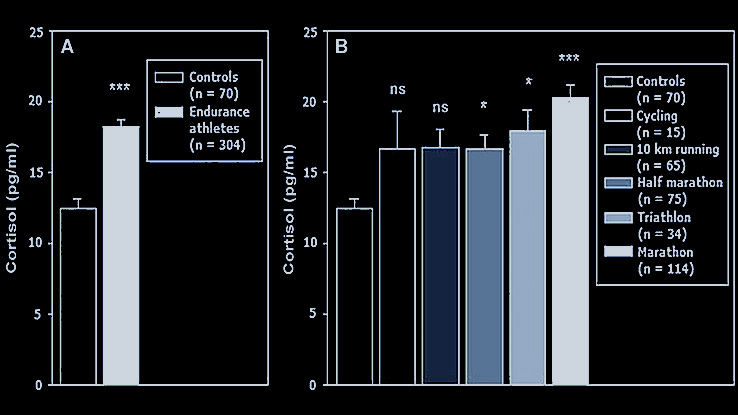
When over-exposure of cortisol is seen in long durations of exercise, it may overtake the levels of testosterone in the body. Cortisol is associated with breakdown of muscle tissue, while testosterone is associated with building muscle. When cortisol is produced at such a high level for such a long time, it is very hard to flush out of the body’s system. When the ratio of testosterone and cortisol is unfavorable (e.g. T < C), muscle is lost. When muscle, which helps to burn fat, is lost fat percentage is increased. It has been found that there was no increase in cortisol after 10 minutes of aerobic exercise (75% of VO₂ Max) in 17 male physical education students but increased by 54 percent compared to their pre exercise levels.1 This demonstrated cortisol was influenced by prolonged intense exercise. In another study conducted in 201, 42% of analyzed cortisol levels in 304 amateur endurance athletes had an average additional secretion above the control (as seen in the graph below).2  Which means, that of those athletes running for 30 minutes or more, cortisol amounts doubled which could lead to a very high ability for the body to store fat in the future, for more running. It is a vicious cycle. All one has to do is compare archetypes of sprinters to marathon runners (see above).


cortisol-graph.jpg


As for alternatives to the myth of running for fat loss, simply walk. Walking for 40% of VO₂ Max for 1 hour actually lowers Cortisol levels. This occurs because the intensity is lower, and the cortisol has had a chance to be removed from the body’s system faster than it can be secreted. If you still miss the heart pounding excitement that you get from running, try high intensity intervals such as 1 to 16 seconds of sprinting then equal or more time walking for removal of Cortisol. This type of training may actually stimulate muscle growth at the same time.

So if you are a person with the goal of fat loss, but just don’t have the time to commit to hours and hours of running, GOOD NEWS, you should not do it anyway. Commit to slow walking for 45 minutes to an hour, or a few intervals of sprinting, and you will be on your way to fat loss without the threat of cortisol.


1Kindermann, W., Schnabel, A., Schmitt, W., Biro, G., Cassens, J., & Weber, F. (1982).
Catecholamines, growth, hormone, cortisol, insulin, and sex hormones in anaerboic and aerobic exercise. European Journal of Applied Physiology and Occupational Physiology, 49(3), 389-399.
2Skoluda, N., Dettenborn, L., Stalder T., & Kirschbaum C. (2011). Elevated hair cortisol  

concentrations in endurance athletes. International Journal of Psychoneuroendocrinology, 37(5), 611-7.

Thursday, September 11, 2014

Practice What You Preach?

As a graduate student in the Kinesiology department and Clinical Exercise Research Facility, teaching assistant for the Kinesiology department, and a graduate assistant coach for the cross country and track and field teams, I have many roles at Tarleton State University.  Every single one of these roles comes with the expectation that I am a role model and that I lead by example.  When I was hired to do these jobs I had tests to take and papers to sign stating that I understood what my expectations were as an employee and a representative of Tarleton State University.
One of the classes that I teach in Kinesiology is called Conditioning and Fitness.  In this class, undergraduate kinesiology majors are required to take multiple health-related fitness tests and are graded upon how they fair against the American College of Sports Medicine’s norm-referenced standards. According to the ACSM, “tests should yield results that are indicative of the current state of physical fitness, reflect positive changes in health status from participation in a physical activity or exercise intervention, and be directly comparable to normative data.”1 I am proud of the fact that at Tarleton we are investing in more than our students academic success. By requiring kinesiology majors to pass a physical fitness test before they can graduate helps the students to invest in themselves and apply what they are learning in our department.  
The definition of role model is defined as “a person whose behavior in a particular role is imitated by others.”2 How important is it for coaches, personal trainers, kinesiology instructors, etc., to practice what they preach, if at all?  Is there any credibility lost with a “do as I say and not as I do” approach?  I believe credibility is lost. I would not be convinced to hire a personal trainer at the gym if they did not look like they worked out themselves.  I am not suggesting that every kinesiology major be capable of competing at the Olympic games, but I do feel that there is a certain level of fitness that needs to be maintained.  I know that this can be a very gray area and is not as black and white as it seems. What are your thoughts on the issue?
1. Pescatello, L. (2014). Health-Related Physical Fitness Testing and Interpretation. In ACSM's guidelines for exercise testing and prescription (9th ed., p. 61). Philadelphia: Wolters Kluwer/Lippincott Williams & Wilkins Health.
2. "Role Model." Merriam-Webster.com. Merriam-Webster, n.d. Web. 11 Sept. 2014. <http://www.merriam-webster.com/dictionary/role model>


The Benefits of Exercise on Stroke Victims


Blog Post 1.jpgFor the general population, exercise provides numerous physical, mental, and social health benefits such as reduced risk of secondary diseases, improved mental clarity, reduced stress levels, and enjoyment.The same can be said for individuals with paralysis caused from cerebrovascular accident (stroke). Stroke can cause neurologic dysfunction as well as neuromuscular paralysis, leading to frozen muscles and joints, muscular atrophy, and even secondary atherosclerosis. The severity and bodily functions affected in stroke survivors differ from case to case, however these individuals can all benefit from exercise, whether traditional or modified. In fact, they  seek to reap not only the same health benefits as the general population, but additional benefits that exercise provides for those with paralysis.


In a study comparing the … it was concluded that “regular physical activity may be a decisive factor for the well-being of paraplegics.”1. Likewise, a study investigating the … identified improved general health, better fitness and fortitude, and better physiological and mental well being as the most reported positive effects of exercise among people with physical disabilities. In addition, for those who have a lower degree of participation, exercise could have a double effect on their health. Among popular exercises for individuals with disabilities the most popular included strength training, aquatic training, and horseback riding.


In spite of the evidence supporting the benefits of exercise, it can be difficult for paralyzed individuals to locate and join an exercise facility willing to work with the limitations and risk factors of their condition. Tarleton State University houses one of the only University funded exercise facilities for individuals with disabilities specializing in paralysis. This facility is known as the Tarleton Laboratory for Wellness and Motor Behavior, and was formed in the early 1990’s to benefit individuals with disabilities through adaptive exercise and is free of charge. The Laboratory is supervised by two kinesiology graduate students who are responsible for programming exercises and scheduling intern and teacher assistant kinesiology undergraduate students. All students are handpicked for their excellence and expertise in the classroom, as well as their passion to help individuals with disabilities such as stroke. Through adaptive forms of exercise the Laboratory for Wellness and Motor Behavior improves individuals total quality of life through corrective human movement and increased physical activity.  
It is crucial to understand the logical phrase “if you don’t use it, you lose it” and how it applies to a sedentary lifestyle experienced by individuals living with paralysis.  


Resources
1Grange, C. C., Bougenot, M. P., Groslambert, A., Tordi, N., & Rouillon, J. D. (2002). Perceived exertion and rehabilitation with wheelchair ergometer: Comparison between patients with spinal cord injury and healthy subjects. Spinal cord, 40, 513- 518. Retrieved from http://ehis.ebscohost.com.zeus.tarleton.edu:81/eds/pdfviewer/pdfviewer?sid=86a53182-3a05-49ae-8fdd-3ab654bf05a0%40sessionmgr15&vid=5&hid=8
2Junker, L., & Carlberg, E. B. (2011). Factors that affect exercise participation among people with physical disabilities. Advances in Physiotherapy, 13, 18-25. Retrieved from http://ehis.ebscohost.com.zeus.tarleton.edu:81/eds/pdfviewer/pdfviewer?sid=86a53182-3a05-49ae-8fdd-3ab654bf05a0%40sessionmgr15&vid=3&hid=8  


Personal Training : Professional and Personal Relations


As a personal trainer and someone who works alongside personal trainers,it has been found that the job of training people to be in better physical health becomes more than sets, reps, and intervals. Clients begin to see trainers as friends and people who are in their support group. Just like coaching, personal training is difficult without a level of trust, communication, and accountability. As time goes on, and a relationship builds between the client and trainer, they almost can’t resist talking about their job, family, and personal problems going on in their lives. The client feels a sense of trust  from the time spent together and not to mention the fact that they have opened up about their self image and bodily insecurities. 1When clients begin to vent about work or whatever stresses they have, trainers listen to them because they feel their job is to help alleviate stress through exercise and release endorphins, the brain’s feel-good neurotransmitters.
2The issue that comes up with letting clients, who are mostly females, vent and confide in their trainers, who are mostly males, is getting too close or involved with clients. Trainers should stay away from giving input or speaking on relationship problems clients bring up and keep the relationship professional and not put themselves in the middle of the clients personal relationships. 3 This instance can happen both ways when trainers try to get involved with clients outside of work or try to trade off sessions for dates with a client, which is unprofessional and can potentially lose clientele and create a bad reputation for that trainer. What the trainer should do is avoid the situation if it gets too personal and if it continues to be brought up, communicate with the client about keeping the relationship professional. Clients should be reminded that the trainer’s  job is to support fitness goals and help in any way possible with nutrition and workouts to help them achieve those goals.

References
1. Exercise and stress: Get moving to manage stress. (2012, July 21). Retrieved September 7, 2014, from http://www.mayoclinic.org/healthy-living/stress-management/in-depth/exercise-and-stress/art-20044469

2.Personal Trainer Salary Statistics as of 2013. (2013, January 1). Retrieved September 7, 2014, from http://jobstat.net/jobs/personal-trainer/

3.CONFESSORE, N. (2005, April 14). When a Personal Trainer Gets Too Personal. Retrieved September 7, 2014, from http://query.nytimes.com/gst/fullpage.html?res=9C00E0DC133EF937A25757C0A9639C8B63

Current Exercise Prescriptions for Stroke Survivors

Blog Post 1.jpg
The health and wellness benefits of exercise are widely known in the allied health profession community. However, the development of exercise prescription is complicated. It contains a multistep process that must account for the individual’s pre-exercise health screening, fitness testing, and must incorporate the FITT principle (frequency, intensity, type, and time). This process only becomes more complicated as special populations are considered.
According to Ammann et al. (2014), stroke is one of the leading causes of death and disability in the world.1 In an article published by the American Heart Association in early 2014, almost 800,000 Americans each year experience a stroke and there are an estimated 7 million stroke survivors alive today.2 Clearly, there is a large population of individuals in America that need special attention for their exercise prescription.
The current exercise prescription recommendations of stroke survivors include both aerobic and resistance training but must be specific to the target population.1,2 Benefits of exercise have been seen for both sub-acute and chronic stroke survivors.1,2 Ammann et al. (2014) emphasizes the importance of the training principle of reversibility, such that conditioning and deconditioning can be reversed.1
Aerobic exercise training, such as treadmills with or without body weight support, lower or upper extremity cycle ergometers, and recumbent steppers, are incorporated in most exercise prescriptions with the intention of developing optimal functional motor performance.1 Participation should be at least three days per week, with a duration between 20 and 60 minutes. However, more frequent shorter bouts can be effective if functional ability does not allow for a single longer workout.2
Building muscular strength and endurance is typically accomplished through resistance training of the upper and lower extremities using free weights and either weight-bearing or partial weight-bearing activities.1 High repetition sets, between 10 to 15 repetitions, are beneficial when performed two to three times per week with at least eight different exercises involving major muscle groups.
Aside from aerobic and resistance training, a more unconventional method for neuromuscular exercise has been discussed.2 Using interactive and active-play video games, such as Wii Sports and Wii Fit Plus, require both upper and lower extremity exercise and are also quite enjoyable for many participants.2
 
1 Ammann, B. C., Knols, R. H., Bashung, P., de Bie, R. A., & de Bruin, E. D. (2014). Application of principles of exercise training in sub-acute and chronic stroke survivors: A systematic review. BMC Neurology , 14 (167).
2 Billinger, S. A., Arena, R., Bernhardt, J., Eng, J. J., Franklin, B. A., Johnson, C. M., et al. (2014, May 20). Physical activity and exercise recommendations for stroke survivors: A statement for healthcare professionals from the American Heart Association/American Stroke Association. AHA Journal , 2533-2553.

Shoulder Injury Prevention


Today we see more and more athletes with shoulder injuries. 1“Shoulder injuries are frequently caused by athletic activities that involve excessive, repetitive, overhead motion, such as swimming, tennis, pitching, and weightlifting.” The majority of people learn the hard way about the importance of taking care of your shoulders. Unfortunately, most athletes are not educated in preventing shoulder injuries. This lack of education is a big factor in the number of shoulder injuries. The key to preventing these injuries is proper conditioning, including flexibility, core stability, balanced muscle strength, and sport-specific exercises.

Some things that you can do as an athlete is to educate yourself about the ways to prevent shoulder injuries such as, sports-specific exercises. You don't want to be doing exercises that will hurt you instead of help you. For example, it would be better for  a pitcher to do a dumbbell chest press on a body ball, as opposed to a bench press, so that their shoulder movement is less restricted.

Core stability is the most important factor. 2“It provides the kinetic chain for overhead activities, allowing the trunk muscles to transfer energy and momentum to the shoulder for overhead sports.” The core is the foundation and provides a strong support for the shoulder This is why you need a tight, strong core.

Flexibility is a fundamental component of physical fitness. It is important to stretch both before and after you workout or play your sport. Keeping your shoulder stretched will help keep you flexible and keep you from getting tight. There are some exercise bands that you can use to help stretch, such as band shoulder press, internal and external band rotation, lateral and rear deltoid raises. You also want to ice after every time, so that you keep your shoulder from getting inflamed.

Shoulder muscle strength is probably the biggest reason for shoulder injuries. 2“Most athletes workout the front muscles of their shoulders like the pectoralis major, front deltoids, trapezius and rectus abdominis.”  This leaves the back muscles like the back deltoid, teres minor and major, infraspinatus, supraspinatus weak and the shoulder imbalanced and overworked. So you need to make sure you are working out both the front and back muscles for a balanced shoulder.  

References:
1 Common Shoulder Injuries-OrthoInfo - AAOS. (2009, July 1). Retrieved September 7, 2014, from http://orthoinfo.aaos.org/topic.cfm?topic=a00327
 
2 Shoulder Injury Prevention. (n.d.). Retrieved September 7, 2014, from http://www.shoulderdoc.co.uk/article.asp?article=1370


Importance of Maintaining Health as Physical Educators


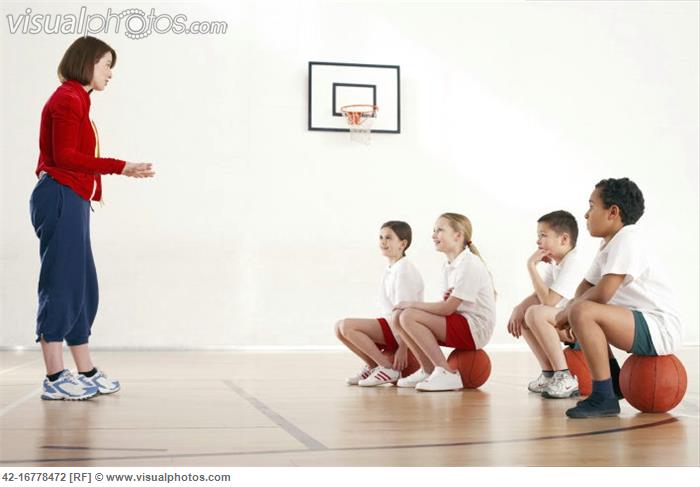
school_children_in_physical_education_class_42-16778472.jpg“Leaders in physical education agree as a result of the nature of the physical educator leadership position, the physical education teacher naturally become models for their students” (Dean, Adams, & Comeau 2005). According to Gold (2010), teachers and coaches were “the” most frequently cited non-family-member as adult role models, and that physical education teachers who model physically active lifestyles appeared to have effects on youth similar to those of their parents. It is important as coaches and physical educators to portray the characteristics of a healthy individual.

Studies suggest that an instructor that is perceived as physically fit is more respected, has more knowledge, and “is” more likely to follow exercise and dietary suggestions.  Maintaining health by meeting the standards will aid in getting hired as a professional, job attainment, and create positive attitudes towards the student’s learning environment. Authorities in the field of physical education have stressed the importance of modeling an active lifestyle and physical fitness for professionals in all fields related to physical activity (Gold 2012). The National Association for Sport and Physical Education recommends that physical education teachers should engage in regular physical activity at a level sufficient to promote health-related physical fitness.

If physical educators are going to proclaim that physical education can help reduce the obesity epidemic, then physical educators need to take seriously their duty to be a role model for fitness and, therefore, be physically fit themselves (Bell, 2008). It is vital to maintain a healthy appearance, active lifestyle, and healthy habits as physical educators because they send a powerful message to their students when they do not portray what they are teaching.

1 Bryant, L., & Curtner-Smoth, M. (2008). Impact of a Physical Education Teacher's Disability on Elementary Pupil's Perceptions of Effectiveness and Learning. Adapted Physical Activity Quarterly, 25, 118-131.

2 Gold, R. (2012). The Qualities of Physical Education Teachers Based Upon Students' Perceptions of Physical Appearance. 39(2), 92-114.

Exercise Benefits During Pregnancy

Exercise Benefits During Pregnancy

Once a woman has become pregnant for the first time, she is constantly bombarded with advice, opinions, and ridiculous old wive’s tales from everyone around her. Past generations often perceive pregnancy as a time that women should become inactive and sedentary, with the attitude that exercise is something harmful to a fetus. However, we now know that exercise during pregnancy serves as quite the contrary. In today’s society people are becoming aware that remaining physically active is very important to maintain a healthy pregnancy. Those who become or remain sedentary during pregnancy are more likely to feel sluggish and moody, gain an excessive amount of weight, and are more likely to develop gestational diabetes. Preventing gestational diabetes is very important for mothers and their babies, and should be taken very seriously. Consequently, women who exercise during pregnancy tend to have more strength and energy during labor. On the other hand, women who have been physically active throughout their pregnancy tend to have an easier time losing the baby weight postpartum. Not only do these benefits apply to mothers, but the baby also benefits tremendously in growth and development by an improvement in blood flow during and after exercise.

What kind of exercises are most beneficial?

A woman’s exercise capabilities will depend on how physically active she was prior to becoming pregnant. For women who were physically active prior to becoming pregnant, it is ok to continue the close to the same exercise routine. If resistance training is part of your regime, it is important to decrease in weight while increasing in repetitions. For women who did not exercise prior to pregnancy, walking and water aerobics are a great way to get moving. 20-30 minutes of continuous exercise a day has shown to be the most beneficial in pregnant women. Even though exercise is important during pregnancy, precautions should still be considered. For instance, abdominal work and exercises that require you to lay flat on your back should be avoided to prevent back strain and impede blood flow. Also, do not start activities that would risk causing a fall or contact to the stomach area. Contact sports should also be avoided.

Overall, exercise during pregnancy has shown great benefits for women and their infants. Do what’s best for you and your baby and stay moving during your pregnancy!   


Pomerance Bell, R. (2013, November 28). Yes, You Can-and Should- Exercise During Pregnancy. Retrieved September 6, 2014, from http://health.usnews.com/health-news/health-wellness/articles/2013/11/28/yes-you-can--and-should--exercise-during-pregnancy?page=1

Suzanne, S. (n.d.). 18 Bazillion Benefits of Exercise During Pregnancy. Retrieved September 6, 2014, from http://www.fitpregnancy.com/exercise/prenatal-workouts/18-billion-benefits-exercise-during-pregnancy

Wednesday, September 10, 2014

A Renovation for Rehabilitation

A Renovation for Rehabilitation
By: Rachel Cinquepalmi

     The Lab for Wellness and Motor Behavior, housed in Tarleton State’s Kinesiology Building Room 175, is actively training individuals with quadriplegia, paraplegia, hemiplegia, spina bifida, multiple sclerosis, and other mobility impairments. This influential rehabilitation center contains modified equipment for these participants which allow them to stay active despite physical restrictions. The individuals who have trained for a significant amount of time with Dr. Priest (the founder of the lab) have reported benefits including but not limited to increased endurance, improved mobility, improved mental alertness, and decreased expense and dependence on prescription drugs. Certified personal trainers provide exercise supervision for these clients and Kinesiology students also have the opportunity to complete an internship in this lab.
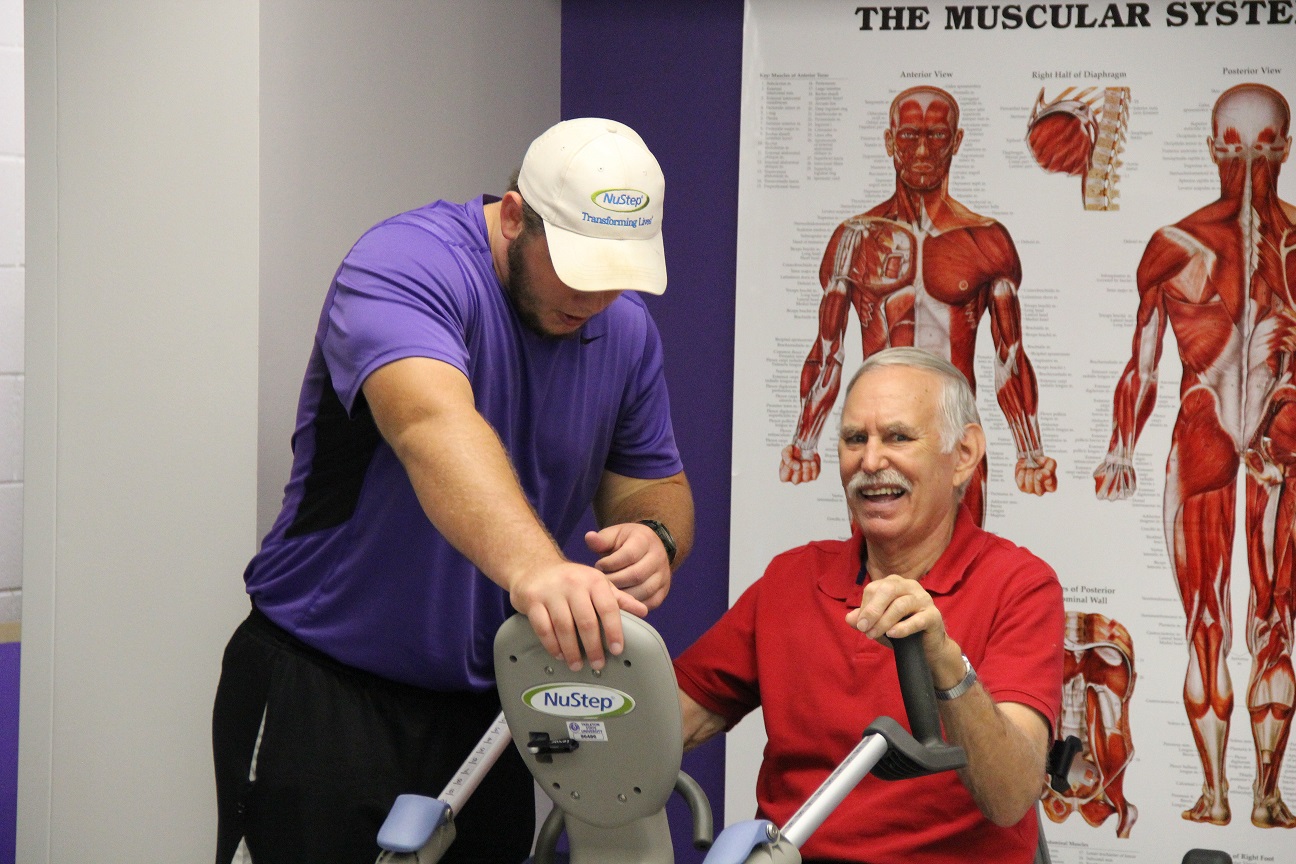
Isaac is preparing a patient for a workout
on the new Gait Trainer Treadmill.

     Beginning in the summer of 2014, reconstruction of the lab took place with the addition of new machines and a larger and more accommodating space. Three new machines including a Technogym, a NuStep, and a Gait Trainer Treadmill have been implemented to complement the Psycle machine. The Technogym is an Upper Body Ergometer Machine, or a UBE, which is similar to a bicycle, but rather than pedaling with the legs, the patients pedal with their arms. This Technogym device may be used as a cross training tool to help improve cardiac endurance and upper body strength. The NuStep device is a recumbent cross trainer which is similar to an elliptical in that it allows simultaneous upper and lower body motion to work all major muscle groups. Finally, a new Gait Trainer Treadmill is being utilized to target symmetry of walking in addition to prompting clients to elongate their steps with the unaffected legs. In addition to the advanced machines, the current rehabilitation facility in Room 175 is four times larger than the previous center in Room 102 with approximately 1,600 square feet which allows for the trainers to treat more patients per workout session. 
Here a patient is utilizing the NuStep machine.

      Dr. Priest and the student workers and trainers are enthusiastic about the renovations and are excited to be working with the clients in the new and improved establishment. “We are truly changing lives one step at a time,” says Graduate Assistant and personal trainer Isaac Dickey.

     Dr. Priest has announced that the lab is currently taking applications. “The renovated center has 15 trainers and over 30 clients already,” says Priest. “We are using our new, state of the art equipment to enhance the lives of these individuals by providing a means for physical activity.” Participants, both students and outside citizens, train for 3-6 hours per week for 15 weeks during the fall, spring and summer semesters. This lab is continuing to provide hope and health to people who struggle with paralysis and the renovation of the Lab for Wellness and Motor behavior is an exciting and important improvement.     

Join in the conversation at the Google+ community page Stroke Rehab - Wellness and Motor Behavior.  https://plus.google.com/u/0/communities/112013677417890656684           
  

Thursday, September 4, 2014

A Lesson in Leadership: Be Committed!

Vince Lombardi once said, "Individual commitment to a group effort - that is what makes a team work, a company work, a society, a civilization work."    The former Athletic Director at the University of Alaska - Anchorage, Dr. Steve Cobb, understood Lombardi's message - he possessed a strong sense of commitment to student-athletes and the success of the athletic program.

Dr. Steve Cobb, an alumni of Texas A&M University-Commerce, passed away on Tuesday, September 2 in Florida.   The following article was written by Doyle Woody of the Alaska Dispatch News.   Mr. Woody captured the essence of a leader who was firmly committed to his profession - Athletics as well as the success of Student-Athletes in the classroom and on the field of play.   


RIP - Coach Cobb ... you will be missed!

Friday, August 29, 2014

Marketing in the Digital Age

Marketing in the digital age requires businesses to embrace social media.   According to Hubspot, 92% of marketing professionals support the fact that social media generates exposure for their businesses. Marketing on Twitter, Facebook, and Instagram can significantly influence the purchasing decisions of many customers. The creation of virtual stores that mimic the ProShop concept of collegiate athletic sites provide a positive impact on marketing a brand or organization.   Consider creating Virtual ProShops to increase your return on investment (ROI).   

Interested in ordering Kinesiology apparel?  Check out the Kinesiology Virtual ProShop!    NOTE:  The Kinesiology Virtual ProShop closes each Sunday night so that orders from that week can be processed.   The Kinesiology Virtual ProShop reopens each Monday to start the new week of orders.   All orders are shipped from Stephenville and should arrive at your home within 7-10 days from the start of the new week (Monday).  

Please share the Kinesiology Virtual ProShop link with all of those who support Tarleton State students as they prepare for professional careers in Kinesiology-related fields such as health, fitness, athletic performance, exercise science, and sports medicine.   Help send a powerful message to ALL Kinesiology professionals by sporting our apparel!   


Tarleton State is in the business of BUILDING FEARLESS CHAMPIONS in Kinesiology!