Sunday, January 31, 2016

Rodeo Athletes and Kinesiology


Rodeo Athletes and Kinesiology
Rodeo…most people have heard of the word or have been to a rodeo as a little kid to see the infamous bull riding. But not too many people know what all goes into being a rodeo athlete. There is so much more to rodeo than holding on for dear life for 8 seconds and getting around all three barrels … Rodeo is life and life is hard. Professional rodeo athletes are on a tight knit schedule and have to enter and win a certain number of pro rodeos to qualify for the big event at the end of the year, the NFR (National Finals Rodeo) this is like the super bowl for the sport of rodeo for the top rodeo athletes this is their job.
Physically each individual athlete has to be proficient in different areas to perform at the optimal level. Ropers, whether calf ropers or team ropers, have to be able to strategically rope their calf or steer in matter of seconds which requires a great matter of skill. Comparison with more traditionally researched athletes, however, has lacked the sport-specificity required for proper skill analysis and improvement in this sport. At the present time, no previous studies have investigated the kinematic aspects of rodeo and the use of a rope as a projectile in sport.1 Subsequent kinesiological analysis divided the roping motion into five distinct phases: windup, primary arm acceleration, arm cocking, secondary arm acceleration and arm deceleration, follow-through, with the motion being continually modified to accommodate split-second changes in environmental and competitive conditions. These conditions, which are unique to this sport, include maintaining optimal plane of motion in relation to a non-stationary bovine target, overcoming inertia during completion of the throw while traveling on horseback at a speed of up to 55 km an hour, maintaining trajectory, direction and acceleration of a non-aerodynamic projectile in the absence of gyroscopic action, and adjusting to the influence and in-stability of equine footing.2
In summary, compared with traditional sport, the throwing task is considered extremely dynamic, requiring an extensive array of subconscious articular adjustments to maximize velocity and reach the elusive target.


jake long roping.jpgjade corkill roping.jpg

References
  1. Meyers, M., & Skelly, W. (1995). Kinematic analysis of rope velocity in rodeo. Applied Research In Coaching & Athletics Annual, 44-53
    2. Meyers, M. C., & Laurent, J. M. (2010). The Rodeo Athlete. Sports Medicine, 40(5), 417-431.

A Brief History of Football

 A Brief History of Football


d9050a57228cd81fb891dee44eee97f7.jpg

American football has been played since the late 19th century.  Since its inception, it has grown from a rough and tumble rag-tag, game into a billion dollar enterprise.  Football is the the most popular sport in America by a wide margin1, but it wasn’t always this way.  In the beginning football was a dangerous and lawless sport.  It was even banned by many universities and colleges.2  The first collegiate football game was played by Rutgers and Princeton in 1869, and the first “professional” football game was played in 1892 when William Heffelfinger was paid $500($12,000 by today’s standard) to play in a game.2  Despite an attempt in the 20th century to ban football on college campuses the game has flourished.
Much of the credit for the early success of football is due to Walter Camp.  Camp worked to turn the dangerous and deadly game into the complex and organized game it is today.  He played a vital role in the creation of what would become the NCAA.2  Finally, his most well known and indelible mark on the game was the creation and implementation of the forward pass.2  Once, the forward pass was made legal it opened the game of football up and it began to resemble the modern game.
football_620x350.jp

As the game of football has grown so have the many different ways the game is played.  The NFL, NCAA, and most high schools participate in 11-man football, but due to its popularity numerous high schools across the nation have begun to play 8-man or 6-man football.  Canadians even have their own brand of football that is played with 12-men. These different forms of football have allowed the game to be played on a competitive level in towns both big and small all across this country.  Football has even begun to spread to other countries.  The NFL has played games overseas regularly since 1986 with two games a season being played in London.3
Football has grown from humble beginnings to become one of the most popular sports in the whole world.  Over the next few weeks we will look at several of the advances that have been made in the game of football.


1.       Murray: The past, present and future of America's 10 most popular sports. (n.d.). Retrieved January 18, 2016, from http://www.rgj.com/story/sports/2014/07/12/murray-past-present-future-americas-popular-sports/12587687/
2.       The History of Football in America. (n.d.). Retrieved January 18, 2016, from http://www.understanding-american-football.com/history_of_football.html
3.       Sweetman, T. (n.d.). NFL International Series: Why American football loves London. Retrieved January 18, 2016, from http://edition.cnn.com/2014/09/26/sport/nfl-international-series-wembley/

What is Periodization? The Basics

Goal of Periodization? Which is most Effective for the Athlete?
What is Periodization?
Sports periodization is the planning of athletic training while using a progressively cyclic format with the goal of timing peak performance during the athlete’s major competitive events. Phases of training are meant to provide a change in variables such as frequency and intensity of workouts, focus on endurance, power and strength, and sport specific movement.  Off-season and pre-season training are great for addressing any weakness or imbalances that may have developed over the previous season, thus helping to avoid injury during the athletic season.  Without a structured program, many times athletes will burn out before the season begins. On the other side of the spectrum, they may not be properly prepared for competition.  Many combinations of training duration, volume, and intensity can be used in an attempt to maximize strength gains.
Basics:
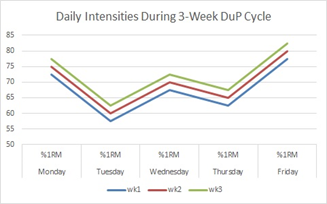
    Linear Periodization (LP): training initially uses high volume and low intensity. The training for LP progresses through mesocycles or phases where the volume decreases, and intensity increases. This style of training is broken down into phases that focus on hypertrophy, strength, power, and transition phases.  This is known as the “Classic” style of training, created by Dr. Leonid Matveyev.
  • Undulating Periodization
    • Undulating – This refers to the fact the weight/intensity/load changes on a session by session basis or from week to week.
    •  Periodization – The program is set up in such a way that it is progressive, and has periods of light, moderate and heavy work.The key to UP is getting in maximum workout volume, without impacting recovery, which is why the undulating and periodization aspects are critical.
These are the two most well-known and most-used types of periodization.  We are just keeping it simple here to give you a basic understanding.  Now that we know what periodization is and the goals of each, one may ask, “Which is more effective for the athlete?”

Wrap-Up
Applying periodized planning to team sports poses unique challenges due to the variety of training goals, volume of concurrent training and practices, and extended season of competition.  Both of these methods have been proved to work. So then, does it matter which is used? The simple answer is: it depends on what one is training for. Gamble (2006) states, “Team sports require several disparate training goals.  These may include hypertrophy, maximal strength, explosive power, metabolic conditioning, and injury prevention.  Therefore there is a need for planned variations in training programs to systematically shift the emphasis to promote these different training effects at different phases of the preparation period.
References

  1. Baechle, T. (2008). Essentials of Strength Training and Conditioning (3rd ed., pp. 507-509). Champaign, IL: Human Kinetics.
  2. Baker, D., Wilson, G., & Carlyon, R. (1994). Periodization: The Effect on Strength of Manipulating Volume and Intensity. The Journal of Strength and Conditioning Research, 8(4), 235-241.
  3. Buford, T. W., Rossi, S. J., Smith, D. B., & Warren, A. J. (2007). A comparison of periodization models during nine weeks with equated volume and intensity for strength. The Journal of Strength and Conditioning Research, 21(4), 1245.
  4. Gamble, P. (2006). Periodization of training for team sports athletes. Strength and Conditioning Journal, 28(5), 56–66.
  5. Hamer, P. W., Kok, L.-Y., & Bishop, D. J. (2009). Enhancing muscular qualities in untrained women: linear versus undulating periodization. American College of Sports Medicine, 2010, 1797–1807.

Saturday, January 30, 2016

Social Media Connecting Campus Recreation

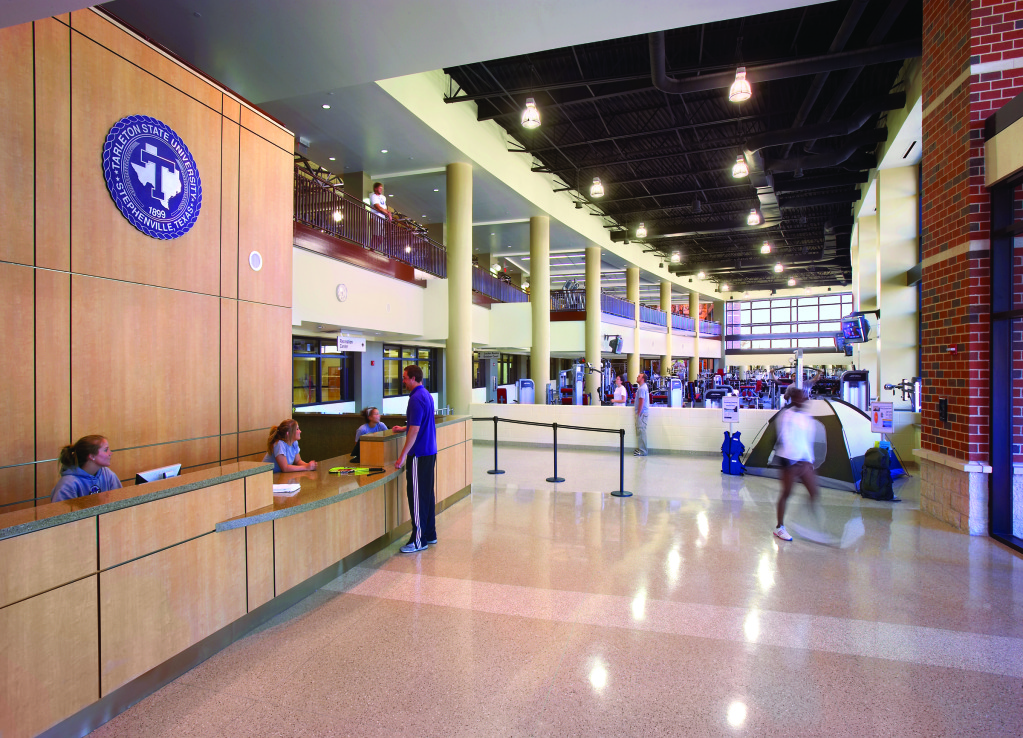
TarletonStateLobby.jpgSocial Media Connecting Campus Recreation
To better connect with your students, you want to interact with them on their own terms. You want to put your message in front of them in a comfortable and relatable way. What better way to do so than by interacting with them through the same means as they already engage in daily, via social media.


Sociocultural perspective suggests that cognitive growth is influenced by society and culture, and not performed in isolation. Not surprising then is the overwhelming use of social networking sites in four-year colleges. According to Barnes and Lescault, “100% of 456 four-year accredited U.S. institutions reported using some form of social media, with Facebook (used by 98%) and Twitter (used by 84%).”(1) The goal of campus recreation is to give students an outlet to further their health and wellness and the opportunity to interact through sport. In campus recreation we are seeing these interactions from university and students begin to reshape how we can better meet these goals.


Here at Tarleton we have already experienced student driven changes in our campus recreation facility and in our intramural/club sports programs. We asked our students what sports they would like to see us add to our program and subsequently added men’s and women’s club soccer as well as men’s lacrosse.


Campuses are also beginning to interact with one another and share programming information. The use of an online outlet through NIRSA.net is also helping to keep campuses connected and up to date with what is currently happening in campus recreation nation wide. Being that NIRSA is a nationwide organization, campuses on the west coast are beginning to adopt what schools on the east coast are doing and vice versa.


A connected nation of collegiate recreation facilities and programs is highly beneficial for these programs and the students who use them. Being able to share information about which programs work and which don’t, how schools handle certain situations, and how and why certain facilities attain the equipment they have gives the student the best possible opportunity to explore campus recreation enjoyably.
References:

1Barnes, D., & Lescault, A. (2016). Social Media Adoption Soars as Higher-Ed Experiments and Reevaluates Its Use of New Communications Tools, According to New Research Study. PRWeb. Retrieved 29 January 2016, from http://www.prweb.com/releases/SocialMedia/Higher-Ed2011/prweb8668892.htm

Friday, January 29, 2016

Is Big 'Pharma' Killing Americans?

Throughout history, people have chosen to intimately trust their doctors for the ultimate betterment of their overall health. Many individuals truly support the notion that "their doctor knows best" and they choose to leave their health in the hands of these professionals. A patient has a problem, he visits his local M.D. who in turn provides him with an antibiotic to ease the pain or cure the symptoms.

In recent times, these pharmaceutical companies have grown more powerful and wealthy than ever and the American people are paying the price too--with our lives. The twelve largest drug manufacturers and the eight largest drug delivery companies have highly profited revenues in addition to both political and economic power in the United States. For example the top eleven pharmaceutical companies in the United States generated net profits in just one decade from 2003 to 2012 of nearly three quarters of a trillion dollars--simply net profit alone.1


So one would think that with all this money and power, pharmaceutical companies could do immeasurable healing right? Wrong. This structured power is undoubtedly designed so that at every tier it not only makes but keeps people sick so that they are chronically dependent on their drug for survival. This drug will not treat the issue or address the root cause, rather it merely masks the symptoms while providing a long list of side effects for the patient.

Consider this: more than three quarters of US citizens over the age of 50 are currently taking prescribed medication and one in four women over their 40's are taking antidepressants.2 While the United States only contains 5% of the world's general population, our country consumes over half of all prescribed medication...yet our death rates remain scary compared to our neighboring countries.3 Death by medical error has become the third largest killer of Americans behind heart disease and cancer.

Another harsh reality lies in the fact that doctors are forced to rely on these pharmaceutical companies and in turn are over-prescribing antibiotics. If you were to go to your average doctor and complain of an ache or pain, the typical M.D. would simply tell you what you already know and they would hand you an antibiotic to mask the symptoms rather than assess the situation and find a solution. Recent studies have determined that a liberal use of antibiotics will cause trans-generational permanent DNA damage. Antibiotics are prescribed approximately 20,000 times/year and have been found to be highly toxic and dangerous to the nervous and digestive system.4

This blog is the first of many which will delve into the importance of true treatment of individuals from the core. I believe that we must expose the dangers of big pharmaceutical companies and turn our focus to treating our health issues by natural means. Instead of placing a band-aid on our issues, we should cure them...the correct way.

References:


Telling the Truth: What Drug Companies Don't Want You to Know. (n.d.). Retrieved January 21, 2016, from https://www.cspinet.org/integrity/tell_truth.html  

Thursday, January 28, 2016

WHAT IS FIBER ?

http://savingdinner.com/wp-content/uploads/2010/04/fiber.jpg
Fiber is a carbohydrate that  human body cannot digest. Most carbohydrates when digested are broken down into sugar molecules, however fiber passes through the body which helps regulate blood sugar. Fiber also helps reduce hunger by helping you stay fuller longer. To maintain good health, the average person should consume at least 20 to 30 grams of fiber per day.
There are two varieties of fiber, both of which are beneficial to health and can help with different things.
  • Soluble fiber can dissolve in water and can be found in foods such as oatmeal and beans. This can also help lower blood glucose and cholesterol levels.1
  • Insoluble fiber cannot dissolve in water and is mostly found in whole grains but also in vegetables such as carrots and cucumbers.Insoluble fiber can help food move through the bowels and can promote regularity.1


http://www.ladysoda.com/wp-content/uploads/2012/04/high-fiber-foods.jpgTo get the fiber your body needs it's as simple as a well-balanced diet. High fiber foods include fruits, vegetables, beans and legumes, as well as breads, grains, and nuts. Fruits that are high in fiber are bananas, apples, mangos, oranges, raspberries, and strawberries. Vegetables that are high in fiber are those that are darker in color and can include broccoli, Swiss chard, artichokes, and potatoes (red, russet and sweet). Beans and legumes are flavorful and are a great fiber filled addition to any soup, salad and chili. Some options you might consider are navy, garbanzo and kidney beans.
If bread is the option you choose to boost your fiber intake, you should select a bread where a whole grain is listed as the first ingredient some examples of this are pumpernickel, seven-grain, or a dark rye. Some grains that are high in fiber that you can choose as an alternative to white rice would be brown rice, wild rice, and barley. When selecting a cereal, those with five grams or more of fiber per serving is your best bet. Some nuts that are high in fiber that you might also consider as a snack can be pistachios, almonds, pumpkin and sunflower seeds. Although, nuts have to be enjoyed in moderation as they can be high in calories.

References:
1Fiber Tips, Articles, and Information - Meta Wellness. (n.d.). Retrieved January 21, 2016, from http://www.metawellness.com/en-us/articles/fab-fiber

2Fiber. (n.d.). Retrieved January 21, 2016, from http://www.hsph.harvard.edu/nutritionsource/carbohydrates/fiber/

Buy Wise, Cook Efficient, Store Smart: Learn the tricks.


woman_buying_groceries_000036698554.jpg


Welcome to a 10-week program to master the art of buying food wisely, cooking efficiently and storing smartly. This program will help you unfold witty ideas for better meal planning and budget allocation.
We are all aware of the idea of healthy eating and many of us  inculcate that in our lives. But few times we fall victim of food companies’ marketing strategies, retail store product arrangement tricks, couponing, supermarket strategies and more.
Let's start from the very beginning of the grocery buying cycle and see how can we make improvements as we go:
1.    Start out with sticking notes in the kitchen for the items which need to be purchased. Peel off the note every time you go to the grocery store and carry it with you. In an early research, it was found that the human mind can only retain three to four items at a time.1 This is why phone numbers are arranged this way.1 Ultimately, the best way to ensure everything you need is purchased is by making notes.

2.    Grocery store trips should be limited to once a week unless there is a severe need for something. Shopping is not advisable on a hungry stomach because everything may seem delicious and you may end up buying items that are not required or not healthy.

3.    Couponing may not always be a great option. Many processed and expensive foods have coupon deals. Beware of expensive and less nutritious foods. You could buy a cost effective yet healthy food item instead of the other options. Start noticing that the fresh food items seldom have coupon deals. These foods would be on sale because of their perishability.  Also, give some thought about switching brands especially if you are present in a large family type since not everyone may like the new brand.

4.   Do not take children grocery shopping. Supermarkets employ the strategy of arranging sweets and candies at the kid’s eye level. Thousands of people work on how to arrange supermarket aisles for better sale. Supermarket product arrangement is a growing industry. Do not get caught up in it. Also, be vigilant of the children toys and candies placed right next to items that are regularly purchased. This is done to attract children even if the parent do not walk to the kids department.

5.    Often milk and meat are arranged at the rear of the store because of these items being a regular purchase and hence making you walk among the attractive products and deals on your way. If you need to shop for only one item, take it and make your way to the checkout counter. The more you hang around in the store, the more money you will be spending.

6.   Items on the checkout counter like candies, magazines, personal care items are arranged to engage buyer in an impulse purchasing. Do you really need that candy or the lip balm when you have hundreds lying all over the house?

We will cover lots of interesting ideas about preparing meals and cooking efficiently next week. Stay tuned!
1 Moskowitz.Clara (2008). Mind’s limit found: 4 things at once. Livescience. Retrieved from
http://www.livescience.com/2493-mind-limit-4.html
2“Household Hints and Handy Tips”. (1988). Reader's digest: 351-352.Print

Benefits of Physical Therapy

What is physical therapy?


Physical therapy is the treatment of an injury through the use of physical methods such as heat and ice treatment, rehabilitative exercise, and the passive movements of joints and soft tissue.  The person who creates these rehabilitative programs is known as a physical therapist.  “A physical therapists (PT) is a healthcare professional who diagnoses and treats individual of all ages who have medical problems or other health-related conditions that limit their abilities to move and perform functional activities in their daily lives.” “The role of the physical therapists is to diagnose the patient's condition, restore and maintain the physical function and optimal wellness of the patient, and prevent the progression of injury that could result in additional injuries.”1

What Type of Injuries Do PT’s Treat

Physical therapists are highly trained individuals that are trained to treat a myriad of physical injuries or impairments.  Some common injuries include cervical and lumbar injury treatment, recovery from knee replacement surgeries, rotator cuff surgeries, torn knee ligaments, broken or sprained ankles, and breaks or tears of just about any other body part you can think of.  Physical therapists are not limited to only treating patients that have injuries to the musculoskeletal system; they also have the ability to treat patients that suffer from neurological, cardiovascular, and pulmonary disorders.

What methods do PT’s use

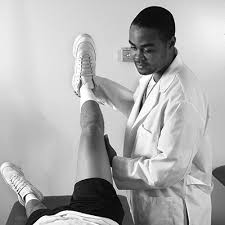
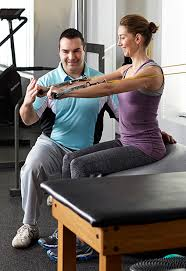
Some of the methods that PT’s commonly use are heat, ice, rehabilitative exercise, and manual therapy.  Heat is usually given to patients prior to their exercise to help relax the muscles and properly warm them  up before exercise. The rehabilitative exercises are the exercises that the physical  therapist decides  the patient should do after evaluating them. Manual therapy is a hands on approach in which the therapist uses their hands to stretch, massage, or strengthen the injured body part.  Ice is given to the patient usually after the exercise to help with the pain, inflammation, and swelling of the injured body part.  Physical therapists also sometimes use different types of machines that help assist in the treatment process for different injuries. These machines include low level laser, traction, electrical stimulation, interferential current, and ultrasound.2

Why is Physical Therapy Beneficial

Physical therapy is an alternative form of treatment that does not involve pharmaceutical drugs and can be very beneficial to people who are avoiding surgery, recovering from surgery, or who are doing rehabilitative exercises to help  prepare for an upcoming surgery.  Regularly making  appointments also gives patients direct and immediate access to a licensed medical professional that will always be available to answer questions about their injury.

Reference
1 Role of a Physical Therapist. (n.d.). Retrieved January 21, 2016, from  http://www.apta.org/PTCareers/RoleofaPT/

2 NLM Controlled Vocabulary. (n.d.). Retrieved January 21, 2016, from http://www.ncbi.nlm.nih.gov/mesh/?term=physical therapy technique

Wednesday, January 27, 2016

Pay for Play


Pay for Play
Now tell me if you have heard this one in the past decade, “College athletes should not be paid the school is paying them to go to school isn’t that enough?”, the real answer to that is “no it is not enough.” Yes most of the schools give a nice stipend to their athletes but it is not enough money for these student athletes to live off of comfortably for the entire semester. The average stipend given to a Power 5 conference player is between 3,000 to 5,000 dollars.1 If you were to take these amounts and divide it into the amount of months in a single semester, the athlete would be getting between 750 1250 dollars depending on the amount given.


The reason
I believe that athletes should get payed more money or at least be rewarded with valuable goods when their team or university makes it to the College Football Playoff National Championship game. ESPN paid 500 million dollars to broadcast the game and made 45 million dollars off of the games broadcast.2 These college athletes should be getting a slice of the pie from either the university, since they are getting free press off of their team, or ESPN. Either the university or ESPN should make a play to pay the athletes in a way that will not a NCAA violation. College athletes put everything they have everyday into their sport now why is it that they are not getting paid or at least compensated for that effort?

The solution to the problem can be solved very easily I believe. The university or NCAA can either give permission to a media source like ESPN to give a certain sum to the two teams that make the national championship game or the NCAA should pass a rule that allows for more of a stipend upgrade to help out college athletes have an overall  easier lifestyle.  After all most of the stipends given to the athletes are going to everyday life uses.

Stipend- a fixed regular sum paid as a salary or allowance.

References:
retrieved january 21

retrieved January 21