Wednesday, June 1, 2016

Nutrition Tips for Gamers: Round 2!

So maybe I cheated a bit in the week or so of writing this blog. Maybe it was because HEB had a buy 1 get 1 free on those large bags of M&M’s that I love so much. Who knows?!? Back in our first blog we gave a couple of nutrition tips to get your gaming a little bit more on the healthy side. If you haven’t seen it, well here’s a link (http://tinyurl.com/h88n533). Now we revisit the topic of nutrition to continue our quest to a healthier lifestyle while we game.


Like I said earlier. I bought and ate a whole lot of M&M’s this week. They tasted wonderful. But for some strange reason, I didn’t feel too good later though. You may say John, you know what you wrote before, why do this to yourself? The answer is very simple. I. Love. Sugar. It’s a problem and I know it. Most of the time I contain myself from buying the chocolaty goodness. Mainly by letting my wife do the shopping. No, but really, we as gamers have a tendency to over consume sugar. It just happens sometimes. Those sweet little snacks are easy to get to when you are in a rush to get back to a match that's about to queue up. Everyone knows that sugar is bad for your teeth and it can help you put on a few pounds. Why does sugar cause this and other problems?


Most sugars from your sodas and candy are high in fructose.2 What is fructose you ask? Well in short, It’s basically a fruit sugar. You may say, well that doesn’t sound bad, why can’t I eat tons of it?!? Well Mr. Sweet Tooth, your body doesn’t produce this naturally. Our bodies run on glucose, which is a bit different. Can it get rid of? Well yes it can, just not a whole lot at a time. From here we can explore the effects of a diet with a ton of extra sugar added to it

  1. It can overload your liver with glycogen.1  Hold here a sec you may say. The liver is full of what?!? Glycogen is simply the substance that your body converts sugars to when it stores it. Now your liver is where this substance is stored for use. Eat a large bag of M&M’s? There is no longer room in the inn for your sugars. This is when your body starts storing it as fat.
  1. It’s known to help a disease or two. I know. It’s starting to not look good. But here are some things that sugar is known to help contribute to.


Insulin Resistance
Type 2 Diabetes
Metabolic Syndrome (MS)
Cardiovascular Disease
Cancer


That list isn’t pretty. But evidence has been found that links excessive sugar intake to all of these diseases. Studies are starting to link sugar intake to the raising of cholesterol. So you may be asking, why are you still eating it John?!? Well that’s simple, it tastes really really good! Moderation is the key to this. So don’t eat the whole bag of M&M’s or kill a case of snowballs. Until you can get to the point of self control and motivation to completely cut out the sugar, just take a step back and limit your intake. Until next time gamers, game safe!


References


1Gunnars, K. (2013, September 30). 10 Disturbing Reasons Why Sugar is Bad For You. Retrieved May 23, 2016, from https://authoritynutrition.com/10-disturbing-reasons-why-sugar-is-bad/

2Skerrett, P. (2011, April 26). Is fructose bad for you? - Harvard Health Blog. Retrieved May 23, 2016, from http://www.health.harvard.edu/blog/is-fructose-bad-for-you-201104262425

Anaerobic Activity Part 1


       Last blog, I discussed the benefits of aerobic activity. For this blog, I’m going to discuss anaerobic activity, which is the opposite of aerobic activity. Instead of keeping a slow pace, we use a short burst of exercise at high speed. Besides being the opposite of aerobic, what exactly does anaerobic mean? Well, aerobic activity thrives off of the use of oxygen. Being that anaerobic is the opposite of aerobic, it means without air. How can one participate in any type of activity without air? Type is the key word.
Anaerobic activities are short term activities that rely solely on power, speed and explosion for execution of said activity. Examples of anaerobic activities include sprinting, power lifting, or basketball. What is it about these sports that makes them anaerobic sports? For the majority of the time, athletes must use fast-twitch muscle fibers in order to execute necessary movements throughout the activity. For example, when a sprinter is coming out of the blocks, he/she explodes out as hard and as fast as they can without losing control of their movements. Or think of when a basketball player goes up to dunk the ball. He/she is not going to jog up to the goal and effortlessly hop up and dunk the ball, he/she will more than likely be approaching the goal close to full speed in order to obtain maximum or optimal momentum for their jump. Why is it important to be anaerobically efficient?
Whenever I’ve asked friends I’ve met in the gym to run with me, the only concern that ever comes up is weight loss. I get comments like, I’m trying to gain some weight, or I don’t want to lose muscle mass. Well contrary to aerobic activity, anaerobic activity doesn’t burn as many calories, and helps build overall strength and muscle mass. Sprinting is a good way to gain some of the benefits of aerobic activities without having to sacrifice what you would gain from anaerobic activities.
As a sprinter myself, I can say that I’ve maintained around the same weight for the past five years, while enjoying an abundance of energy and a fast metabolism.
                                

                                                              References


1Anaerobic: MedlinePlus Medical Encyclopedia. (n.d.). Retrieved May 23, 2016, from https://www.nlm.nih.gov/medlineplus/ency/article/002230.htm


2Aerobic Vs. Anaerobic Fitness. (2015). Retrieved May 23, 2016, from http://www.livestrong.com/article/334601-aerobic-vs-anaerobic-fitness/


Motivators Behind Employee Wellness


When I began my graduate assistantship with Worksite Wellness, I was so excited to start working with employees and helping them get healthy! I thought that planning activities, providing seminars, hosting events with prizes, etc. would entice employees enough to jump on the health/wellness train. I was wrong. Participation numbers were nowhere near what I imagined. This was a lot harder that what I anticipated. I forget that not everyone is passionate about fitness and living healthy lifestyles. While there are many individuals that are very active in our program, there are others that are motivated differently and I have not provided them with the motivation they need. I have learned a lot since I have filled this position, and plan to continue learning. I will discuss three things I have learned thus far:
walk with the doc.jpg1) I can not be the primary motivator...people have to develop a motivation to be healthy,
  • 2) You have to find out what they employees want you to provide to them, and
  • 3) you have to inspire them.


First  of all, I can not try to do all of the motivating. I can provide it initially, but if employees do not develop their own motivation for sticking to their commitments, then they will not have lasting results. When employees experience success, they are more motivated to continue participating.


Secondly, I can plan all kinds of things that I think will be enjoyable, but if it is not what the employees want then it won’t be successful. Worksite Wellness is for employees, therefore everything that goes on within the department needs to be catered to their desires. If they want more social gatherings to mingle with other departments on campus, then we will plan a healthy smoothie party or a campus wide 5k during the day. Listening to employees is the best way to get them involved.

Lastly, they have to be inspired. If I am demanding or snobby when communicating, I will get nowhere. Relationships needs to be built and people have to be inspired by me. When people feel encouraged, they feel important. When they feel important, they work better. And it all starts with inspiration.

It think that employee wellness is a great benefit to both employees and businesses. When employees are well, they work better. When they work better, businesses are more successful. I love my job!


References

1Employee Health | Corporate Wellness | Patient Motivation. (n.d.). Retrieved May 23, 2016, from http://michellesegar.com/organizations/


2Borenstein, L. (2015). Employee Wellness Programs Are Due for an Overhaul. Retrieved May 23, 2016, from https://www.entrepreneur.com/article/244040  


The Importance of Muscular Endurance

The Importance of Muscular Endurance

No matter who you are or what you do to get where want to be, there is going to be something to endure along the way. The muscular endurance phase that comes next will prepare you for just that. During this phase we will train to push our bodies through activities that are lasting a long period of time. This can be something as whenever you are helping someone move into a new apartment and you have to endure a long walk up three flights of stairs with a heavy box in your hands. It can also be you enjoying a day at the pool with the kids and playing swimming games all afternoon. This phase will not only enhance your ability to do this but will also improve your quality of life.

The muscular endurance phase will test our muscles on how long we can perform an activity throughout full range of motion.2 We will be focusing on completing each exercise of 12-20 repetitions for 1-3 sets at a moderate tempo with 0-90 second rest period.1 Our goals for this phase are similar to stabilization are improving muscular endurance, increasing neuromuscular efficiency (catching yourself before you fall), and improving coordination. We will still focus on stabilization as we endure these movements for a longer period of time.1 The same four-week cycle of the workouts will be completed similar to the stabilization phase. There will also be a cardiovascular work and recovery sessions on your off day, but now the cardiovascular work provides more of a challenge because your athletic improvements. Refer to the example exercises below for concerns.

The muscular endurance phase will help you move in your in-laws, play in the pool with your kids, and even help you take a long nature hike with your dog. So, if you are ready to endure every obstacle you are faced with in life take on the challenge of completing the muscular endurance phase.
References:
1Clark, M., Lucett, S., Sutton, B. (2014). NASM Essentials of Personal Fitness Training.
Burlington, MA: Jones and Bartlett Learning.
2Verstegen, M., William, P. (2006). Core Performance Essentials. New York,  NY:

Rodale.

Preventing Disordered Eting in Athletes

                            Preventing Disordered Eating in Athletes
      

Disordered eating (DE) in athletes can be defined as inadequate eating and weight control behaviors. Because of the high demands of athletics, athletes are more likely to suffer from a DE. Disordered eating can cause adverse affects on health and athletic performance. Proper education about the signs, symptoms, effects to the body, and risk factors can reduce the likelihood of an athlete to suffer from a DE. DE is a serious condition that should be taken as such, proper managing of this disorder can be a lifesaving measure 1.  
Clinically Diagnosed Disorders
There are three clinically diagnosed eating disorders; anorexia nervosa, bulimia nervosa, and eating disorder not otherwise specified.  Anorexia nervosa can be defined as someone who severely restricts the amount of food that they intake to prevent weight loss or continue losing weight. Bulimia nervosa is a condition where someone binges on large amounts of food then purging immediately after to prevent weight gain.  The last clinically diagnosed eating disorder is called eating disorder not otherwise specified; this condition is one that does not meet the criteria of the other two. It can be a mix of both disorders or eating behaviors not characterized by either.
Prevention
Educating athletes about DE is the first step to preventing them. Mandatory educational programs for athletes, coaches, and athletic training staff should be implemented annually. Information that should be covered in the educational program are; early signs and symptoms, how to detect someone with DE, the medical complications, and what resources are available to help an athlete who might suffer from one.  “However, fewer than 41% of Division I athletic programs make such education a requirement” (as cited in Beals, 2003).  Also proper nutrition and eating habits should be taught to all athletes in order to prevent medical issues and improve athletic performance. Female athletes should be informed of the effects eating disorders have on menses and the effects of menstrual irregularities have on athletic performance. If an athlete is properly informed that DE will harm their athletic performance and not improve their performance, they may become less likely to suffer from an eating disorder.  Open, non-judgmental, and truthful discussions about DE will lower the barriers to help athletes be more willing to come forward and seek help (as cited in Becker, 2004).   Educating children from a young age about DE and other nutritional problems is another prevention method. Also screening methods can be used to determine if an athlete has DE symptoms such as medical history review, physical exam, menstrual history review, and a mental health evaluation1.
References
Bonci, C., Bonci, L., Granger, L., Johnson, C., Malina, R., Milne, L., Ryan, R., Vanderbunt, E. (2008). National Athletic Trainers' Association Position Statement: Preventing, Detecting, and Managing Disordered Eating in Athletes. Journal of Athletic Training, 43(1), 80-108.

Fatal Heart Conditions in Athletes

Fatal Heart Conditions in Athletes


Statistics:
  • Leading cause of death in young athletes
  • 1 in 200,000 athletes per year are affected by a heart condition.
  • 16-17 deaths per year in the United States.
  • Risk increases with increasing level of competition
  • Higher rate in college athletes: 1 in 50,000
  • More prevalent in basketball and football
  • Occurs two times more frequently in African Americans1

Athlete’s Heart Syndrome
Athletic heart syndrome is a heart condition that can occur in people who exercise for more than an hour a day, most days of the week. This condition leads to structural changes in the heart. The heart becomes extra large and thick causing Bradycardia, Cardiomegaly, and Cardiac hypertrophy2.
Hypertrophic Cardiomyopathy
It Hypertrophic Cardiomyopathy is a disease that causes the myocardium to become abnormally thick. It is the most common cause of sudden death in athletes and HCM often goes undetected. Symptoms of HCM may include1:
    • Chest pain or pressure
    • Shortness of breath  
    • Fatigue
    • Fainting
    • Palpations
    • Sudden death

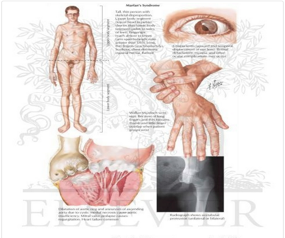
Marfan Syndrome

Marfan syndrome is a genetic disorder that causes a condition in which your body's connective tissue is abnormal. It often affects the connective tissue of the heart and blood vessels, eyes, bones, lungs, and covering of the spinal cord. The most serious complications of Marfan syndrome involve the heart and blood vessels. Marfan syndrome can affect the aorta, the main blood vessel that supplies oxygen-rich blood to the body, and the aorta can stretch and grow weak. Signs and symptoms of Marfan syndrome include1:
  • tall, thin build,
  • Long appendages,
  • Scoliosis,
  • Flat feet,
  • About 1 out of 5,000 Americans has Marfan Syndrome.  

Long QT Syndrome
Remove Indention Long QT Syndrome is a Inherited heart rhythm disorder. It causes fast, chaotic heartbeats. The rhythm may become so erratic that it causes sudden death.  Symptoms of Long QT Syndrome include
  • Fainting
  • Seizures
  • Sudden death
Symptoms most often occur during exercise, emotional excitement, and sleeping1.
Ways To Screen For Heart Disease
An in depth family medical history is necessary, because most heart conditions are hereditary. An EKG can detect many of these heart problems. An echocardiogram can give a 3D view of the heart allowing a cardiologist to spot any visible heart conditions. An EKG cost about $150 but most insurances will cover 80-100 percent of the cost2.


Maron, B. (1995). Cardiac Disease in Young Trained Athletes. Retrieved May 23, 2016, from http://circ.ahajournals.org/content/91/5/1596.full

Ramnarace, C. (2011, March). 7 Ways to Protect Your Young Athlete From Sudden Cardiac Death. Retrieved May 23, 2016, from http://www.everydayhealth.com/heart-health/0308/ways-to-protect-your-young-athlete-from-sudden-cardiac-death.aspx

Custom Made Mouth Guards


Custom Made Mouthguards

Most athletic trainers have worked alongside a football team and have dealt with the frustrations of mouthguards. From an athlete constantly dropping or losing their mouthguards to cutting them too short or chewing on them like a piece of gum, athletic trainers have seen it all. Most athletes hate wearing them because they are uncomfortable and annoying but they do not understand why they are so important. It is common for athletes use the store bought mouth pieces that you heat in boiling water then bite down on to mold to your mouth, although research shows that custom made mouth guards have been shown to be significantly better.  Here are a few reasons why custom made mouthguards are crucial to the sport:
  • Help Prevent Oral Injuries
    • Over 5 million teeth are knocked out annually during sports and recreational activities.
    • Athletes have a 33-56% chance of receiving an orofacial injury during their playing career.1
  • Help Prevent Brain Injuries
    • They help to absorb shock, stabilize the head and neck, and limit movement caused by a direct hit to the jaw to prevent concussions.
    • A study found that football players wearing store-bought mouthguards were more than twice as likely to suffer mild traumatic brain injuries than those wearing properly fitted, custom mouthguards.2
  • Communication During Play
    • Custom made mouthguards allow athletes to speak clearer and provide optimal oxygen flow preventing the athlete from needing to remove them during play.1
With the evolution of custom made mouthguards and the reasons listed above it should persuade any parent, coach, or athletic trainer to provide athletes with custom made mouth guards if able.

References:


Aerobic or Anaerobic: Which do you use more when you workout?

Aerobic or Anaerobic: Which do you use more when you workout?


Aerobic exercising, this uses primarily the aerobic metabolic system. This is where you have enough fuel and oxygen together to continue muscle cell contraction repeatedly without having to worry about fatigue. When the body is at rest it relies on the aerobic system for most of the bodies fuel. As the exercise progresses from resting to a slow walk to then a jog our breathing will increase and the muscle contraction will require a higher oxygen intake. This is very important for runners and cyclist as it allows their muscles to keep on going for long periods of time unlike a workout with a higher intensity. If and when the intensity of the workout becomes greater; then the workout would become more anaerobic. 
Anaerobic exercising is going to be more lifting of weights and more strenuous activities. 1Anaerobic exercising is where the muscle does not require oxygen to contract the muscle.  1When you start using anaerobic metabolism you reach a metabolic threshold, this is the point where you produce waste. The waste hinders the body's ability to keep going and it leads to the fatigue in the muscle. This is such an important factor when you are talking about anaerobic metabolic system. When the waste sets in it becomes harder and harder to continue lifting at that intensity or to add weight. When your muscles fatigue you will feel a burn while you continue to try and keep going which often time can be quite painful.
I am definitely anaerobic when it comes to what type of metabolism I use more often in terms of exercising. When exercising I primarily lift weights because that is what I am accustomed to. Therefore, I have to deal with fatigue a lot when lifting high intensity lifts such as squatting for example. Squatting requires a lot of energy and demands your metabolism to kick in to get the job done.
Not everyone exercises the same, therefore people use different metabolic systems during their workouts. It really depends on what you are trying to accomplish. How do you workout? If you want to run and do long distance more than likely you will use more aerobic. If you lift weights, you will more than likely use more anaerobic. This also helps yo determine how long you can workout and what to and what not to eat for your exercising that you are trying to do.


Refrences

1Griffin, D. E. (n.d.). Aerobic vs. Anaerobic: What is The Difference? Retrieved from http://www.myfooddiary.com/resources/ask_the_expert/aerobic_vs_anaerobic.asp