Friday, December 2, 2016

Motivation

Research shows that 50 percent of people who start a new workout program drop out within six months.1 Why? They do not have any motivation to keep going! People see it as they HAVE to work out, which makes them not want to. When exercise is made to be fun and not as much as an expectation, then it is more likely to be done. Here are a few tips to stay motivated throughout your fitness journey:

http://tinyurl.com/gveynd5
  1. Set goals!2 Having a goal to work for and to achieve is motivational. Instead of setting goals like losing so many pounds a year or adding so much lean muscle mass a year, try setting goals that involve signing up for a 5k, half-marathon or a full marathon. This way you can train and get excited to run the race. This way you make exercising more fun and less serious.
  2. Make it a priority!2 Make time to go get a workout in, even if you have to wake up early. Instead of staying up late to watch your favorite late-night TV show, go to bed earlier and wake up more energized to work out!
  3. Schedule a regular workout time!2 Find a time throughout your day to work out and stick with it. Making things a routine will make it easier to stay motivated.
  4. Don’t let the weather stop you!2 Just because it’s not a perfect sunny and 75-degree kind of day, doesn’t mean you can’t take your workout indoors. There is always a way to complete your workout whether it is inside or outside.
  5. Don’t waste time!2 Make your workouts count. If you are limited on time do not just stand around and talk with friends. Go with a plan ready and get it done.
  6. Keep it simple!2 The more things get complicated the more likely you are to lose interest. Just because other people are doing the most complex workouts does not mean you have to. Keep your workouts simple for whatever suits you.
  7. http://tinyurl.com/gs6oy3p
    Surround yourself with active people!2 If you are around people that just like to sit around and watch TV, guess what you are going to be tempted to do? Having people to work out with is one of the best ways to stay motivated. You will be able to have people there to keep you accountable for your workouts.
  8. Use social media!2 Some people see posting their workouts on social media, for their followers to see, a good way to stay accountable. You can even follow other fitness sites to keep you motivated!
  9. Mix it up!2 If you keep doing the same thing over and over, you are going to get bored and just go through the motions. Change up the trails you run on, or the exercises you perform. Make things more challenging and see how far you can push yourself.
  10. Reward yourself!2 What better way to reward yourself than with new gear? New workout tops or bottoms or even a new pair of shoes. When you look good, you train good. Or even putting new music on your playlist can motivate you.
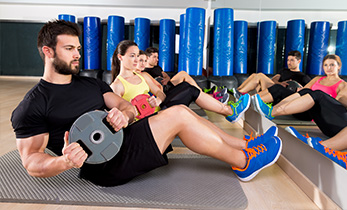
You can do this! Try these motivational tips when you seem to be struggling. Push through and achieve those goals!

References
1@. (2010). Keep Dropping Your New Workout? Retrieved October 31, 2016, from http://www.womenshealthmag.com/sex-and-love/fitness-tips-how-to-stay-motivated
2By Tariq Ali of Tri Nut. (2014). 10 Ways to Commit and Stay Motivated to Working Out. Retrieved October 31, 2016, from http://www.blendtec.com/blog/10-ways-to-commit-and-stay-motivated-to-working-out/


Nutrition Tips

While working out, a commonly overlooked factor is diet. A healthy diet is important as it gives the body the necessities  required to lose body fat, gain lean muscle mass and to maintain energy levels for exercise. There are people who go to the gym and religiously workout, but they do not seem to be making any progress. This can be a result of  not feeding their bodies the right nutrients needed to make these changes. Here are some basic tips to help you get on the right track with nutrition.

THE MUSCLE NUTRIENT: PROTEIN
It has been said that protein is the staple of any diet, especially to serve the dietary needs of an athlete.1 Next to water, protein is the most abundant material in the human body.1 It is present in muscle, bone, connective tissue skin and blood.1

The following is a protein recommendation list based on the current Recommendation for Dietary Allowance (RDA)1:
  • Sedentary or those who exercise infrequently = 0.4 grams / 1 pound of body weight
  • Active exerciser = 0.5-0.6grams/1 pound of body weight
  • Very active/weightlifter/endurance athlete = 0.7-0.8 grams / 1 pound of body weight

In general, about 15-20% of your total daily calories should come from protein.1

Here is a list of some good sources of protein to get you started1:
  • Chicken breast
  • Turkey
  • Orange roughly
  • Salmon
  • Tuna
  • Top round/sirloin steak
  • Lean ground beef
  • Egg whites
  • Low fat cottage cheese

THE ENERGY NUTRIENT: CARBOHYDRATES
Carbohydrates fuel the body by providing our muscles with glycogen, while working out, and helps us to optimize our athletic performance.1 Carbohydrates should be from minimally processed sources like eating true whole wheat bread versus white bread or even enriched bread.1 Carbohydrates should make up about 55-60% of your total caloric intake, depending on your activity level.1

Here is a list of food sources of carbohydrates to help you1:
  • Baked potato
  • Sweet potato
  • Brown rice
  • Wild rice
  • Squash
  • Pumpkin
  • Oatmeal (whole oats)
  • Whole wheat bread/tortilla

THE ESSENTIAL NUTRIENT: FAT
An important and necessary nutrient for everyone are fats. That is, some fats- the ones that are saturated are not good for cholesterol levels as they can cause clogged arteries. The fats that are considered good for your body are unsaturated fats. These can help protect against heart disease by reducing cholesterol and providing the body with extra energy.1 Basic rule here, if it is a solid at room temperature, it is usually saturated (bad); if it is a liquid at room temperature it is unsaturated (good).1

Here is a list to help you with some of the good fats you should include in your diet1:
  • Safflower oil
  • Olive oil
  • Flax seed oil
  • Sesame oil
  • Fish body oils (EFAs=essential fatty acids)

THE HYDRATION NUTRIENT: WATER
Staying hydrated is very important with exercising. The body is about 60% water, give or take.2 We're constantly losing water from our bodies, primarily via urine and sweat.2 The health authorities commonly recommend eight 8-ounce glasses, which equals about 2 liters, or half a gallon.2
http://tinyurl.com/guy7u6d
http://tinyurl.com/z4jf2kp
Following these tips can help you with your goals in the gym! They will help your energy levels stay up and keep you motivated!
References
1B. (2015). Food Basics 101: Your Diet Makeover. Retrieved October 31, 2016, from http://www.bodybuilding.com/fun/wnso11.htm
2B. K. (2016). How Much Water Should You Drink Per Day? Retrieved October 31, 2016, from https://authoritynutrition.com/how-much-water-should-you-drink-per-day/

Insurance Coverage for Physical Therapy

The purpose of this blog is to provide an informative view of a top insurance provider for physical therapy and their coverage provided. In addition, this blog will also show how the client can get the best coverage.

hpso_1_.jpgAs a practicing physical therapist (PT), you work hard in your career to care and treat your clients. With that being said, malpractice or unforeseen consequences could have a dramatic impact on your career and financial future. Healthcare Providers Service Organization (HSPO) is the leading insurance provider for physical therapists.1 “HSPO insures nearly 1 out of every 2 physical therapists in the nation.”2 The financial burden is overwhelming, costing nearly $20,000 in lawsuits. Coverage with HSPO includes: professional liability coverage, license protection, defendant expense coverage, personal injury coverage, first aid expenses, and so on. In addition, you can take this insurance with you wherever you go. For example, changing jobs, adding a second job, or volunteering, you will still be covered by HSPO.

Insurance all Pages.jpgAs the client, the best way to insure that your health is protected is to take an active part in your healthcare. And the best way to be active is by educating yourself. Many companies are interested in keeping their workers on the job and premiums low, so insurance providers will help employees prevent injuries and promote a healthy lifestyle. Talking to a human resource director will allow you to have access to more information. Asking a few of these questions will get you started on the right path to selecting the best coverage: Is physical therapy ‘bundled”?, does the benefit language permit access to physical therapy for each condition throughout the year?, does the benefit language ensure coverage that facilitates restoration of function?, and does the benefit language ensure coverage that promotes functional independence for those with chronic conditions?2 When choosing a plan you also must consider cost, accreditation, adequate coverage, lifetime limits, and others. “The right to a physical therapist services in an important option and is your right as a patient.”3

In conclusion, I have discussed the coverage provided for a physical therapist and what questions the client can ask to ensure they are getting the best coverage. As a future physical therapist, you should know what to expect in insurance coverage. The reader should be able to effectively acquire the best coverage.


References

1American Physical Therapy Association. (2016, February 8). Professional Liability Insurance for PTs, PTAs, and Students. Retrieved from APTA: http://www.apta.org/Benefits/Insurance/ProfessionalLiability/
2HPSO. (2016, November 17). Physical Therapist. Retrieved from Physical Therapy Professional Liability Insurance: http://www.hpso.com/individuals/professional-liability/physical-therapy-professional-liability-insurance
3Move Forward. (2016, November 17). Physical Therapy and Your Insurance. Retrieved from A Patient's Guide to Getting the Best Coverage: http://www.moveforwardpt.com/resources/insurance/detail/physical-therapy-your-insurance

Record Keeping

The purpose of the blog is to provide an informational view on why physical therapists use and maintain record keeping. In addition, this blog will show how physical therapists use record keeping as an aid in rehabilitation.

m-injury-1.jpgWhen an individual hears or thinks of a physical therapist, many often overlook the miscellaneous duties. For example, record keeping is an essential part of being a physical therapist. Medical records, physical records, exercise records are key components in deciding what type of rehab is best for the individual. According to the World Confederation for Physical Therapy (WCPT), recognizing the importance and legal and accurate records is a standard of physical therapy practice and is essential to protection and care of the individuals.2 Records on the individual’s performance yields valuable information. For instance, records show evidence of informed consent, demonstration of client care, facilitate consistent a team approach, and provide a vital source of statistical information for the day-to-day running and future planning of physical therapy.2 There are plenty of more examples, but these hit most of the high points.

Keeping track of the data allows for the physical therapist to apply the progressive overload principle, a muscle or muscle group will increase in strength in direct proportion with the overload placed on it. As a former intern for Dr. Priest’s Lab of Wellness and Motor Behavior (LWMB), I can tell you from personal experience how important, handy, and incidentally convenient having records are for applying that principle. It also allows you to develop a an accurate and personalized program best to achieve individual success. Maintaining and keeping records of individual participation is a tangible evidence that can be shared with a physician, the individual, or other physical therapists to analyze, modify, or review the history.

In conclusion, I have discussed why keeping and maintaining records is an important role of a physical therapist. Also, I have shared a brief description of how record keeping can be used in future rehabilitation. In my final blog, I will discuss the liability involved with physical therapy.


References

1American Physical Therapy Association. (2009, December 14). Guideliines of Physical Therapy Documentation of Patient/Client Management. Retrieved from Documentation Management: https://www.apta.org/uploadedFiles/APTAorg/About_Us/Policies/BOD/Practice/DocumentationPatientClientMgmt.pdf
2World Confederation for Physical Therapy. Policy Statement: Standards of physical therapy practice. London, UK: WCPT; 2011.  (Access date 22nd September 2011)


Thursday, December 1, 2016

Principles of Overload

Overload is the threshold prescription to cause a desired outcome.  A muscle will only strengthen when forced to operate beyond its customary intensity. The load must be progressively increased in order to further adaptive responses as training develops, and the training stimulus is gradually raised.
For most people, the term “load” makes them think of a weight.  That can be true in regards to resistance training, however in the Cardiorespiratory Fitness sense, load can mean the amount, distance, type, and/or the intensity of the exercise.  So to see an improvement in Cardiorespiratory Fitness in a particular event, as well as improvement in resistance training, you need to examine the type of training you are doing, determine your goal in that type and go from there.2
A way to ensure that you are following a progressive overload is by remembering and following the acronym FITT.  FITT stands for: Frequency, Intensity, Time, and Type.
Frequency increasing the number of times you train per week.
Intensity increasing the difficulty of the exercise you do.
Time also known as duration, is increasing the length of time that you are training for each session.
Type Increase in the difficulty of the training you are doing.
Think of progressive overload like building a house.  You lay a few bricks the first day, go away, rest, recover. Come back the next day and add some more bricks. Over time you have a house.  Another example is from Greek history; the Myth of Milo and the Calf 1.

    “To become the greatest wrestler in Greece, to win six Olympic laurels, Milo had to train like the rest           of us.  His method?  Borrow a new-born calf and carry it around Croton day after day, week after week, and month after month.  As the calf grew, so did Milo’s strength, until he was the strongest wrestler in Greece and could carry the now full grown bull upon his back.”1
This is a slightly extreme example, but the principle is the same.  Try to do more each time in order to see results.  This can be for anything and not just for resistance training, you don’t try to run a marathon right at the start.  You build up to that distance over time.


References:
1 About. (2016). Retrieved November 20, 2016, from https://miloandthecalf.com/about/

2 Baechle, T. R., & Earle, R. W. (2016). Essentials of strength training and conditioning (4th ed.). Champaign, IL: Human Kinetics.

What is Active Recovery?


Overload is crucial for improvement in performance, it is the threshold prescription to cause a desired outcome.  A muscle will only strengthen when forced to operate beyond its customary intensity.  A load must be progressively increased in order to further adaptive responses as training develops, and the training stimulus is gradually raised 1.  I will discuss more about this in the next blog, but you need to have a basic understanding of overload for this article.  So in order to increase performance, there needs to be constant progression in training.
However, with a constant progressive increase in work, the likelihood of overtraining and injury goes up.  A way to help prevent problems before they happen is through recovery.  The…purpose of recovery is to allow the muscle to repair itself and to engage muscles that are tired or sore 2. As I have stated in a previous blog, recovery can be more than just rest.
Active recovery uses a workout that has a lower level of intensity.  Typically, this will be more aerobic work than an actual workout.  These workouts are just enough to get the blood moving around in the body and help to  reduce any lasting fatigue in the muscles 2.
Examples of active recovery are endless.  Here is a short list to name a few:
·      Cycling – an exercise that is very low impact on the body, this is generally every athlete’s first choice as it involves light activity and also sitting down.
·      Swimming – a great way to get the blood flowing, this is a full-body workout that is extremely gentle on the body.  Sometimes the joints need active recovery as well if your sport is high impact such as running.
·      Rowing – considered by many the triathletes ‘secret weapon’, rowing is low impact but is another great full body exercise that gives the muscles a great recovery.
·      Rock Climbing – not the first go-to for most athletes, this activity uses your full body and can give the mind a bit of a workout as well.


References:
1Baechle, T. R., & Earle, R. W. (2016). Essentials of strength training and conditioning (4th ed.). Champaign, IL: Human Kinetics.
2 Read, A. (n.d.). Overtraining Can Kill You: The 3 Stages of Overtraining, Part 1. Retrieved November 07, 2016, from https://breakingmuscle.com/strength-conditioning/overtraining-can-kill-you-the-3-stages-of-overtraining-part-1