Sunday, February 7, 2016

Making the Modern Day Offensive Lineman

    Offensive linemen in today’s football are athletes in that they have to be strong, well-balanced, powerful, flexible and coordinated while being the biggest guys on the field. These special athletes need to possess these combination of characteristics in order to be successful against defensive lineman who are equally big, but generally faster and more agile. Let's delve into the base characteristics at each position on the offensive line.

The Tackles
   
Tyrone Smith (left Tackle) oft the Dallas Cowboys
     Playing the position of Tackle on the offensive line requires the same combination of great footwork, balance, and athleticism. These athletes protect the edges against elite defensive ends that can be the same size, but faster and more agile.  The optimum size range for this position ranges from 6’5”-6’7” and weigh in at tops 320 pounds. In addition to having very long arms to create separation from defensive lineman. A little known fact, the left tackle that protects the “blind side” of the quarterback is the second highest paid position thanks to defensive end Lawrence Taylor.
2 Taylor ended quarterback Joe Theismann’s career in 1985 after sacking him, ultimately breaking his leg.1
The Guards

    These guys are the brutes of the trenches and have to move meat. When facing interior defensive lineman, these guys have to possess the most power and strength to drive defensive tackles who can weigh up 360 pounds. Optimum height for this position is between 6’4”-6’6” and these players typically weigh in at 330-350 pounds.


The Centers
   

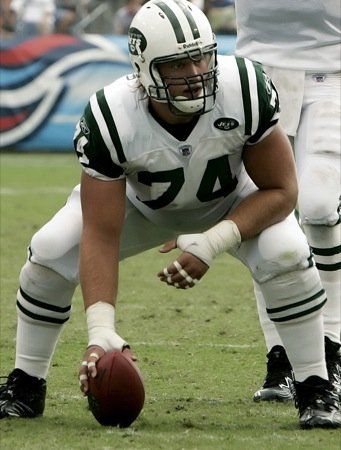
Center Nick Mangold of the New York Jets
    This is the position I played in college and I believe is the most fun because it challenged me both mentally and physically the most. To be a successful center requires not only some characteristics of guards and tackles. In that they have to have the strength of a guard and the feet of a tackle. Also they have to be smart and be able think on the fly. The center is known as the quarterback of the offensive line and/as he commands the direction of the line as a whole. He controls the pace of the offense, calls pass protections, run block combinations. In some cases has the snap count and all of this must be done in a matter of seconds in a game setting. The ideal center stands between 6’3-6’5 and weighs at most 315 pounds.

  1. Remembering Joe Theismann’s leg injury, 30 years later. (n.d.). Retrieved February 03, 2016, from http://www.nydailynews.com/sports/football/remembering-joe-theismann-leg-injury-30-years-article-1.2441238
  2. http://bleacherreport.com/articles/6989-left-tackle-the-money-position-in-the-nfl


ACL Injuries


What is an ACL injury?
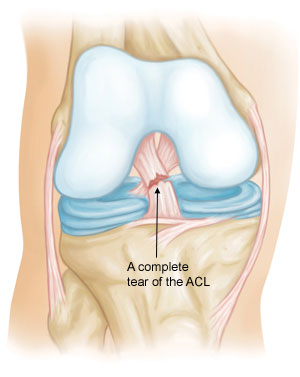
ACL stands for anterior cruciate ligament.  The anterior cruciate ligament is one of the four major knee ligaments that help connect the femur, the tibia, and the patella. The other ligaments are called the medial collateral ligament (MCL), the lateral collateral ligament (LCL), and the posterior cruciate ligament (PCL).  The LCL is on the outside of the knee and the MCL is on the inside of the knee.  The ACL and the PCL cross each other to form an “X” inside of your knee with the PCL in the back and the ACL in the front.  When the ACL tears, it splits into two and sometimes involves injury to knee cartilage and the other ligaments.1  When the ACL is torn there will be a popping sound and the knee will swell within  six hours of the injury.2  Anybody that is somewhat familiar with the world of sports has seen or heard of someone tearing their ACL.  It is an injury that can occur in just about any sport, but is most prevalent in football, basketball, and soccer; when watching NFL football this year, it seemed that just about every week a star player went down with a torn ACL.  ACL tears mainly happen when an athlete changes direction, stops suddenly, lands from a jump incorrectly, or receives direct contact or collision to the knee.1  

Not a Career Ender
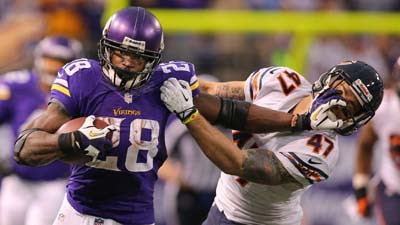
Because of the vast improvements to modern medicine, ACL tears are no longer seen as a career threatening injury.  We have seen many professional athletes come back from ACL injuries and play as if nothing happened to them at all, one prime example of that is Adrian Peterson.  Adrian Peterson is an NFL running back who tore his ACL and MCL in 2011 then in 2012 went on to rush for over 2105 yards falling just nine yards short of the NFL’s all time single season rushing record.3  Because Peterson won the NFL MVP award that year he took a lot of attention away from another star NFL player by the name of Jamal Charles.  Jamaal Charles who also tore his ACL in 2011 came back and 2012 and earned a spot on the NFL All-Pro team after rushing for 1509 yards.4   Peterson and Charles, along with many other professional, college, high school, and even younger athletes that have torn their ACL’s have shown the ability to be just as good if not better at their sport when they return to their sport after injury and that trend will hopefully continue to rise.


1 Anterior Cruciate Ligament (ACL) Injuries-OrthoInfo - AAOS. (n.d.). Retrieved January 31, 2016, from http://orthoinfo.aaos.org/topic.cfm?topic=a00549

2 Anterior cruciate ligament (ACL) injury: MedlinePlus Medical Encyclopedia. (n.d.). Retrieved January 31, 2016, from https://www.nlm.nih.gov/medlineplus/ency/article/001074.htm

3 Minnesota Vikings. (n.d.). Retrieved January 31, 2016, from http://www.nfl.com/player/adrianpeterson/2507164/careerstats

4Kansas City Chiefs. (n.d.). Retrieved January 31, 2016, from http://www.nfl.com/player/jamaalcharles/925/careerstats
Anaerobic/Lactate Threshold Training
        Have you ever tried running as fast as you can for a mile or two!? After a few minutes, your legs and arms start getting heavy, and then your legs start burning. You start to slow down gradually as your legs feel like they are cement blocks no matter how bad you fight it. This occurs because of the lactic acid build up in your blood?

       
        Your anaerobic system is how your body creates energy without the presence of oxygen.1 When your body doesn’t have enough oxygen to make energy lactic acid is created as a by-product. Lactic and the hydrogen ion is what causes muscle fatigue. The extra hydrogen ion’s raise the ph level in the muscle cells. Lactic is used to provide energy, but is done so at a slow rate. You can train your body at specific level that helps delay the onset of lactic and hydrogen ion’s in your body. The training involved is called anaerobic threshold or lactate threshold training and is right before your body switches from the aerobic system to the anaerobic system.2 After knowing your vVO2 max you can go for a lactate threshold run at 85-90% of your vVO2 max for your chosen duration. Depending on experience, the longer duration you run, the closer you want to be towards 85% and the shorter duration spent running the closer you want to be towards 90%. Everybody has a different lactate threshold and the less experienced you are the lower your lactate threshold will be. Your lactate threshold should be a hard effort, not uncomfortable; a pace to where you can say a word or two, and hold for a few miles without going all out.2 The goal of lactate threshold training is to move the lactate curve to the right so you can run at a faster pace before your body starts to accumulate lactate.

 
As you can see there is specific training to help improve your performance when you are wanting to see how fast you can run for a mile or two. Lactate threshold training should only be done 2-3 times a week. Since this type of training is a hard effort your body needs time to recover from the workout.   
       
1 Vigil, J. I. (1995). Road To The Top. Albuquerque, NM: Creative Designs

2 Larkin, D. (2014, March 17). Lactate Threshold: What it is and How Do You Leverage it in Training? Retrieved January 29, 16, from http://running.competitor.com/2014/03/training/lactate-threshold-leverage-training_96998

Body Building Today

Body Building Today
Body building has always been about lifting weights progressively with increasing strength and size, but what has body building evolved into over the years. When did body building start becoming more about size instead of the persons ability to gain muscle in a way that was for the person’s own well being in being able to carry out the functions in every day life.

The ancient Greeks did not look at body building the way it is viewed today  They saw body building as a means to get bigger and stronger to be able to complete tasks that the body was faced with day to day.

Body building today isn’t about how effectively one can perform difficult tasks on the body but how big a person can become and be able to maintain good and symmetrical body proportion.
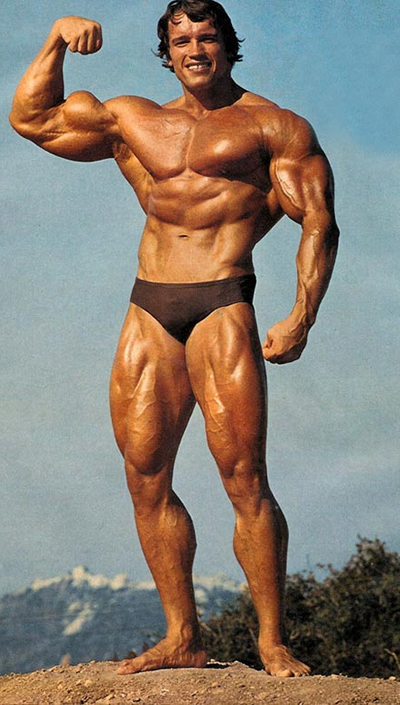
Arnold Schwarzenegger was one of the first body builders to make a name for himself and the sport. No matter how big Arnold was back in the days, it  doesn't even compare to the size of the athletes competing in the sport today.

The sport, like any other sport is evolving with the size of each new athlete becoming bigger and bigger than the star from before.

arnold-schwarzenegger-bodybuilding-688.jpgphil heath.jpg

Look at Arnold next to the current Mr. Olympia holder, the sport has evolved into something completely different than what the populator of the sport had intended.

On March 8, 2015, less than 24 hours after joyfully congratulating the winner of the Arnold Classic in Columbus, Ohio, Arnold Schwarzenegger dropped a bombshell on the fans and reporters who had assembled for his annual sunday morning seminar. He forcefully blasted the state of elite competitive bodybuilding, casting blame on IFBB head judge Jim Manion and other officials for "choosing the guy with the biggest neck and the biggest muscles" and other "bottle-shaped" bodies instead of a more aesthetically pleasing physique epitomized by the legendary Steve Reeves. It was a stinging rebuke that echoed through chat rooms, web boards, and gyms for weeks afterward.”

This statement that Arnold made just proves that body building has evolved into something that the originators had not intended for it to be. The first body builders were big in size of course but could move, and continue to pursue athletic needs placed on the body. The old winners were flexible and had a more athletic capable body than the winners of today. Yes, new winners are proportionate in size, but lack the physical capability that some movements of the body require.

The road body building is headed down does not fulfill the legacy that was left behind from the early greats and populators. While yes body building as a sport is growing more and more every year the true meaning behind that sport has lost its way.

Not a year goes by that the contoured body of vintage Frank Zane isn't hoisted up on a pedestal and declared the ideal masculine aesthetic, the structure that all bodybuilders should strive toward. Images of a '70s-era Schwarzenegger on magazine covers still sell better than contemporary stars. This was the look that made the sport, that created an entire industry.”


Pro Bodybuilding Has Lost Its Way. (2015). Retrieved February 01, 2016, from http://www.bodybuilding.com/fun/pro-bodybuilding-has-lost-its-way.html

Thumbs Arnold 2005 Arnold Schwarzenegger, Biography, Pictures And - Natural Bodybuilding Tips. (2013). Retrieved February 07, 2016, from http://naturalbodybuildingtips.info/thumbs-arnold-2005-arnold-schwarzenegger-biography-pictures-and/

Let's Talk About ADHD.


It is estimated that ADHD (attention deficit disorder) affects approximately 9 percent of American kids between the ages of 13 and 18 and approximately 4 percent of adults in America.1 As a matter of fact, ADHD is one of the most frequently diagnosed disorders in America and often, these children are placed on some sort of prescription at a young age to help manage the symptom or to have the ability to focus on schoolwork etc. However, are prescription drugs the true way to cure/treat this overdiagnosed disorder?

Symptoms of Children with ADHD:

  • Easily bored
  • Fidgets, squirms
  • Doesn’t listen well
  • Impatient
  • Difficulty organizing/completing tasks
  • Has difficulty following directions

Symptoms of Adults with ADHD:

  • Has a hot temper/Prone to get angry
  • Low tolerance of situations or people
  • Frequent mood swings
  • Restlessness
  • Disorganized

Many physicians and doctors are now attributing ADHD to the food Americans are putting in our bodies in addition to a possible genetic attribution, and/ or environmental factors. Regardless of the source, it is crucial that these individuals treat their ADHD, rather than mask it with a prescription drug (typically Adderall or Ritalin) which contains a long list of harmful side effects.2 For example Ritalin is known to stimulate the central nervous system which can cause vomiting, an increased heart rate, anxiety, agitation, nervousness and much more. Adderall is highly addictive and is known to cause tremors, high blood pressure, fast heart beats, mood swings, and even hallucinations.3

5 Natural Remedies for ADHD:
       1. Fish Oil (1,000 mg daily): Fish oil is one of the top foods for those with ADHD. They are both vital for optimal brain function and they are useful inflammatories as well. Fish oil may help those with ADHD to focus more efficiently, thus improve the learning process.
2.   B-Complex (50 mg daily)
  3. Multi-Mineral Supplement: This may include calcium, zinc, and/or magnesium. A deficiency in these minerals only enhances the ADHD symptoms.
4. Probiotics (20-50 billion units per day): Probiotics are crucial to maintaining digestive issues which can certainly affect ADHD and the surrounding symptoms.
5. GABA: GABA is a calming amino acid, but it should be discussed with a doctor prior to intake.

In addition to dietary changes, one with ADHD should aim to make lifestyle changes as well. Children with ADHD should be shown affection and also provided with opportunities to succeed. Give children with ADHD the reassurance that they do have the potential to be great. Also, regular playtime and physical activity is vital for children with ADHD. With physical activity, excess energy may be released, hormone levels may be regulated, and children’s bones and muscles will grow strong and health. Finally, children with ADHD should be provided with an efficient organizational system.

Adults with ADHD should also create an organizational system and should use technology to their advantage. It is also important that adults with ADHD get plenty of sleep in addition to exercise to both take time to relax and also stimulate muscles, nerves, etc.4

To summarize, those with ADHD should address any root issues along with symptoms and ways to treat these symptoms instead of resorting solely to prescription medication. With the assistance of the right combinations of foods and supplements, one with ADHD could efficiently ease the issues and improve in learning ability.   

References:

Giustra-Kozek, J. (2014). Healing without hurting: Treating ADHD, apraxia, and autism spectrum disorders naturally and effectively without harmful medication. Howard Beach, NY: Changing Lives Press.

Natural Remedies for ADHD - DrAxe.com. (n.d.). Retrieved January 31, 2016, from http://draxe.com/natural-remedies-adhd/

Carbohydrates

Do you know what carbohydrates are? Carbohydrates are one of the main types of nutrients and they are the most essential source of energy for your body. Your digestive system changes carbohydrates into glucose, which is blood sugar. Your body breaks down this sugar for energy to fuel your cells, tissues and organs.1 Carbohydrates fall under two categories as simple or complex. The difference between the two types of carbohydrates is the chemical structure and how rapidly the sugar is absorbed and digested. Simple carbs are digested and absorbed more efficiently than complex carbohydrates.
  • http://www.newhealthadvisor.com/images/1HT01073/PART1.jpgSimple carbohydrates contain just one or two sugars, such as fructose (found in fruits) and galactose (found in milk products). These single sugars are called monosaccharides. Carbs with two sugars such as sucrose (table sugar), lactose (from dairy) and maltose (found in beer and some vegetables) are called disaccharides. Simple carbs are also in candy, soda and syrups. However, these foods are made with processed and refined sugars which do not have vitamins, minerals or fiber. They are called "empty calories" and can lead to weight gain.1
  • Complex carbohydrates (polysaccharides) have three or more sugars. They are often referred to as starchy foods and include beans, peas, lentils, peanuts, potatoes, corn, parsnips, whole-grain breads and cereals.1 Complex carbohydrates are harder to digest due to the bond between the sugars.
Eating numerous amounts of carbohydrates can lead to an increase in overall calorie intake, which can lead to obesity. Not consuming enough carbohydrates can cause a lack of nutrients or malnutrition. when consuming too much of carbohydrates the body tends to create fat.
Good carbs are low or moderate in calories, high in nutrients, devoid of refined sugars and refined grains, high in naturally occurring fiber, low in sodium, low in saturated fat, and very low in cholesterol and trans fats.2 Bad carbs are high in calories, full of refined sugars, like corn syrup, white sugar, honey and fruit juices, high in refined grains like white flour, low in many nutrients, low in fiber, high in sodium, high in saturated fat, and high in cholesterol and trans fats.2
References:
1Szalay, B. J. (2015). What Are Carbohydrates? Retrieved January 31, 2016, from http://www.livescience.com/51976-carbohydrates.html
2Carbohydrates: MedlinePlus Medical Encyclopedia. (n.d.). Retrieved January 31, 2016, from https://www.nlm.nih.gov/medlineplus/ency/article/002469.htm

Rodeo Injuries

Rodeo Injuries
When you think of intense, rough, adrenaline driven sports, most people think football or  UFC. I personally consider rodeo when I think of sports with these characteristics. Rodeo has so many different events thus opening the door  for so many possible injuries. An image exists in the public's eye of thrill-seeking individuals with unyielding determination, resilience and an ephemeral response to pain.1 Injury can be incurred while on the animal, whether it is a t bull or bronc, or during the dismount. The dismount can be voluntary (once the mandatory 8 seconds have elapsed) or involuntary (by being thrown off). Injuries incurred while on the animal may include elbow, wrist, and hand injuries, such as those documented radiographically (Meyers et al). Pelvic. Injuries  such as pubic diastasis may occur through a wedge effect of the animals back during bucking and concussions s may occur during the ride through a whiplash effect or impact against a horse’s hip or a bull’s head. The rider may also be slammed against the chute gate or the arena rails. Injuries that occur once the athlete is thrown or dismounts may affect various body parts and usually involve moderate to high energy. Stomping and goring injuries after the dismount produce a mechanism for very violent and occasionally fatal injury.2

Injury percentage per Rodeo event: 2
  1. Bull Riding: 49.8%
  2. Bareback Riding: 22.8%
  3. Saddle Bronc Riding: 15.6%
  4. Steer Wrestling: 8.0%
  5. Calf Roping: 2.7%
  6. Team Roping: 1.1%

References:
  1. Meyers, M. C., & Laurent, J. M. (2010). The Rodeo Athlete: Injuries -- Part II. Sports Medicine, 40(10), 817-839.
  2. Downey, D. J. (2007). Rodeo Injuries and Prevention. Current Sports Medicine Reports (American College Of Sports Medicine), 6(5), 328-332.