Sunday, February 7, 2016

Drugs In College

DRUGS IN COLLEGE
Too many times anyone in America can turn on  ESPN and see a college athlete busted for a drug charge or a team violation leading to a dismal from the team. In this new age of athletics where drugs such as marijuana are easily accessible to the athlete, what is stopping them from doing harder drugs? Should there be  harsher punishment for failed drug test? Where is the line drawn in the sand saying enough is enough on drug policies.

The biggest headline thus far in the NCAA drug testing world is with former quarterback from the University of Missouri, Maty Mauk. Mauk is no stranger to being warned for his actions before finally getting the size 12 boot in the butt that kicked him off of campus. Mauk earlier in the 2015 football season missed week 5’s game against South Carolina which was declared as a violation of team rules that lead to his suspension for the rest of the season. Mauk’s last chances that lead to his third strike was a video of the quarterback snorting a white powder substance1. In the view of the viewer I would have to say it looked a lot like cocaine to me. For a player to have so many chances to ultimately break every team rule why was he still on the team after his first incident? I would be willing to bet the team violation from September was probably a drug related incident. I would not think that someone just wakes up one day saying that “I think I am going to go do cocaine today.” That just does not happen. Mauk could have ended his life like a former NCAA standout Len Bias 2. Len Bias if you do not know was drafted Second overall pick by the Boston Celtics to only die two days later of a cocaine overdose. Now even though Bias’ story is different from Mauk’s’ it could have been prevented. If coaches do not punish these student-athletes more severely for drug related problems they could see an athlete ruin his life or ultimately lose his life due to drugs.

I believe that if the coaches won’t step in and bring in a harsher punishment for failed drug test it will ultimately force the NCAA to step in and bring a bigger punishment. Steps have to be made to secure the safety of these student athletes or a situation of a Len Bias could ultimately be the final destination for a student athlete. The uses of harder drugs cannot go unseen anymore or be swept under the rug. Changes must occur to ensure student athlete lives are not ruined for the rest of their life like a Maty Mauk or Len Bias.


Pictures:


Cause and Effects of Lower Extremity injuries

        Lower extremity injuries are very important because we use our lower limbs everyday.  Serious lower extremity injuries are caused from contact with a large force, which can result in broken bones and dislocations. Minor injuries occur when a muscle or ligament moves past its normal range of motion. Two very important causes for injury to the lower extremities are muscle fatigue and poor balance. A prior injury, weakness of the joints, or a small range of motion could cause poor balance.  In athletes, this may not only hurt their chances of success, but also put them at risk for injury. Since the body’s balance is maintained in the core, upper extremities, and lower extremities, injury to any of these areas can cause balance deficits. Weak stability can cause  more harm to other parts of the body than just the lower extremities. For example, if a hurdler in track lands on the weaker leg due to fear of re-injury, his or her body could get off balance and possibly fall landing on his or her arm, which would cause an injury to the upper extremity. With this upper extremity injury, the hurdler’s balance could be thrown off. While there are many other possibilities , it is practically a domino effect. Abnormal balance and muscle fatigue go hand-in-hand. Overworking the specific muscles around the lower extremities can cause muscle fatigue, as well as abnormal stability. According to Semyon M. Slobounov in his book, Injuries in Athletics: Causes and Consequences, “Female athletes with a composite reach distance less than 94.0% of their limb length were 6.5 times more likely to have a lower leg extremity injury.” Since these females have a higher risk for injury, studies show that female athletes have a higher risk for ACL injuries.  Other overuse injuries in the lower extremities include: shin splints, tendinitis, plantar fasciitis, bone marrow edema, tarsal and carpal tunnel, nerve damage, degenerative joint diseases of the ankle, knee, and hip, etc. According to Mark Charrette, DC in Lower-Extremity Overuse Injuries: Primer on Causes and Corrections, “An example of an extrinsic source of lower-extremity overuse that is often overlooked is the forced pronation and "environmental" leg-length discrepancy due to repetitive running or walking on a banked surface, such as along the sides of roads with a pronounced slant for water runoff.”
References

  1. Campagne, Danielle. "Overview of Fractures, Dislocations, and Sprains -   Injuries Poisoning." Merck Manuals Professional Edition. N.p., n.d. Web. 01 Nov. 2015. Web.
  2. Charrette, Mark. “Lower-Extremity Overuse Injuries: Primer on Causes and Corrections.” Dynamic Chiropractic. 33:10. Nov. 2015. Web.
  3. Slobounov, Semyon. "Abnormal Balance as a Risk Factor for Injury." Injuries in Athletics: Causes and Consequences. New York: Springer, 2008. N. pag. Web.

Indicator Exercises: Know Where You Stand in Your Athletic Development

What they are:
At first glance, you are most likely wondering, “What the heck is an indicator exercise, and why should it even matter to me?” Let us start at the root of this term: indicator. Indicator typically refers to the state of something or a device which is used for measurement. Then looking at the word ‘exercises’, one can only guess what indicator exercises means. These  exercises are used as a means to get a pulse on your current athletic state or they are used as a means to track athletic development. In addition, indicator exercises can also serve as a foundation or starting point to building your program to enhance these exercise and their desired physical adaptations.
What indicator exercises to measure:
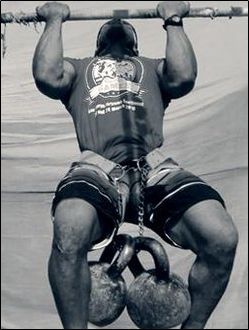
This particular segment can get very interesting: there is not a right or wrong exercise! Well let me rephrase that, there is no 100% right or wrong exercise, just exercises that would seem to be a better fit based on sport. For me as a coach, the indicator exercise will vary mostly from sport to sport. A baseball player and football player do not play similar sports, so we can denote that their training programs would be different, so one would assume their indicator exercises are different as well, correct? This is all up to the discretion of the coach or personal trainer. A football player may need to bench 300 lbs. to be successful at his sport/position; at the same time there are baseball players who may not need that type of strength but rather the strength needed for a weighted chin-up.
For instance, Joe DeFranco, a world famous trainer who has coached numerous professional athletes, has mentioned how his program contains  4 indicator exercises: box squat, box jump, bench press, and chin-ups. A different coach may use different exercises with different sports, SO WHAT! If it works for you and your program, it works for you and your program. The important thing is to identify WHICH exercises best help you as a coach determines the effect of your training program.
When to test/measure them:
There is no specific time frame in which you absolutely should test indicator exercises, yet there are common times among many strength coaches or personal trainers. For myself as a S&C coach, I would commonly test indicator exercises at both the beginning and the end of a training cycle, however long that cycle may be. At the same time, I could choose a day and tell my athletes to go for a heavy 1 rep max today; all in the mindset of using a system of measurement to see exactly where athletes stand in their development.
Wrap-Up:
As stated earlier, there is no real wrong exercise to use as an indicator exercise, there are just better fits. Regardless of your sport, age, training experience, come to a rationale of indicator exercises that work best for YOU and YOUR program; from there utilize them to monitor progress. In the end, it is vital as strength and conditioning coach or personal trainer to know what indicator exercises are, which/when to use them, and how to measure them in a way that benefits the development of your athletes or clients. Rhetorical question: how can you know if you’re progressing or not in your athletic development if there is no way to measure or quantify it? Simple answer: you can through indicator exercises. Know what exercises best correlate to an athlete's given sport, which give the best representation to your athletes development, measure it, and then aim to enhance it through programming. Happy Lifting Everyone.
References

  1. DeFranco, J. (2008, September 29). Westside for Skinny Bastards, Part III: The Final Chapter. Retrieved January 31, 2016, from https://www.defrancostraining.com website: https://www.defrancostraining.com/westside-for-skinny-bastards-part3/
  2. Indicator. (2015). Retrieved January 31, 2016, from http://www.merriam-webster.com website: http://www.merriam-webster.com/dictionary/indicator
  3. Indicator Exercises – The Simple Key of a Good Program. (2015, May 20). Retrieved January 31, 2016,from http://jacktylerperformance.com/ website: http://jacktylerperformance.com/indicator-exercises-how-do-you-know-if-youre-getting-better/
The Plays behind the Game
Well, game 1 has been decided on this Conference Championship day weekend; and to claim that any singular play, call, or circumstance would be the deciding factor would do the game injustice. Sunday’s AFC Championship match up between the New England Patriots and the Denver Broncos was everything a football fan could ask for.
A game covering two dynamic teams and characters held up to the hype. The New England Patriots, defending Super Bowl champions, came into the game considered the favorite. The Denver Broncos, after their humiliating loss in their last Super Bowl appearance were the underdog. Yet, what we witnessed Sunday afternoon were two gladiators competing at the greatest level. The games character’s displayed two future Hall of Fame Quarterbacks, and they proved why; not so much statistically but in the way the two competed for four quarters of football.
Yet, with a missed extra point on the Patriots first scoring possession by Stephen Gostkowski, the game’s fate would already be nearly decided. In a 20-18 loss and a failed 2pt. conversion late in the 4th quarter Gostkowski later stated he “felt as though he lost the game for the team”.1
Yet, I say, let’s not be so fast to jump on the kicker in this one. A pass to Danny Amendola late in the 4th quarter on a crucial portion of the game could also pay tribute to the big loss. The play was ruled incomplete after Amendola appeared to catch or “not catch” the football. Honestly, I don’t know anymore. [The season may need to hurry and end so we can figure this whole completion of a catch thing out] Yet, the Broncos decide to challenge the play. Why? The Broncos wanted a catch and fumble. Yet at the end of the day, an overturned ruling would have gone against the team. That particular conclusion would have ended in a catch, fumble, yet down by contact and resulted in a 1st down for the Patriots.
This is just another circumstance within a game where game management falls into question. Yet, two turnovers on downs later, a final redzone score late, and a failed 2pt. conversion complete the game 20-18 with the looks of it on the shoulders of Stephen Gostkowski.
1(2016, January 24). Retrieved January 24, 2016, from http://espn.go.com/
2Miller, S. T. (n.d.). How Peyton Manning and the Broncos upset the Patriots. Retrieved January 24, 2016, from http://espn.go.com/nfl/story/_/id/14638806/how-peyton-manning-denver-broncos-upset-new-england-patriots-nfl


5.jpgBenefit of Intramural Sport

     “In today’s America, obesity is the largest concern to our overall health that our nation faces.”2 Intramural sport gives college students a viable source of exercise to improve their physical and mental health.
        Students are not forced to simply go to the gym, lift weights or run in a confined space indoors. Sport allows the student to exercise in an open setting, surrounded by other students, while competing for a common goal. The institution of competition encourages the students to push themselves beyond a comfortable threshold to achieve the goal of victory. A great example would be  competitive weightlifters pushing themselves to achieve a new personal best.
        Mentally, intramural sport gives the student a means to further their social relationships with their peers, as well as making new relationships through friendly competition. Whether you’re a freshman looking to meet people and establish new friendships, or a junior/senior looking to branch out from your group of friends, intramural sports forces you to meet new people. Whether they’re on your team or not, you’re forced to have some sort of interaction with a new group of people at each event.
        Another health benefit of intramural sport is that of reducing stress and giving the student a sense of belonging. Sport allows the competitor to escape from the stress of being a student temporarily, while either practice or a game is being played. College students are still building their identities, which is why the benefit of sport can go beyond general health and physical fitness. Sport can give the student a sense of belonging due to the fact that when on a team, the student is a part of something. Drabkin points out, “the release of the hormone oxytocin during team sport, proves that bonding through sport is beneficial to the competitor.”1
0.jpg
        Not all students are going to be collegiate athletes, but intramural sport is an available venue for all students to compete. I encourage all students, athletic or not, to give intramurals a try. At the very least, you will have one night of fun competing against your fellow collegians.
References:
1. HowStuffWorks,. (2011). What are the pros of playing intramural sports?. Retrieved 1 February 2016, from http://entertainment.howstuffworks.com/what-are-the-pros-of-playing-intramural-sports1.htm

2. Obesitycampaign.org,. (2016). The Campaign to End Obesity. Retrieved 1 February 2016, from http://www.obesitycampaign.org/obesity_facts.asp

Preventing Concussions in Football

Marc Martinez
Concussions in Football
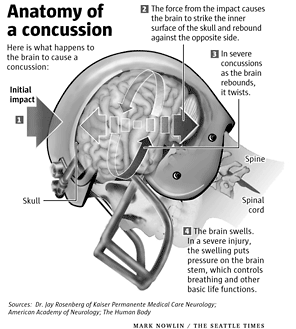
Throughout the past decade, the spotlight has really focused on concussions in the game of football. This is due to the increasing amount of short and long term health complications athletes at all levels are continuously facing. Today’s athletes are constantly being pushed to hit harder, run faster, and lift heavier; however, the pressure put on these athletes to perform day in and day out can often take its toll when you add up the number of hits these players are taking each week.
“No guts, no glory” is a saying displayed throughout locker rooms across the nation, but are the long-term health effects really worth all the glory in the end? While many outside critics see this as a risk, these players are being paid to take the NFL and those in the medical field believe that changes and precautions should be made to help better protect these athletes, their careers, health, and their future. “The National Football League, facing a class-action lawsuit from hundreds of former players regarding head trauma, is dedicating large amounts of funding to research the problem, and helmet manufacturers are frantically searching for the innovation that will best protect players from the dreaded concussion”.1 Concussions need to be brought to the attention to all of those involved in sports medicine; this includes informing athletes of these risks and signs to look for after sustaining the injury. With this being said, many changes have been and are being made in the game of football.  
Some improvements may be:
  • pre-health examinations
  • innovative helmets
  • implementing new rules and guidelines

“Ensure that the helmet is fit in accordance to the requirements for that particular sport. Reports show that only 15-20% of all helmets are fit correctly each and every time”.2 These can all help and solve many of the concussion issues in today’s game.


References:
  1. Polnerow, D. (n.d.). NU Writing. Retrieved February 03, 2016, from http://www.northeastern.edu/nuwriting/solving-footballs-concussion-problem
  2. Tips on Concussion Prevention. (n.d.). Retrieved February 03, 2016, from http://www.orthonc.com/concussion-clinic/tips-concussion-prevention
Orthopaedic Specialist of North Carolina


The Point is to Score Points!

Football can seem like a complicated game at first glance.  All the different positions, formations, and rules can confuse a person quickly.   However, the point of the game is actually very simple:  Score more points than your opponent.  While everyone involved will agree to this point,  opinions differ on how to achieve the goal of winning.  In the beginning, football was a game of low scores and run-heavy offenses, but all this would change in 1966.1  At this time, modern football was born with the implementation of new defenses and offenses.  Today, we have Tom Landry, Weeb Ewbank, Sid Gillman, Vince Lombardi, and Don Shula to thank for many of the base formations and strategies that are employed on a weekly basis.

Offensive football saw the biggest paradigm shift in philosophy.  Prior to the 1960’s, offenses were run first and pass second. Woody Hayes sums up the philosophy of early football  best, There are only three things that can happen on a pass, and two of them are bad.”2 But once the 60’s hit in professional football, coaches began to see the benefit of the pass and sought to create offenses that took advantage of this weapon.  Sid Gillman, Hall of Fame coach, is credited with being the father of the modern “pro-style”  offense.  His offense had three basic tenets:
  1. Spread the field horizontally as well as vertically
  2. Pass to set up the run (not the other way around)
  3. Feature one-back formations3
Today the majority of offenses in football follow these guidelines.  There are still some coaches who cling to a run-first philosophy.  Paul Johnson, head coach at Georgia Tech, and Ken Niumatalolo, head coach at the Naval Academy, use a triple option offense.  Both coaches have been very successful.

Defenses have also changed over the past forty years.  Examples of defensive innovations include:

  1. Hall of Fame coach Tom Landry’s 4-3 Flex defense  
  2. The 3-4 defense that was created at OU in the 1940’s, and first used by the Dolphins to win a Super Bowl in the 1970’s4  
  3. Buddy Ryan’s creation of the 46 defense that the Chicago Bears used to win the Super Bowl.
  4. “Tampa 2” defense created by Monte Kiffin and Tony Dungy to stop the quick pass offenses of the late 80’s and 90’s.
All of these defensive strategies are still in use today and are just as successful now as they were then.
Football has changed over time, but the goal remains the same:  Score more points than your opponent.  Coaches differ on how this should be done.  Many are termed “offensive minded” because they want to score, score, score and aren’t as concerned with stopping the other team.  Other coaches have picked up the label “defensive minded” because they focus on developing a strong defensive scheme and strategy, and ask very little of their offense.  One thing that both sides agree on though is that they are trying to score more points than their opponent, and the differences in how a team does this is what makes football so intriguing.

References:
1The coming revolution in football strategy. (n.d.). Retrieved January 28, 2016, from http://www.si.com/nfl/2016/01/20/super-bowl-100-football-strategy

2Quote Investigator. (n.d.). Retrieved January 28, 2016, from http://quoteinvestigator.com/2011/10/04/pass-3-things/

3Smart Football. (n.d.). Retrieved January 28, 2016, from http://smartfootball.blogspot.com/2009/04/sid-gillman-father-of-modern-passing.html

4(n.d.). Retrieved January 28, 2016, from https://en.wikipedia.org/wiki/3–4_defense

Friday, February 5, 2016

Food labels and what they mean


Once you are inside the store, walking through the aisles, and deciding what items to purchase, it is critical to read the food labels to make wise purchase decisions. Below are some things to look for when reading food labels.
  • Sugar - Many  times, manufacturers trick the customer by claiming a product is fat free. However, in  reality it is also very high in sugar. You are definitely getting low fat, but all the extra sugar will result in an excess of stored fat. Pretty good trick, isn't it?
portion-300x190.jpg
   

  • Portion Size - People also are misled when they trust that the company has their best interest at heart and, as a result, neglect to read the labeled serving size of a product. Products usually have calories listed for one serving and they highlight the number of servings per package. The customer might buy it thinking that it contains fewer calories but in reality if a package contains four servings, calories might be multiplied by the number stated on the cover which is  another important reason to start reading labels.
  • Fat - Avoid food which is very high in fat. Check labels for saturated and unsaturated fats. Saturated fats have shown to raise blood cholesterol levels, causing  ill effects on the heart. These fats are found in meats, whole-fat dairy products, baked and processed goods, butter, and margarine.

  • Sodium - According to The American Heart Association, nine out of 10 Americans consume too much sodium. The recommended daily allowance is 1500 milligrams or less, but an average American consumes about 3400 milligrams in a day.  Too much sodium can put you at risk for heart failure, stroke, kidney failure, osteoporosis, headache, and water retention which  could further develop into  bloating, puffiness and weight gain1. Also, sodium is usually high in canned goods  because salt is used for preservation and fast food is high in sodium as well.   
  • Our bodies make cholesterol in addition to the consumption we receive  from food sources like eggs, meat, and full fat dairy products. In adequate quantities, cholesterol plays a significant role in maintaining hormonal balances, synthesis of hormones, utilisation of vitamin D, production of bile, proper functioning of brain and many more benefits to the human body. A major problem arises when cholesterol levels are higher than the body needs. Excess of this cholesterol clogs the arteries, reducing the blood flow which can lead  to stroke and heart attack, and keeping the brain from getting enough oxygen. Checking cholesterol levels on the product labels could significantly lower cholesterol levels and improve health.

1 “The effects of excessive sodium on your health & appearance”.(2014). The American Heart Association. Retrieved from
2 How to understand and use the nutritional facts labels. (2015). U.S Food and Drug Administration. Retrieved from

Wednesday, February 3, 2016

A small overview of The Laboratory for Wellness and Motor Behavior at Tarleton State University


I have been a Trainer/Grad. Assistance  in the Laboratory for wellness and Motor Behavior lab for two years now here at Tarleton State University. It’s a lab where we exercise stroke survivors, diabetics, hemiplegics, cerebral palsy, and people with multiple sclerosis. Majority of our patients run out of insurance to pay for Physical Therapy, so they come to use for free. Overtime with working these extraordinary people, I began to notice a trend. On their first workout session, they’ll be on at least 10 different medications, but a couple months later there dosage goes down; ultimately to the point of no use of that synthetic drug. Which raises the question, How can someone who is so dependent on pharmaceutical drugs, end up with no need for them after a training program? If this is true, let's increase the physical activity so we can see a decline in prescription drug.  00130001.JPG

After physical therapy most patients never tend to work out after they leave rehab. They sit at home and never move, allowing their muscles to stiffen up.  How do we unstiffen our muscle? The answer is simple, stretch, exercise in all range of motion, repeat.  Most people know that stretching increases blood supply. Because stretching allows blood to flow through your body, the nutrients in the blood are being carried and spread out all throughout your body as well. An increased blood and nutrient supply also helps reduce soreness.(1)In regards to increase blood supply and nutrients, exercising has the same benefits.

In the lab we go beyond the three sets of ten that the physical therapist administers. For example, we will put a client on a flywheel powered cycle and as the patient pedals, the flywheel has momentum in the direction whether is forward or backwards. We can crank up the resist in which they pedal against.  For instance, the first workout session for a client they will pedal for five hundred revolutions. A revolution on our cycles is a complete trip for the pedal; you end where you started. A couple months later in their training program they are up to four thousand revolutions.  “Four thousand revolutions?!” you say. A lot blood is being pumped through the body.32790.jpg
This is just a miniscule of what we do here in the lab. At anytime, the Wellness lab can consist of massage therapy, corrective exercise training, physical therapy, speech therapy, nutrition, and even psychotherapy. As kinesiologists, our view is holistic , and make sure our clients are in balance to be functional fit.


References