Sunday, September 13, 2015

Transition of International Student-Athletes


grad hat with world flags.jpg
http://tinyurl.com/q2zy5q3
Transitioning can be a tough process in life. It can be a positive or negative experience depending on the individual and the environment in which they find themselves. As a student, transitioning from stage to stage could be a long process but fortunately there are professors and counselors to help. Adding athletics to a student schedule is really tough, especially trying to balance both roles, each having its own impact on the student. Foreign student-athletes pass through a lot while transitioning; they have to deal with trust issues, depression, diet fluctuation, insomnia, as well as different coaches, cultures, beliefs, customs, norms, attitudes, behaviors and sometime language.
This transition phase can be tough, as nearly all students can attest.  For international students coming from overseas, the adjustment to life as a college student –and student athlete- in the United States can be a daunting one. Many arrive on campus under similar circumstances; with excitement for a new challenge but unsure of how to adapt.1 This process is known as Acculturation. The acculturation process uniquely affects international student-athletes as they are challenged by the demands of academic excellence, athletic performance, and social acceptance. As they navigate through the individual and cultural differences, international student-athletes are psychologically and psychosocially affected by acculturative stress. Acculturative stress is the response to stressors that occur as a result of movement from one country to another.2   
Acculturation processes are experienced Differently depending on the acculturating group and individual.


1SELBE, N. (2013, November 5). Foreign athletes face unique challenges | Daily Trojan. Retrieved September 10, 2015, from http://tiny.cc/rn822x
2Richards, V. (2014, April 1). International Student Athlete: An Acculturation. Retrieved September 10, 2015, from http://tiny.cc/9ba32x

Friday, September 11, 2015

What is Cardiopulmonary Rehabilitation?

 Ahmed, N. (2013, March 25). Cardiac rehabilitation therapy: 
A few minutes on the treadmill can do wonders - 
The Express Tribune. Retrieved September 11, 2015. 
It is a well-known fact that heart disease is the number one killer in the US and the epidemic is only continuing to grow. Along with the increase of congestive heart failure (CHF), chronic obstructive pulmonary disease (COPD) and other lung diseases are becoming more apparent including chronic bronchitis, pneumonia, and coronary artery disease. Although COPD and CHF are clearly different, “there is considerable resemblance in the systemic consequences of these disease entities and their effects on exercise capacity and health-related quality of life”.1  Cardiac rehabilitation (or cardiac rehab) facilities have been opened across the country to increase functional capacity and quality of life in patients with COPD or CHF. The goal in cardiac rehab is to improve muscular strength and endurance in the patient’s heart, lungs and peripheral muscles through aerobic and anaerobic training. Older populations often don’t go to the gym or fitness centers due to fear of hurting themselves, in cardiac rehab all patients are monitored closely.
Typically, exercise is reduced significantly in a patient diagnosed with either COPD or heart disease due to symptom limitations.2 It has been documented that when exercising loads are applied intermittently (alternating periods of high intensity exercise with periods of low intensity exercise or rest, COPD and CHF patients can tolerate high work rates (100% of peak work rate) with lower metabolic and cardiorespiratory demands.2 Cardiac rehabilitation programs have been proven to help patients with COPD and CHF but, once the program is over, the benefits are quickly reversed after a few weeks.2
Having spent much time working in a cardiopulmonary rehab facility, I can attest to the physical and mental improvements of these patients. The Better Breathers Club in Stephenville, Texas is a rehab facility where patients pay a small monthly fee and receive monitored exercise training three days a week. I have observed and assisted with some tremendous improvements with many of the clients. It is important for patients to maintain the activity level even after leaving cardiac rehab. Many hospitals offer a maintenance program for patients who have graduated from cardiac rehab so they can maintain their new lifestyle.
References:
1Journal of Applied Physiology Jul 2013, 115 (1) 16-21; DOI:
10.1152/japplphysiol.00195.2013


2Louvaris, Z., & Vogiatzis, I. (2015). Physiological basis of cardiopulmonary
rehabilitation in patients with lung or heart disease. Breathe, 11(2), 120–127. http://doi.org/10.1183/20734735.021114

Physical Therapy The Love Affair

Physical therapy is a head-over-heels, puppy-love kind of feeling for me.  I literally love going to work everyday in a physical therapy clinic. This blog will express the highs and lows of being a future physical therapist. Today I’ll start by describing the early days.

I first began thinking about physical therapy as a career in high school; this was my first “career crush”, if you will.  I had a few knee and ankle injuries during that time and had to get treated by orthopedic surgeons and physical therapists.  I loved the atmosphere at the physical therapy clinic, it was more grownup than the high school gym but still everyone was working hard to achieve his or her physical goals. The therapist had excellent bedside manner and the other patients were always friendly despite the uncomfortable feeling of stretching and exercising.

Image from Google
I will be a lucky person to be able to do something I love everyday for the rest of my life. Physical therapy and I are such a perfect match because, I’ve been a natural caregiver my whole life, I love taking care of others and making them feel good.


I’m completely engaged and committed to my future in physical therapy, I decided the day it was time to pick a major that I was going to give it 110%.  From prerequisites, to observation hours, to applications; this process extended from August 2007 to August 2015.  This eight-year engagement will hopefully turn into a full blow marriage in the next three years.


National Falls Prevention Awareness Day is September 23; this year there are 5 great resources available on our APTA webpage. Click here for more info! http://www.apta.org/PTinMotion/News/2015/9/9/FallsResources/

World Physical Therapy Day a Time to Strengthen Connections, Says WCPT President; details are available on our APTA webpage. Click here for more info! http://www.apta.org/PTinMotion/News/2015/9/8/WorldPTDay/

REFRENCES:
National Council on Aging, (NCOA). (2015, September 9). Get Ready for Falls Prevention Awareness Day With These 5 Great Resources. Retrieved September 10, 2015, from http://www.apta.org/PTinMotion/News/2015/9/8/WorldPTDay/

World Confederation for Physical Therapy, (WCPT). (2015, September 9). World Physical Therapy Day a Time to Strengthen Connections, Says WCPT President. Retrieved September 10, 2015, from http://www.apta.org/PTinMotion/News/2015/9/8/WorldPTDay/

Campus Recreation and Academic Success

http://tinyurl.com/pvucupo
Campus Recreation is a vital part of the lives of many students, faculty, staff, and alumni who use the facility and services. Recreational facilities are attended by members every day for activities such as leisure, class, intramurals, or work. Most facilities’ goal is to provide an environment that promotes a healthy lifestyle and encourages commitment to lifelong fitness. Likewise, Tarleton State University’s Recreational Sports Facility’s mission is: “To provide opportunities to engage in activities, programs and special events that promote healthy active lifestyles, leadership development, social interaction and educational opportunities…”1 However, often overlooked, is the underlying effect of academic success that comes from facility use.

The most basic tool to calculate academic success, the grade point average, is a simple yet effective instrument to use to determine if there is a relation between recreational center attendance and students grades. A study conducted in 2009 compared academic and health levels of users versus nonusers determined that frequent users of the facility retained a higher grade point average (.2 higher) than nonusers2 This study suggests that students who stay active by using a recreation facility will have better grade point averages than the students that do not use a recreation facility.


When it comes to maximizing your grade point average, using the campus recreational facility on a frequent basis could be very beneficial to oneself. Although working out or participating in intramural sports is not for everyone, it should be considered due to the increase in sedentary lifestyles amongst 21st century United States citizens. If the gym is not an ideal setting, incorporate a minimum of 60 minutes of physical fitness or activity each day to reap the countless benefits of staying active, such as better health levels and increased grade point averages.

1Rec Sports. (n.d.). Retrieved September 3, 2015, from

2Todd, M. K., Czyszczon, G., Carr, J. W., & Pratt, C. (2009). Comparison of health and   academic indices between campus recreation facility users and nonusers. Recreational Sports Journal, 33(1)

Staying Healthy on the Go : Healthy Snacks to Keep in the Car.

Image result for healthy snacks for on the go


There are numerous excuses people use to not live a healthy lifestyle. Some of the main reasons you hear are: I’m too busy,eating out is easier/faster, eating healthy is too expensive, or my kids don't like healthy foods. This is why we live in a society where people walk around overfed and undernourished. I know people are busy between work, kids, and school, but that is no excuse to not live a healthy lifestyle. I will discuss some ideas to help you stay healthy on the go. 

Keeping healthy snacks in your car is one way to keep you out of the drive through.  Some snacks that will stay good for a while and that are full of nutrients include; trail mix, any type of nut, yogurt covered raisins, dried fruits, pre popped popcorn  and snack bars. Nuts contain unsaturated fatty acids and other nutrients that are beneficial to your heart.1 There are some that are packed with nutrients and others that are full of sugar. Yogurt covered raisins and dried fruit are something that will satisfy a sweet craving, and kids love them. You have to be careful as to which pre popped popcorn you purchase some are high in sodium, some brands that would be good if the Skinny Girl popcorn, or Smart Food popcorn. Snack bars are a great option also, but you need to be cautious of which snack bars you are putting in your body. There are some that are packed with nutrients and others that are full of sugar. A good option would be Lara bars, Quest bars, or Chia bars. All of these are tasty and great for you! 

These are just two simple changes you can make in your daily life, that can be beneficial to your health. By having healthy snacks on hand when hunger sets in you will stay out of the drive though and on the right track for a healthy life!

References
1"Nuts and Your Heart: Eating Nuts for Heart Health." Mayo Clinic. 2015. 

27 Healthy Grab and Go Snacks. (2015). Retrieved from http://www.parenting.com/gallery/7­healthy­grab­and­go­snacks 


Thursday, September 10, 2015

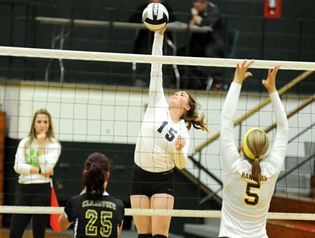
Shoulder Impingement in Volleyball Players

Volleyball is a sport of repetitive motions; therefore, it puts certain muscle groups at risk for overuse and/or injury. For example, a volley serve puts the external rotator muscles in the shoulder on a full stretch repeatedly; those specific motions can put a shoulder at risk for injury.1 The shoulder houses various muscles and tendons that all work together to allow lots of movement in every direction including flexion, extension, abduction, external rotation, etc.2 The most common shoulder injury in volleyball is impingement of the shoulder.2 This happens when the upper arm is routinely lifted above the shoulder and pulls the shoulder through a full range of motion excessively.2 The word “impingement” means the entrapping or pinching of a muscle or nerve which leads to symptoms of either numbness/tingling, pain, or lack of range of motion.2 Attackers in volleyball are the ones most likely to suffer from this injury due to constant “abduction and the over-stretching of their glenohumeral joint.”2
 
Preventative maintenance care is the first and foremost way of handling any injury. Warming up the muscle as well as good stretching techniques are good injury prevention methods to make sure impingement does not flare up. In the case that it does, focusing on the tendons within the capsule to loosen up the tension is important.2 It is common in volleyball players to have an imbalance between the internal and external rotator muscles such as your infraspinatus, supraspinatus, teres minor and subscapularis muscles; therefore these specific muscles are more vulnerable to impingements.2 Due to the imbalance, it is crucial to provide a stretching and strengthening program to balance out that difference as much as possible.2 Maintaining a consistent stretching and strengthening program by working on all the muscles affected by this injury will ultimately lead to a less chronic situation and will put your patient’s shoulder and mind at ease.
References:
1Briner, W., & Kacmar, L. (1997). Common injuries in volleyball: mechanisms of injury, prevention and rehabilitation. Sports Medicine, 24(1), 65-71.
2Seminati, E., & Minetti, A. E. (2013). Overuse in volleyball training/practice: A review on shoulder and spine-related injuries. European Journal Of Sport Science, 13(6), 732-743.


The Need to have Adaptive Physical Education in the School Systems


images.jpg


Adapted Physical Education (APE) is a specially designed physical education program which uses accommodations and modifications to meet the needs of students who require developmental or corrective instruction in PE. For example, a game of catch can be adapted in multiple ways based on the needs of a student. A ball with a bumpy texture or with a bell inside can be used for students with tactile or auditory needs, the distance the ball is thrown or bounced can be decreased for students , or a scarf could be used for students who

In the school systems that I have been in there has seemed to be a shortage in APE teachers and programs. For example in the Stephenville schools I have noticed that students with special needs or disabilities are basically getting pushed to the back of the line. This is by no means right in any way at all. Congress enacted a law in 1975 that gave all children with disabilities the opportunity to receive a free public education just like normal children. This was to be called IDEA, “Individuals with Disabilities Act”.(1)  Over the last year and half while substituting for schools in Erath County,it seemed  that the APE program did not exist at all. I did notice that from the 6th grade and below there was a small amount of PE or recess time for these students. Then once the students were between 7-12th grade there was no PE or recess for them. The students in the high school only go outside for 30 minutes a day, otherwise they stay inside the school the entire day. During PE class they attend normal PE however the students who are confined to wheelchairs just sit off to the side with the teachers. The students who are able to walk/run on their own are basically just told to walk around the outside of the basketball court. None of the students with disabilities get any sort of physical activity that.

The national standards for APE are set by the Adaptive Physical Education National Standards APENS.(2) Federal law mandates free and appropriate public education services for all children with disabilities. Subsequently, the law mandated that these services be provided by qualified professionals. The definition of special education within this law included the discipline of physical education.


References

Cerebral Palsy is Not an Exception to Exercise

http://tinyurl.com/oj3u2x3
If you are an individual diagnosed with Cerebral Palsy (CP), you are no different than any other human on this planet. So why are you being treated as such? Throughout the years, people have been scared of the liability of exercising anyone who is different. To obtain physical activity you have go to a physical therapy office and struggle with insurance simply to obtain a greater quality of life. A little known fact is that all people need exercise throughout their lifespan for optimal health benefits. What if you could go into a gym and exercise like everyone else?
When individuals think of Cerebral Palsy, they generally assume the worst. CP is defined as “a group of permanent disorders of movement and posture causing activity limitation that are attributed to non-progressive disturbances that occurred in the developing fetal or infant brain.”1 The definition of CP in itself is negative and discouraging. Physical fitness is an essential part of life enhancing cardiovascular endurance, muscle strength, and flexibility.  People with CP must maintain higher levels of physical activity to help offset changes from their condition including spasticity, contractures, pain, and reduced mobility. With increased amounts of exercise, those conditions will lesson and almost disappear. With time, you will reduce your intake of medications, and depression may no longer become an issue.
In an interview with Jerry Thornton, a 52 year old with CP who has been exercising for the last twenty years at the Lab for Wellness and Motor Behavior, he says, “I only pay about 8 dollars a year in health care. I never catch the common cold during flu season and my heart is healthier than most athletes.”  Thornton leads by example, and people need to follow his direction. Three benefits of exercise for people with CP are: “preventing secondary musculoskeletal impairments and maximizing physical functioning; fostering the cognitive, social, and emotional development of (individuals); and developing maintaining and…restoring neural structures and pathways.”2
Living a sedentary lifestyle leads to devastating outcomes such as muscle atrophy, depression, fatigue, cardiovascular disease. There are few programs that foster the idea that exercise should be created equally for all people. If you are an individual with CP, find a gym that is right for you and consult with a professional for the best way to adapt your workout to meet your needs. Follow Thornton’s example and add strength training, muscle endurance, stretching, and stabilization to your everyday routine.

References

1Damiano, D. (2006). Activity, Activity, Activity: Rethinking Our Physical Therapy Approach to Cerebral Palsy. Physical Therapy, 86(11), 1534-1540. doi:10.25/22/ptj.20050397
2Hombergen, S., Huisstede, B., Streur, M., Stam, H., Slaman, J., Bussmann, J., & Berg-Emons, R. (2012). Impact of Cerebral Palsy on Health-Related Physical Fitness in Adults: Systematic Review. Archives of Physical Medicine and Rehabilitation, 93(5), 871-881. doi:10.1016/j.apmr.2011.11.032