Friday, September 20, 2013

Strength Training 201

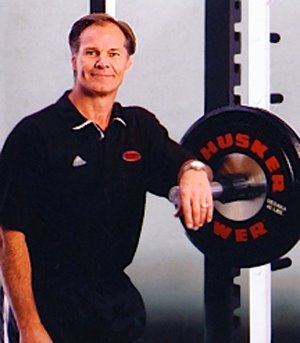
Boyd Epley grew up in Phoenix, Arizona where he attended school all the way through Phoenix Junior College, in which he earned his Associates of Arts degree. From Pheonix JC, Epley attended the University of Nebraska where he became the school record holder for pole vault in his junior year. Early in his senior year, the sport in which he loved so much caused him to suffer a serious back injury which ended his career (NSCA Journal 2009). 
In order to rehab his back, Epley spent a significant amount of time in the university’s weight room. He soon had a group of injured football players join him during his workouts and the football coaches noticed that these injured players were returning to the field much faster than ever before.
The coaches soon approached Epley about working with the entire football team. On September 15, 1969 Epley began his new career as a strength coach when head coach Bob Devaney agreed to give him a one semester trial period(www.cornnation.com/2009). This made Nebraska the first university with a paid strength and conditioning coach and changed college athletics as a whole forever. His ideas were revolutionary, and through his vision of creating stronger athletes Nebraska went on to win back to back national football titles in 1970-71.
 
Boyd Epley opened the door for others aspiring to be a strength and conditioning coach. He was the first to prove the importance of physical preparation. His value of the importance of a well-educated strength staff lead him to start the National Strength and Conditioning Association, which was the first professional organization for anyone pursuing a career in strength and conditioning and is still a leading organization in the field today.

A College Degree in Athletic Training: Determining the Best Route

According to the National Athletic Trainers’ Association, nearly 70% of athletic trainers hold a master’s degree. Candidates can earn their Board of Certification for the Athletic Trainers, nationally recognized credentials, either through a bachelor’s of science undergraduate program or an entry-level master’s of science program. The Commission on Accreditation of Athletic Training Education (CAATE) accredits both of these routes of Athletic Training Education Programs (ATEPs). So the question remains, should undergraduate CAATE accredited programs remain, or should all ATEPs start making the transition towards an entry-level graduate program.  

Keep the Undergraduate Option:
  • According to CAATE, there are currently 350 accredited Undergraduate athletic training programs in the United States. 
  • This option allows students who know they want to pursue a career in athletic training to obtain their credentials after four years of schooling.
  • Classes and rotations are spread out among five to six semesters, allowing students plenty of time to grasp the concepts and materials. It also allows students to have longer clinical rotations
  • Allows students to pursue a master’s degree in a field other than Athletic Training.
  • Allows students to obtain a graduate assistant position after undergrad where he or she can work independently but still be mentored by a head athletic trainer.
Shift towards the Master’s Route
  • According to CAATE, there are currently 26 accredited entry-level master’s athletic training programs – typically a 2-year program.
  • Students are more mature and better able to analyze and interpret the information provided in the courses.
  • Promotes professional credibility as athletic trainers obtain master’s degrees comparable to other medical professions.
  • Allows a student to have a more typical “undergraduate experience.” During undergrad, students can still be involved in athletics, Greek life, or other campus activities without having to schedule around athletic training responsibilities. Also allows a student to obtain a more general undergraduate degree.    
The jury is still out on the best option. But based on my experience, I foresee a shift towards the entry-level master’s degree route.

Strength and Conditioning the Conjugate System – Part 2: Max Effort Method


The Max Effort Method originated as a combination of the Bulgarian System, the former Soviet Union System, and Louis Simmons’ 43 years of power-lifting experience. Simmons defines the Max Effort Method (MEM) as “lifting maximal loads against a maximal resistance”1 which basically means lift very heavy weight as hard as you can. The MEM improves intermuscular and intramuscular coordination by forcing muscle groups to work together due to the large amount of resistance placed on them.2 That is to say, the MEM can fix such problems as poor glute activation with lifts like heavy squats, because the heavy resistance placed on the muscle group requires the use of all the included muscles in order to properly perform the lift.
The MEM is achieved by lifting loads at 85-97% of an individual’s max for reps of 1-5. In the conjugate system there are two Max Effort lifts per week, one squat or dead lift variation and one with a bench or military variation. Two examples of this are building up to 3 heavy back squat sets of 3 reps at 90-92% of your max, or 5 sets of 5 reps at 85-87% of your max. Finding your one rep max is a Max Effort lift as well.
Now I know what you are thinking, training at near maximal loads twice a week every week? You are crazy!! However, the conjugate system has a trick for preventing overtraining by using variations of the four main lifts mentioned before, such as safety bar squatting or rack benching. These variations slightly change the way each muscle group is stressed, which in turn prevents over stressing of any one area.
You must remember the muscles and central nervous system adapt only to the load placed on them.3 In other words, if you want to get stronger you must lift heavy weights. The max effort method is one of the most effect ways to do so.
Check back in next week for part 3 of this series the Dynamic Effort Method.
1.        Louis Simmons, Westside-Barbell
2.        Thomas Hill, Conjugate System Applied to Sport
3.        Joe DeFranco, Westside for Skinny Bastards

Thursday, September 12, 2013

History of Strength Training 101 – Part 1

Strength training is a practice that has been around for centuries and can be dated to times as far back as the Chou Dynasty (3600 B.C.) when subjects would have to pass weight lifting tests before entering the military (www.cscca.org/news/legendsaward/2007/epley). It was used as military training throughout time until the 19th century. Circus performers would use strongman feats as an act in their shows to draw in large crowds of people (strongmanvsbodybuilder.wordpress.com/.../the-circus-the-strong-man). Although strength and conditioning is an ancient practice, until recent years these practices were very primitive; guys tossing weights around to be strong but with no real structure to what they were doing. It was this lack of methodical approach to strength and conditioning that made it a taboo practice for traditional sports teams in America. Many coaches believed that lifting weights was detrimental to the performance of their athletes. These coaches thought that strength training made their players “muscle bound” and hindered their ability to move during play. It was not until 1969 when a University of Nebraska track athlete’s career was ended due to a back injury that the need for a profession in the strength and conditioning field was considered necessary (www.cscca.org/news/legendsaward/2007/epley).
Keep an eye out for the next installment of my blog.   We will be looking into who, what and where that unfortunately injured Nebraska athlete came from and what he did to revolutionize the world of college athletics with some heavy pieces of iron.


Life of a New Personal Trainer: Boot Camp Jitters


As personal trainers, working personally with one or two people comes easy; it is what we signed up for. We are able to use our 6-inch voices inside a weight room surrounded by dumbbells and machines – we feel in control of the situation. How do you step outside of your comfort zone in the personal training world? One way is to train 20-30 clients at once – Boot Camp style.

Looking back on my first week of instructing boot camps makes me laugh. I would spend one to two hours strategically planning what I was going to do with this huge group of people. I was constantly second guessing my plans. Whoa, is that too many burpees? What if it rains? Will this make an old lady pass out? Then, I would show up an hour early to browse the location and maybe test out which patch of grass would be best for lunging. I kept thinking, “These next four weeks are going to be exhausting!”

This reaction is NORMAL for the first week, and the good news is it does not take long to get into the swing of things. Soon enough, you will be throwing together workouts as you drive to the session and you’ll be showing up at the same time as everyone else.    
 

Why you need a Personal Trainer!


Most people, if they are honest with themselves, have felt unsatisfied with their physical and mental health. They know the cure is to get ‘in shape’ by exercising, but where should they start? The answer – a personal trainer.

 Regardless of person’s fitness background, a personal trainer can help someone reach goals they never imagined possible such as fat loss, muscle hypertrophy, stress reduction, reduce health risk factor, increase muscle strength, muscle endurance, flexibility, or cardiovascular endurance. No matter how superficial or legitimate a person’s goal, a trainer is the one that can help shape these goals and makes them obtainable and successful.
 A personal trainer not only shapes and improves a person’s physical body, but they also help strength their mind and spirit.  Our society is saturated with people that are stressed and depressed for various reasons – exercising can benefit them. According to a pharmaceutical drug study, Zoloft and Lexapro are the #1 anti-depressant drugs. These are also the easiest two anti-depressant drugs to stop using and the best way doctors recommend is through exercise. 

 No matter the person, a personal trainer can and should wear many hats to fulfill many roles. A knowledgeable personal trainer should get their client faster results and offer a wide variety of exercises at different intensities. A skilled personal trainer can train someone just about anywhere, so hire a personal trainer that you can connect with and take back your life.

Strength and Conditioning: The Conjugate System Part 1

The conjugate system is a Russian based-training system that has been popularized in America by the Westside Barbell Gym and its founder Louis Simmons. The conjugate system is based off of three major principles: maximal effort, dynamic effort, and repetition effort.

The maximal effort, or max effort, method builds speed and absolute strength and improves neuromuscular coordination by increasing motor unit synchronization. This method is achieved by using near maximal weight in an exercise.

The dynamic effort method builds explosiveness, rate of force development and speed strength and is achieved by lifting submaximal weights at highest possible speed.

The repetition method promotes strength endurance and hypertrophy, strengthens neuromuscular deficiencies, and increases work capacity. The repetition method is achieved by lifting non-maximal loads to failure or near-failure.1

In traditional block periodization training schemes, each of those three methods are used as a sole focus for different parts of the year. The drawback to this is that you lose part of what you gained when transitioning into the next phase. The conjugate system, however, trains each of these methods every week so there is no loss making the conjugate system a much more efficient training system.2

Check back next week when I cover the maximal effort method in depth including sets, reps, intensity and philosophy.

2 Source:  Joe Defranco, Westside for Skinny Bastards, Vol.3.

Burnout in the Athletic Training Profession

Working as a Graduate Assistant (GA) Athletic Trainer is a great stepping stone to becoming a professional in the sports medicine field. It allows young professionals to further develop his or her clinical skills, as well as gain experience and confidence as a newly certified athletic trainer. However, does the excessive workload and stress lead to burnout and work-family conflict?
GA Athletic Trainers are required to balance clinicals, school, family, and teaching undergraduate-level courses. A typical work day for a GA in charge of a sports team can consist of rehabilitation in the morning, administrative work, teaching classes, pre-practice treatments, practice, post-practice treatments, miscellaneous job duties, and taking graduate level classes.
 
According to the research conducted by the University of Connecticut (http://www.ncbi.nlm.nih.gov/pubmed/22892414), GA’s work an average of 40-hours per week, which is the same as a full-time employee. They found that if GA’s continue to work full-time work weeks plus maintain a rigorous academic load, it will eventually lead to burnout; especially for graduate assistants with multiple responsibilities.
 
For some, a graduate assistantship experience can be a very stressful time for a young athletic trainer, but the value of the experiences they receive in both the clinical setting and the academic classroom is priceless. When it comes time for graduation, graduates are more prepared for the real world and will also have received their Master’s degree.  According to a study done by the NATA, 70% of certified athletic trainers have their Master’s degree. As an allied healthcare profession, we pride ourselves on being highly educated and knowledgeable professionals. 

Obesity in America

Obesity in America has become a major problem and there are several factors as to why. According to the article “Obesity in America: What's Driving the Epidemic?” the obesity rate has increased 50 percent in the past 40 years, which means that two in every three American adults are now overweight or obese. As a health professional, I think this is something that should be taken seriously and we should take a stand. A major contribution to obesity is that more people are eating fast foods and not working out. Another factor affecting the rising rate of obesity is the school systems in America cutting out physical education, which I think is a problem because physical education is just as important as other subjects being taught to our youth. By cutting P.E. out of schools, children are starting to get taught that P.E. and working out is not important. These children then become grown-ups who have that mindset. Also, I think there should be more defined areas on what P.E. teachers should be teaching. School system need to weed out the old “roll out the ball” teachers, because this is not teaching our youth how to live a healthy life and to me this shows me that the teachers with the “roll out the ball” method really not taking their jobs serious.
Nightline did a background study to try to find out why obesity has risen even though the efforts to fix this growing problem have doubled. His video takes you into that study.


Summer Sports Camps Serve as Training Ground for Youth Coaches & Athletes

Summer sports camps for youth are often provided by the coaches of local high schools.  The high school coaches offer these camps to promote their programs and as a way to make money during the summer months.  However, most high school coaches also realize that these summer sports camps can also have a positive impact on the proper coaching techniques and player development of sport-specific fundamentals.  By implementing their coaching techniques and philosophies in the summer camps, high school coaches can ‘train’ the volunteer youth coaches in their specific schemes.  Youth coaches and players can benefit from the summer camps by getting a jump start on fundamental development. 
 
In a phone interview with Kris Duplissey, head varsity soccer coach for Forney High School, I asked about the benefits of providing coaching clinics for youth coaches in the area.  Duplissey stated, “If the players come into the high school program as freshman and understand the execution of our plays then it expedites the teaching process and allows more time for advanced coaching.” 
 
With the guidance that could be provided from coaching clinics and camps, players could receive a portion of the same professional coaching they get from summer camps, year round with their recreation league coaches.  This would help the players’ fundamental development that a lot of times for high school coaches have to be taught when the players are freshman in high school.
 
High school coaches can influence proper fundamental techniques and the future of players’ success on the field by providing coaching clinics for youth coaches in their local communities.


Are High School Assistant Coaches Paid Enough?

Being a coach is a hard job. Wining is what determines if coaches get to keep their job or not, but winning is not the easiest thing to do. Coaches in the high school level have it tough in Texas, especially football. The average head coach gets paid between $50,000 to $100,000.  On the other hand, the assistant coaches do not get paid enough for the amount of work they do. In the city of Austin, an assistant coach will be paid a stipend of $5,917 for the school year. This is on par with the average for what assistant coaches make in the rest of Texas. This is not enough pay for the work being done. These hard working assistant coaches should be given a pay increase for every hour they spend working after five o’clock, or when they are required to come up to the school for sport activities. These coaches are in the office breaking down film before and after practice, and have to go to all the game functions which include Saturday practice or games. They are in the locker room when the kids get back late from the games and can’t leave until all of the kids have left. The independent school districts should give equal and fair pay to the coaches for spending all of that time away from home. The coaches would feel refreshed knowing that when they come to the filed house that there work is being compensated, instead of just going through the motions.

The Kettlebell Craze: The Ultimate Fitness Tool

What is that oddly shaped fitness tool called a kettlebell?
 
 
A kettlebell is a cast iron, sphere-shaped weight that resembles a cannonball with a handle. This piece of equipment is used as a strength and conditioning instrument that fuses multi-joint full body movements.
Although this piece of equipment is somewhat new to the fitness world in America, the kettlebell has been around for many centuries. Research indicates that the Ancient Greeks were the first to use a kettlebell, however Russia is widely recognized for popularizing the use of kettlebells as a strength training staple as early as the 18th century. The Russian culture views a kettlebell as a symbol of strength and national pride; for centuries they have used this tool for athletic development and health.
American fitness professionals have embraced the use of kettlebells due to the undeniable research which supports the benefits of training with this type of equipment.  According to researchers (KettlebellScience.com), Western scientific studies have shown that Kettlebell Training:
 
  • Improves Explosive and Maximal Strength (Lake & Lauder, 2012)
  • Improves strength, power and endurance (Manocchia, 2010)
  • Taxes both aerobic and anaerobic systems (Fung & Shore, 2010)
  • Maintains health and improves overall fitness (Castellano, 2009)
  • Positively impacts cardiorespiratory endurance and promotes changes in body composition(Porcari, 2010)
  • Can burn up to 20.2 calories per minute (Porcari, 2010)
  • Increases musculoskeletal health by reducing neck, shoulder and low back pain, and increases trunk extensor strength (Jay et al, 2010)
  • Is transferable to traditional weight training and bodyweight exercises and is an excellent alternative to traditional weight lifting (Manocchia, 2010) 
Kettlebell workouts can be fun, but also a challenge. This piece of equipment should be utilized in more training environments due to the countless benefits, ease of use, and functionality. Kettlebells have a few basic and fundamentals moves that most of the workouts are based. These basic moves can be modified to advanced movement with time. In my next post, these exercises will be discussed into greater detail.

Intramural Sports: Is There Equality in Co-Rec?


Co-Rec sports are popular on college campuses because they allow men and women to compete on the same team.   However, are the rules of co-rec designed to promote equality between the genders? According to a recent article in Athletic Business magazine, (http://www.athleticbusiness.com/articles/article.aspx?articleid=3956&zoneid=8), the rules are often modified in co-rec sports in order to promote equality and keep the women actively involved in the game.  The Intramural Sports program at Dakota State University has altered the traditional rules of basketball to provide women with an advantage when playing in a co-ed league. For example - if a woman makes a shot inside the three-point arc it is worth 3 points (instead of the normal 2 points) and the traditional three-point basket outside the arc is worth 4 points. Directors of Intramural Sports programs claim that the reasons for the rule changes are simple - to get the women more involved in the game.

Intramural programs that modify the scoring rules to favor women do not promote fairness.  Perhaps these programs have modified the rules of the game in order to increase female participation or to promote the strategic game plan for getting females involved in each play.
 
The co-rec basketball rules at Tarleton State University were similar to those used at Dakota State University; however, two years ago, the Intramural Sports department reinstated the regulation rules. Regardless of gender, if a player made a two-point shot then they received 2 points … if the player sunk a three-pointer then 3 points were recorded on the scoreboard. Although some would claim that female participation would decrease when using traditional basketball rules and scoring, this did not prove to be the case at Tarleton State University. Once the rule was changed, the female participation numbers did not decrease rather they remained the same.
 
MAKE THE CALL – If women want to be equal with men, then the scoring should be equal no matter who shoots the ball.   What are your thoughts?  

The Grand Issue with the NCAA: Pay-for-Play

Few conversations hold the ability to bring forth the intense passion like the topic of paying collegiate athletes. There seems to be an abundance of talk upon this issue without any action taking place. I refuse to partake in these spirited conversations as there are so many variables, yet few intellectual resolutions. The grander issue at hand is the variation in those compensated over those who are not. It does not take a modern day economist to determine that the occurrences within the most popular non-profit association are erroneous. Currently, no answer exists to determine if a student-athlete should receive a form of compensation, and I’m content with that verdict.

However, it is difficult to silently observe while so many others rake in the billions of dollars that collegiate athletics generate. The NCAA states on its website that it was, “Founded more than one hundred years ago to protect student-athletes.”  The NCAA, its board of directors, and its ever so many committees are considered to be the most intellectual minds our nation can produce. Yet, the president of the NCAA, Mark Emmert, steadfastly states, “As long as I’m president of the NCAA, we will not pay student-athletes to play sports.” It is fundamentally wrong that merchandisers, members of the media, and so many others whose careers lie outside collegiate athletics have the opportunity to be so greatly compensated.

It is okay to not be in favor of “Pay-for-Play”, but it is wrong to deny student-athletes the revenue they solely generate while others are rewarded. 


Pre-Exercise Nutrition: Essential Energy and Hydration Before Physical Activity

The end of the summer means the beginning of a new school year and a new opportunity for thousands of athletes to showcase their talents around the country. Football teams start to get ready for the upcoming season, basketball is around the corner, and all other athletic programs start their preseason workouts and conditioning.
 
While many of these athletes spend the summer exercising and getting in shape, some are not able to do any type of physical activity due to work, injury, or summer classes. This can make it hard for these athletes to keep up with conditioning, lifting and practice, especially when the temperature reaches into the high 90’s and many times 100+ degrees. For this reason, athletes must understand that consuming enough food and staying hydrated are as important as practice and conditioning for their athletic-development.
 
Pre-workout meals are the first step towards a proper nutrition. According to the American Dietetic Association, “the goal is to consume a carbohydrate-rich snack or meal before exercise to top off muscle stores” and provide the athletes with the energy they need to begin their workout. Williams & Nicholas, from the Gatorade Sports Science Institute, recommend that athletes consume pre-exercise meals 3-4 hours before the physical activity to allow digestion and avoid gastrointestinal disturbances.
 
Hydration is a key component of proper sports nutrition. Hydration must be considered before starting physical activity instead of waiting until the body is thirsty and already dehydrated. Ben Hogan Sports Medicine recommends drinking 1 fluid oz. of water or sports drink, per 10 lb of body weight 2-4 hours pre-exercise.
 
In summary, pre-exercise nutrition is essential for athletes to develop their maximal potential. The insufficiency of food and hydration before engaging in a physical activity can adversely reduce the capacity of an athlete to perform at a high level and also increase the chance for injury to occur.

Athletic Training: How Salary, Certifications & Regulations Differ Across the Country

Location, location, location is a phrase often uttered by real estate agents when discussing the three most important factors of selling property.  The same factors may also play a major role for those seeking a career in the field of Athletic Training.
 
Salary.  Location matters when searching for a job with a competitive salary.  According to the Bureau of Labor Statistics, the 2012 average salary for Athletic Trainers in California was $48,650 compared to $52,900 in Texas; the national average was $44,010. The salary in Texas is significantly higher when cost-of-living is factored into the equation.
 
Certifications. Location determines the type of certification that is required for Athletic Trainers. The Board of Certification for the Athletic Trainer offers a national certification that allows an individual to practice as a Certified Athletic Trainer (ATC).  In addition, each state can have its own licensing board, allowing athletic trainers to practice as Licensed Athletic Trainers (LAT) only in that specific state. To practice in a different state, the athletic trainer must acquire the required licensure or registration. 
Regulations.  Forty-eight of the 50 states have some sort of regulation for the athletic training profession. The levels of regulation include national certification, state licensure, registration or no regulation.  According to the National Athletic Trainers’ Association, Alaska and California are the only two states that do not have any form of regulation. In California, anyone can call themselves an athletic trainer even if they have no formal training or credentials. Often coaches claim to be the athletic trainer, merely because he or she knows how to tape an ankle; a scary thought when these individuals are responsible for the health and safety of our student-athletes. In Texas, athletic trainers must be licensed in order to practice.
In a nutshell, location may be a determining factor for individuals seeking a career in the Athletic Training profession.  Athletic Trainers are better paid in Texas and the Athletic Trainers are required to hold the necessary certifications in order to legally practice.


Thursday, September 5, 2013

Managing Work-Life Balance in Sports & Coaching

According to Stephen Covey, the most significant struggle faced by modern man is the challenge of finding a balance between work and life.  This work-life balance challenge is most evident in the sports profession. The typical day-in-the-life of a coach is jam packed with practices, team meetings, scouting, and games.  With only 24-hours in the day and a career on the line, family time is often missing from daily schedule.  

As an Athletic Director or Head Coach, how might you promote work-life balance among your coaches?