Thursday, April 23, 2015

Finishing Strong

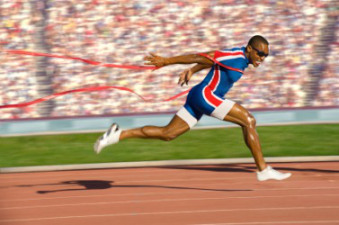
When the end is coming close, it is important to keep pushing and finish as strong as you started.  Whether it’s at work or on the field, people are respected the most who put in their full amount of effort all the way to the end.  In a sports game, the winning team that starts slacking off at the end of the game could possibly end up losing the game. I recently watched a video in which a long distance runner began to celebrate before the finish line not realizing that another runner was quickly closing the gap behind him.  That runner was able to pass him right at the finish line and win the race.  Here are some ideas and recommendations to help you finish strong!
https://anastaciomartinez.files.wordpress.com/2012/11/finish-line.jpg?w=339&h=225
https://anastaciomartinez.wordpress.com/2012/11/16/inspirational
When it comes down to the end, the primary reason for not finishing strong is the lack of motivation. Along with this lack of motivation is typically a set of excuses that go along with it.1 When the end is so close it seems as though it may be easy to just sit back and slide completing your task, but without much satisfaction.  Those who are constantly at the top are the ones one give 110% for the entire time and finish strong.
In everyday life people also need to work on finishing strong.  People need to find what motivates them as use that to help power yourself to the finish. It seems that we simply don’t understand how to identify and harness those special inner passions that have the power to transform our lives.1 Some people will find this passion in sports where they are able to work on improving their skills for competition.   Then when it comes time for the big game or tournament you will be prepared to pay hard and finish hard.  If your playoff preparations are extensive and thorough, you will surely get your share of the breaks.2  With this being said, put in your time and effort, work hard, and the rest will fall where it should.

References
1Cooper, K., & Cooper, T. (2007) Start Strong, Finish Strong. Prescriptions for a Lifetime of Great Health.
2Krane, V., & Williams, J. (1987). Journal of Sport Behavior, 10,47-56

Sunday, April 19, 2015

Post Stroke Exercise

Exercising and moving around safely may not be something you think about, unless you’ve had a stroke. Many stroke survivors have trouble moving as they did before suffering from a stroke. These problems occur from balance issues and arm or leg paralysis. As a result, about 40% of stroke survivors have serious falls within a year of their strokes. However, with proper training and exercise, stroke survivors can regain muscle control and balance.


The most common physical effect of stroke is muscle weakness and having less control of an affected arm or leg. Survivors often work with therapists to restore strength and control through exercise programs as seen on my previous blog Stroke Prevention: Exercise and Physical Activity. They also learn skills to deal with the loss of certain body movements. When paralysis occurs, the muscle, or group of muscles are unable to move on their own. After stroke, signals from the brain to the muscles often do not work right. This is due to the damage to the brain from the stroke . This damage can cause an arm or leg to become paralyzed or to develop spasticity. Spasticity is a condition where muscles are stiff and resist being stretched. It can be found throughout the body but is most common in the arms, fingers or legs. Depending on where it occurs, it can result in an arm being pressed against the chest, a stiff knee, or a pointed foot that interferes with walking. It can also be accompanied by painful muscle spasms.


Therapy can include range-of-motion exercises, gentle stretching, and splinting or casting. Specific therapy techniques include:


  • Physical exercise and stretching- Stretching helps maintain full range of motion and prevent permanent muscle shortening.
  • Braces- Braces can hold a muscle in a normal position to keep it from contracting.
  • Intrathecal baclofen therapy (ITB)- ITB delivers medication where it's most effective and minimizes side effects that often accompany oral medications. A small pump is surgically implanted to supply baclofen to the spinal cord.
  • Oral Medications- Several oral medications can help relax the nerves so that they don't send a continuous message to the muscles to contract. Side effects may occur with oral medications, such as weakness, drowsiness or nausea.
  • Injections- Some medications can be injected to block nerves and help relieve spasticity in a particular muscle group. This treatment weakens or paralyzes the overactive muscle. Side effects are minimized, but there may be soreness where injected.


Walking, bending and stretching are forms of exercise that can help strengthen your body and keep it flexible. Mild exercise, which should be undertaken every day, can take the form of a relaxing walk. Stretching exercises, such as extending the arms or bending the torso, should be done regularly. Moving weakened or paralyzed body parts can be done while seated or lying down.


Fatigue while exercising is to be expected. Stroke victims will experience good and bad days. Therefore, exercise programs should be modified accordingly to accommodate for fatigue or other conditions. Avoid overexertion and pain when helping a stroke victim. The road to recovery is not an easy one for stroke victims. It takes patience and understanding to help reach their physical fitness goals.


References


HOPE- Stroke Recovery Guide. (2015, January 1). Retrieved April 11, 2015, from http://www.stroke.org/sites/default/files/resources/HOPE_Guide_2007_chap4.pdf

Love Your Heart

February was American Heart Month, so start giving that ticker of yours some extra love! Heart disease is the leading cause of death in both men and women. In fact, according to the CDC (Center for Disease Control, about one in four deaths every year are caused by heart disease. While race, age, and other factors affect risk, both men and women of all ages need to be aware of their personal risk and how to prevent a heart attack or death.
Heart disease can describe several heart conditions, however, heart disease is the most common description used for coronary heart disease because this is the most common form of heart disease that causes death. Other conditions can include abnormal heart rhythms, heart failure, and heart valve problems.
Coronary heart disease is a condition where the arteries are narrowed or not able to allow blood to flow through them properly. This is usually a result of plaque. The buildup of plaque can result in a heart attack or stroke. Knowing the risk factors and what you can do to reduce your risk can make a big difference in preventing heart disease.


Risk Factors
  • High Blood Pressure
  • High cholesterol
  • Obesity/overweight
  • Smoking
  • Excessive alcohol use
  • Physical inactivity
  • Diabetes
  • Family history
  • Race
  • Age
Prevention
  • Exercise - Find an activity that gets you moving that you enjoy and will want to continue.
  • Smoking - If you don’t smoke… don’t start!  If you do smoke… quit!
  • Eat a heart healthy diet -  limit salt, alcohol, high fat and high cholesterol intake.  Be sure to eat plenty of fruits, vegetables and high fiber foods.


Having a healthy lifestyle is important to your heart. Find out your risk by seeing your provider for an assessment, have your blood pressure and cholesterol checked and get tips for weight loss and smoking cessation if needed. Commit to taking care of your heart, it is never too late to start!


Childs, Johns. http://www.evidenceinmotion.com/about/blog/ (March 14, 2015). Fact and Fiction. Retrieved March 30, 2015.

Paul, Bobby Jo. http://www.atipt.com/news-media/blog/love-your-heart (February 10, 2015). Heart Disease. Retrieved March 30, 2015.

Saturday, April 18, 2015

Anterior Cruciate Ligament Injury Prevention

Anterior Cruciate Ligament Injury Prevention 

The anterior cruciate ligament (ACL) is one of the most important ligaments in the knee and, sadly, one of the most commonly injured ligaments in the knee. ACL injuries account for a large health care cost estimated to be over half-billion dollars each year, with about 150,000 ACL injuries occur in the United States each year.1 Female athletes who participate in basketball and soccer are two to eight  times more likely to suffer an ACL injury compared to their male counterparts. Athletes who have suffered an ACL injury are at increased risk of developing arthritis later on in life, even if they have surgery for the injury.1

Why do ACL injuries occur?

External Factors. External factors include any play where the injured athlete’s movement is disrupted just before landing or slowing down.  Examples of a disruption include being bumped by another player, landing on an unstable or uneven surface, or a ball deflection. Other external factors which have been studied include the effects of wearing a brace, how shoes react to the playing surface, and the playing surface itself.1

Internal Factors. Internal factors include differences in the anatomy of men and women, increased hamstring flexibility, flat footed,  hormonal effects, and variations in the nerves and muscles which control the position of the knee. The pelvis is wider on women, which causes them to be “knock-kneed”, predisposing them to a greater chance of ACL injury.1

http://www.healthtap.com/topics/acl-injury
How do ACL injuries occur?

Studies of athletes show that tearing an ACL occurs approximately 70% of the time during noncontact and 30% occur during contact. The noncontact injuries usually occur during landing or sharp deceleration. In these cases, the knee at the time of injury is almost straight and may be associated with valgus (inward) collapse.1 Contact injuries occur with the knee is actually forced into the inward collapse. ACL injuries can also are paired with other injuries to the medial collateral ligament (MCL) and meniscus.

How to prevent ACL injuries?

Several prevention programs have been developed in an attempt to decrease the incidence of noncontact ACL injuries. The focus of current prevention programs is on proper nerve/muscle control of the knee. These programs focus on stretching,  plyometrics, balance, and strengthening/stability exercises.1,2 Research suggests that using an ACL prevention program can reduce the risk of injury by almost 50%.2 ACL prevention programs can also help improve measures of performance: vertical jump, sprint speed, hop distance and speed, and overall aerobic capacity.2

Here is a list of free preventative training programs that have been supported by research.2


Sources:

1 Boden, B., Anterior Cruciate Ligament Injury Prevention. (2008) Retreived from AOSSM: http://www.sportsmed.org/uploadedfiles/content/patient/sports_tips/st%20acl%20injury%2008.pdf

2 Preventing ACL Injuries and Improving Performance. Retreived from NATA: http://www.nata.org/sites/default/files/prevent_acl.pdf

Displaying Sportsmanship

article-2192864-148BED5A000005DC-640_634x591.jpg
Over weeks I have been posting about tips for the race, and tips about pre and post race as well. An area that sometimes tends to get overlooked by the desire to win is sportsmanship, and it is inherently important to the character development of this nation's young athletes. Sportsmanship is defined as playing fairly and having respect for your opponent, and it is up to the fitness professional to instill the core value of sportsmanship.

It is necessary for athletes to understand the importance for respecting your opponent, without an opponent there would be no game, and with no game there is no competition. “The ethics of sports was once fairness. Fairness meant not taking undue advantage; if anything, it meant allowing such advantages as chance turned up to go to one’s opponent.”1 When athletes try to gain an unethical edge in sport it is very likely that they will develop a habit of it, and then apply it to their life once sport is no longer a major factor in life. A case in point is Lance Armstrong. This man was a premier athlete at the top of his game, and he still decided to try to gain an unfair advantage over his opponents. There are many possibilities why such an elite athlete would stoop to such low depths as to cheat, but maybe it actually started when he was a child training and his coach helped him win in an unethical manner. At such an impressionable age of a child, bad habits tend to stick.

As fitness professionals it is up to us to teach these athletes the importance of competition and winning, but not let it overshadow the real purpose of us being there. “An overemphasis on winning in a sport may also cloud perceptions of moral behavior.”2 The real purpose of fitness professionals is guide these athletes morally and help to grow and not only be better athletes on the field but better people for our world.


1Epstein, Joseph. "The Deflated State of Sportsmanship." WSJ. 22 Jan. 2015. Web. 13 Apr. 2015. <http://www.wsj.com/articles/joseph-epstein-the-deflated-state-of-sportsmanship-1421970701>.

2Gano-Overway, Lori. "Emphasizing Sportsmanship in Youth Sports." Education World:. 3 May 1999. Web. 13 Apr. 2015. <http://www.educationworld.com/a_curr/curr137.shtml>.

Friday, April 17, 2015

On the Go for Stay at Home Moms

Being on the go can make it very hard for a mom to have time to get to exercise on a daily basis. A lot of mom’s are busy shuffling around kids to school and back, to practices, then dinner, and homework and so forth. Even taking a family vacation can be difficult for exercising, but finding some exercises that are quick and that can be done on the go can make a huge difference in someones life.
Several key exercises to target multiple muscles would include:
  • Full Body Squat- this exercise is the same concept as doing squats with a forty-five pound bar with weights on each side. Keeping your feet shoulder width apart and squatting all the way down like you’re sitting in a chair. Making sure to keep your back straight the whole time. Adding a weight or something heavy to hold in the front is something else that can be done as well.
  • Planks- start by laying on your stomach and then getting up on your toes and elbows and hold that position for thirty to sixty seconds and do this at least three to five times. Make sure that your back stays flat and level with your body and to pull in your stomach towards your back.
  • Jumping Jacks- this exercise is when a person begins to jump to a position that the legs and arms are spread out and then a person jumps back to the starting position.
  • Tricep Dips- these can be done off a table or a bench, depending on where you are. Just sit with the back against the table, put your hands on the table behind you, and then put your legs straight out in front of you. Then push up with your arms, lifting your buttocks, keeping your legs straight and staying on the heels of your foot.

There are so many more exercises that can be done that can target all areas at once or certain specific areas. It does not matter how busy a mom may be there is always time or a way to get a workout in. Sometimes it can’t be a  good hour long cardio session mixed with strength training,  but getting a workout in that day still gives you the benefits that exercising gives.

5 On-the-Go Workouts. (2012, May 24). Retrieved April 18, 2015, from http://www.fitbie.com/get-fit/tips/5-go-workouts/tip/1

On-the-Go-Workout. (n.d.). Retrieved April 18, 2015, from http://www.realsimple.com/health/fitness-exercise/workouts/on-the-go-workout

Energy Boosters

We have all experience the feeling of our bodies crashing in the middle of the day. We just can’t seem to keep our energy up, whether that’s at work, school, or other activities. Next time you are feeling in a slump why don’t we put down the sugar loaded coffee and try some food energy booster. The list below will give you examples on healthy natural energy booster.

1.     Quinoa is a gluten-free grain that contains more protein than any other grain or rice. The grain is so rich in amino acids, that it is considered a complete source of protein, ideal for post-workout meals to help build muscle. It is also high in magnesium, phosphorus and manganese, making it a nutrient-packed source of carbohydrates for long-lasting energy levels1.
2.     Egg yolks are naturally rich in B-vitamins, which are responsible for converting food into energy and they also have Vitamin D to maintain strong bones. Plus, they’re one of the best sources of protein, which is essential particularly after an intense training session when muscle breakdown occurs the most.

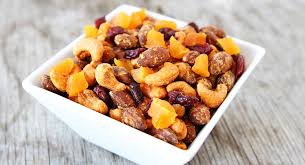
images.jpeg3.     Nuts and dried fruit are the ideal combination of healthy fats, fiber and protein. While refined carbs that are void of fiber quickly break down into glucose for short bursts of energy, fiber helps slow down glucose-release so there is always a steady supply1. Similar to fiber, protein also slows down metabolism of carbs and repairs muscle damage to prevent post-training soreness. Fats such as nuts, seeds and oils are notorious for providing long-lasting energy particularly for longer runs or swims over an hour. Since carbs are the first macronutrient to get used during activity, they can become easily depleted at which point the body relies on energy from fat.
4.     Adding lemon to water transforms regular H20 into a natural energy drink that is packed with electrolytes, which are critical for cells to produce energy.
5.     The natural sugar in fruit provides a quick pick-me-up when you're dragging and helps keep blood sugar levels steady because it's packed with fiber. Make an energizing breakfast smoothie with blueberries, strawberries, and yogurt (rich in magnesium, which helps regulate the release of energy1).

I personally enjoy drinking lemon water, helps with staying hydrated and I’m filled with energy. Always carry snacks as well. Fueling your body is a great way to wake your digestive system up and keep you motivated to finish your day enriched with energy.

Reference
1.Gastelu, D., & Hatfield, F. C. (2013). Sports nutrition (Third edition). Carpinteria, CA: The International Sports Sciences Association, Inc.
2.O'Connor, A. (n.d.). 11 Ways to Boost Your Energy With Food. Retrieved April 12, 2015, from HEALTH: http://www.health.com/health/gallery/0,,20683067,00.html
3.Photo provided by http://www.mccormick.com/Gourmet/Recipes/Appetizer/Peri-Peri-and-Fennel-Spiced-Nuts-with-Dried-Fruits


Building Homework Workouts for Personal Training Clients

As a  personal trainer, I am constantly sending “homework” workouts to my clients for trips, vacations, and off days from training with me. Knowing that they live busy lives as anyone else, I know that these workouts need to be quick, simple to understand, and usually equipment free.
A way to program these workouts is to take a look at the week they are currently training. Does this week include weights, full body, isolated, or active recovery? Be able to merge the in-training workouts with the homework you plan to send.
5 Quick Tips to Creating a Successful Home Workout
  1. Make it simple
  2. Take advantage of your best piece of equipment - THE BODY!
  3. Work in cardio exercises
  4. Emphasize stretching on off days
  5. Be able to do anywhere, anytime
3 Simple Exercises for Any Home Workout
The Burpee
This will be a great cardio exercise that will get the blood moving for your client. By performing a plank, pushup, mountain climber, and jump all into one movement; your client will be able to do different movements all in one simple exercise.


The Pushup
The classic push-up, one we all know and love. This movement will be able to train your chest, back, shoulders, triceps, and abs all at once. All while performing a movement you know by heart.


The Squat
You can never go wrong with a movement for your legs, while including the rest of your body. The squat is a complex but still simple movement. Always be sure to keep the chest upright and the heels planted on the ground, and make sure to get that butt down! By performing the squat you are working the entire leg; hamstrings, quadriceps, calves, and hips as well.


Simple Homework Program for Client
  • 15 Pushups
  • 15 Burpees
  • 15 Squats
  • 1 Min Plank
3 Sets - 1 Min Rest Between Sets

  • End of Set - Walk ¼ Mile on Treadmill @ 3.5 MPH 5.0 Incline
Put simply, any workout for a client to take on-the-go can be complex, or simple, all depending on the client's fitness level and time available for them. Personally, my clients typically have more cardio based workouts for homework and more strength based workouts while training in person.
References
110 At-Home Workouts to Build Muscle in Under 20 Minutes. (n.d.). Retrieved April 14, 2015.
2How To Take Advantage of Home Fitness. (n.d.). Retrieved April 14, 2015.