Friday, February 20, 2015

Basics of Weight Training

To some, exercising can be a hard task to fulfill, to others it’s a lifestyle, but everyone should incorporate weight training at least 2-3 times per week.  
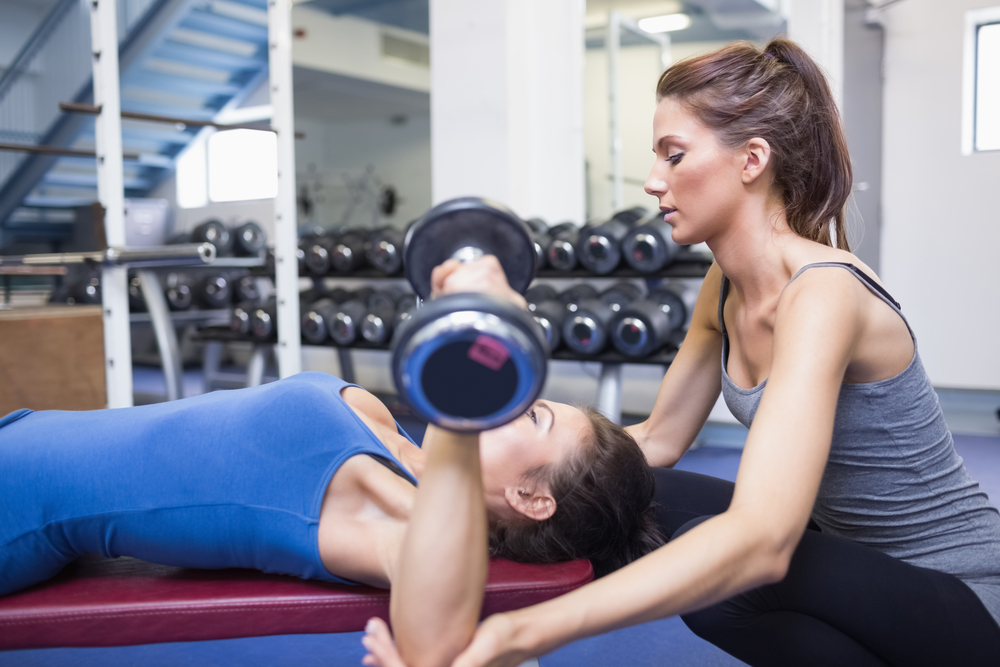
Weight training is a type of strength training where one focuses on muscular growth. To accomplish these goals, one will use  specialized equipment to target specific muscle groups. The specific combination of reps, sets, exercises, and weights used upon these machines  depends on the aims of the individual performing the exercise. Sets with fewer reps can be performed with heavier weights to gain more mass  as well as sets with higher reps with lighter weights for more tonning. Types of equipment that you will find in a normal gym for these exercises include barbells, dumbbells, pulleys and the weight machines.
When beginning a workout, one should always warm up the body first. A proper warm up takes 5-20 minutes. The main reason for warming up is injury prevention.  Another added benefit is the increase of blood flow and flexibility, which lessens the chance of a muscle pull or joint pain.

Benefits of Weight Training:12
      Not only does strength training increase your physical work capacity, it also improves your ability to perform activities of daily living (ADL's).  You will be able to work harder and longer with the proper weight training activities.
      It improves bone density.  One of the best ways you can control bone loss as you age is to add strength training into your workout plan.
      It promotes fat-free body mass with decreasing sarcopenia.  The lean muscle mass that we all work so hard for decreases with age.  
      It increases the strength of connective tissue, muscles, and tendons. This leads to improved motor performance and decreased injury risk.
      It improves your quality of life as you gain body confidence.  Strength training will not only make you strong, but will also help with managing your weight.
So when you begin your training, start with the warm up; whether that is running, pushups, lunges, or jump rope, anything that will increase the heart rat and warm up the muscles. Also start out slow, begin with using light weight. You will lower your risk of injury and ease into a new routine. Once you become comfortable with the program then you may begin to add more weight as you go. Switch it up. Don’t repeat the same workout every time, speed up, go heavy, or change the routine. Use different workout routines for each muscle group. You’ll become more knowledgeable and see better results.Most importantly though, the use of proper form is precedent during a workout. Failure to use good form during a training set can result in injury or a failure to meet training goals.

Reference

1Gustafson, K. (n.d.). 5 benifits of weight training. Retrieved February 13, 2015, from Active: http://www.active.com/fitness/articles/5-benefits-of-weight-training

2Hamilton, M. (2014, March 17). Weight lifting tips for women. Retrieved February 15, 2015, from Women's Health: http://www.womenshealthmag.com/fitness/lifting-mistakes

Thursday, February 19, 2015

Music and Running

If someone were to observe a busy running trail, they would see a lot of people listening to music. Previous research have demonstrated that music can aid running by acting in parallel to exercise1, but how does listening to music aid in running at a race pace effort?
In a study1 performed on 15 amateur runners over a 30 week period, the researchers found that music was capable of giving the runner a sense of pleasure, helped that athlete feel more prepared for the run and help accelerate the recovery process. The runners ran five 5-kilometer runs over the 30 week period, as fast as they could with music being applied before, after and during running with differing song tempos. Slow motivational songs ranged from 80-100 beats per minute, motivational songs ranged from 110-150 beats per minute2, fast motivational songs ranged from 140-160 beats per minute.
http://www.theactivetimes.com/12-top-headphones-working-out
The music was shown to help at the beginning of the intense effort, but as soon as the brain realized the exercise intensity, the brain directed attention to the most important signals, decreasing the effect that music had on running performance. The researchers also found that runners can use music before competitions with a 39% chance of receiving a benefit from it and accelerate recovery with a “sedative” auditory stimuli to speed up recovery.
There are a lot of 5k races out there to be run.  Typically, road races do not have any rules against listening to music as you race, but races on the track tend to prohibit it.  Fortunately, you can still receive benefits from music during the warm up to help prepare you for the race and after to speed up recovery.  

1. Bigliassi, M., Leon-Dominguez, U., Buzzachera, C., Barreto-Silva, V., & Altimari, L. (2015). How Does Music Aid 5 KM of Running? The Journal of Strength and Conditioning Research, 29(2), 305-314.

2. Peterson, D. (2009, October 21). Music Benefits Exercise, Studies Show. Retrieved February 17, 2015, from http://www.livescience.com/5799-music-benefits-exercise-studies-show.html

Turf Vs. Grass - Financial

Turf Vs. Grass – Financial
        When comparing artificial turf to grass, money is something that is always taken into consideration. The size of the school can also be a big factor in choosing the appropriate playing surface. Grass and turf may also be dependent upon what sport is being played.
        Natural turf is extremely more expensive for athletic programs to install, compared to having a natural grass playing field. Although, turf tends to pay for itself over time after considering all of the maintenance fees associated with grass that are avoided, it is estimated that in order to keep grass in proper condition for sporting events it cost  about 33,000 dollars per year. This is based on 30 weeks of use and 10 hours per week. Not including the use of practice on it. The math averages out at a cost of 111 dollars per hour of usage. The average cost of synthetic turf to be installed is about 670,000 dollars. This comes to an annual fee of 67,000 dollars per year based on a 10 year note, which is also the expected lifetime of a turf field. With practice included, 30 weeks and 40 hours per week, it cost 61 dollars to use per hour. The cost per hour of the two different playing surfaces is significantly different 2.
A critical factor to consider when purchasing a artificial turf playing surface would be your practice facilities. If a team will be performing on a turf field, it should practice on  turf as well. Some of the benefits of turf are there is much less maintenance and it is always ready to play on no matter what the sporting event is. There are no muddy, sloppy fields or damages from a previous sporting event that took place prior to the event about to be played. This could mean the difference in a win or loss for a football team depending on whether you are an offensively run or pass heavy team. The cost per hour of usage is much less than the cost per hour for grass. It is easy to see and come to the conclusion that economically wise, artificial turf is the best way to go 1.
1.Clarkson, T. (2006). Greener Grass. American School & University, 78(12), 26-28.
2.GAINS, G. L., SWEDENHJIELM, A. N., MAYHEW, J. L., BIRD, H., & HOUSER, J. J. (2010). COMPARISON OF SPEED AND AGILITY PERFORMANCE OF COLLEGE FOOTBALL PLAYERS ON FIELD TURF AND NATURAL GRASS. Journal Of Strength & Conditioning Research (Lippincott Williams & Wilkins), 24(10), 2613-2617.

How to get Children Interested in Sports

In America, sports are prevalent, from the giant urban dwellings, to the quiet rural habitations. Adolescents in America have a great opportunity to hone their skills in a sport with the hopes of one day getting to play at the collegiate or even the professional level. There are local gyms, private organizations, and even schools that provide the facilities and coaches to help mold a child into the best athlete possible  The only problem is, how do you get them interested?
It is easy to say we have facilities, coaches, and a great track record but if the kid has no interest in the sport you might as well be talking to a brick wall. There is an epidemic of childhood obesity and encouraging kids to be active through sport is a great way to change the rapidly growing problem. So how do you get kids to want to live a healthier lifestyle or simply play a sport?
First things first, be supportive. Not every kid is cut out for football but might be a little more suited for a slower paced game such as baseball. Let the child choose the sport they want to play even if it means they have to try a half dozen sports before finding something they like. It can be hard as a parent or guardian to let your child choose a sport that you may not find exciting or not the sport that you are so fond of. To this I say be proud in the fact your kid chose the sport because now it is a choice they had control over and will more likely want to stick with. Sometimes trying these new things can be intimidating but entering your child in a youth club such as Boys and Girls club can help your child give new activities a try.1 The Boys and Girls club supply mentors for each child and help give support in whatever your child is interested in.  
Be encouraging, as not all kids are going to run home one day and say they want to try out for the basketball team. Watch a few sports on TV and see if anything strikes their fancy and then find an easy learning environment that the child can try playing the sport without fear of judgment. I recommend exposing a child to sports at a fairly early age so they can learn the basic mechanics of sports in general. It will also make it easier for them to try out for sports in the future because they have some experience. A lot of kids are shy or insecure when trying something for the first time especially if it is something they are so sure about doing to begin with. So be their biggest fan, whether they fail or win letting them know that they are your champion will encourage them to try again and not give up. Organizations such as the YMCA support parent participation to encourage child participation.2
My last piece of advice for getting a child interested in sports is to play with them. It is a monkey see monkey do scenario. If a child sees you excited about a sport they will more likely be excited about it as well and want to play with you. Playing a pickup game of basketball with a kid is not only a good way to get them active and learn the skills of the game but it is also bonding time. It may seem like a small thing in the beginning but can make a huge impact in the end.
I believe that every kid should at least try one sport in their life time. f they don’t like it, they don’t have to do it again; but, hopefully, it will encourage them to at least be active. There are so many great opportunities for adolescents to be active and get involved with sports that it would be a great shame to let it go to waste.

1 How We Serve. (2015, January 1). Retrieved February 19, 2015, from http://www.bgca.org/whoweare/Pages/FactsFigures.asp

2 Areas of Focus. (2015, January 1). Retrieved February 19, 2015, from https://www.ymcahouston.org/focus-areas/

Benefits of Swimming


When people get to the gym they always sit there for 10-15 minutes trying to figure out what workout they are going to do. When they finally decide, they usually do the same workout that they did the day before. Instead of continuing with this cycle, why not switch it up and head to pool? Many people are not aware of the benefits that come with swimming.


First off, 90% of your body is buoyant when you are in the water up to your neck, so you are not hitting the floor as hard as you would on land. Gravity does not take as much of a toll on your body in water that it does on land. Secondly, there is continual resistance to every move you make. The water offers 12-14% more resistance than when you exercise on land. Lastly, water has cooling effects that disperse heat more efficiently, so there is less chance of overheating. Exercise in water is cooler and more comfortable than it is on land.1


http://tinyurl.com/n3z5xy4
There are also a tremendous amount of physical and psychological benefits benefits that are associated with swimming:1,2


Physical:
1.       Swimming improves muscle definition and strength
2.       Swimming improves flexibility
3.       Swimming increases  circulation
4.       Swimming rehabilitates muscles
5.       Swimming burns more calories than running


Psychological:
1.       Swimming releases stress and lowers depression
2.       Swimming renews energy
3.       Swimming teaches patience


So next time you can’t figure out what you want to do for a workout, instead of heading to the gym why not head to the pool?
References


1.       Benefits of Swimming. (n.d.). Retrieved February 15, 2015, from http://www.bucknell.edu/athletics/recreation-services/swimming-information.html

2.       Ten Benefits of Swimming You May Not Know About. (n.d.). Retrieved February 15, 2015, from http://www.lifehack.org/articles/lifestyle/ten-benefits-swimming-you-may-not-know-about.html

Effects of Ice Bags

In the athletic training room there are a lot of ice bags that are passed out. Many athletes get ice after practices, workouts, and conditioning. Making an ice bag is the first thing that is learned as a athletic trainer. Ice bags are a well-known treatment used on athletes all over America. Ice bags have some very positive effects that are used to help in pain management and recovery from injury.

When someone gets hurt they damage the individual cells of the injured area. These cells need oxygen to live and when they are damaged they lose their oxygen supply. When they lose their oxygen supply they die. Cell death is bad. The more cells that die, the longer it takes for the injury to heal . Ice is used because it slows down cell metabolism.1 When cell metabolism is slowed down, they can survive for much longer without oxygen.1 When more cells survive than are damaged the less swelling usually occurs. This  leads to faster recovery times.

Another positive effect of ice is that it helps pain management. When ice cools down the tissue to 58°F it slows down superficial blood flow.1 This also slows down nerve conduction velocity. “Activation of cold receptors, slowing nerve depolarization and repolarization decreases the transmission rate of nerve impulses and increase the depolarization threshold, thereby decreasing pain (Starkey, 2013).1” If the pain can be controlled there can be further ranges of motion that are gained and there will be some decreases in muscle spasm as well.2 When the blood flow is slowed down it reduces the amount of inflammatory mediators, which means that there is less inflammation in the injured area.

There is actually some science behind the use of ice bags. It isn’t something that is done in the training room just because that’s the way it has always been done. Something this simple could help increase recovery rates for various injuries.

References
1 Starkey, C. (2013). Clinical Application of Thermal Modalities. In Therapeutic Modalities (4th ed., pp. 133-137). Philadelphia, PA: F.A. Davis Company.

2Retrieved February 13, 2015, from http://www.brianmac.co.uk/cryo.htm

Tuesday, February 17, 2015

Positive Effects of Fatty Foods

Over the course of the past decade fitness regimens, nutrition plans, diets, and “health kicks” have become all the rage in our technologically driven world. Everyone tries to find the latest pill or shake to cure their disease that we in the fitness industry call obesity.
Modern day times have caused there to be a skew in the reality of what foods are good for us and which are not. Advertising for things like Weight Watchers, Herbalife, Advocare, Jenny Craig, and others have caused those wanting to lose weight to misunderstand what exactly “healthy eating” actually is. They describe that a low fat diet is the key to losing weight or simply relying on pre-frozen meals or shakes to be their primary sources of nutrients.
I want to go into a short blurb about some high fat foods that are actually good for us. It is understood that there are nine calories per gram of fat in our foods and that they are made of carbon, hydrogen, and oxygen.1 But, what exactly about these fats cause them to be good for us?
Common examples of good fattening foods:
Avocados:
These are very different from other fruits in that they are loaded with great monounsaturated fats called oleic acid. Oleic acid occurs naturally in vegetable fats and oils and is also the primary fat in olive oil. It is also known to increase collagen synthesis and aid in skin health. Avocados are one of the best sources of potassium containing 40% more than bananas which are known to be high in potassium.
Dark Chocolate:

Yes, I said it, chocolate. Dark chocolate is one of those delicious treats that actually has some great physiological benefits for the body. It is 11% fiber and contains over 50% of the RDA (Recommended Dietary Allowance) for iron, magnesium, copper, and manganese. Iron is needed by red blood cells for oxygen consumption. Dark chocolate is also loaded with antioxidants which are crucial for fighting off disease such as cancer and heart disease. Although it might sound like a counteractive food, those who consume dark chocolate five or more times per week are less likely to die from heart disease, compared to those who don’t.2

Whole Eggs:
You heard correct, whole eggs. Eggs are one of the most confusing items. Everyone questions themselves with yolk or no yolk. A single egg contains 212mg of cholesterol, which is 71% of the RDI (Recommended Daily Intake), plus 62% of the calories in whole eggs are from fat. new studies have shown that cholesterol in eggs do not affect the amounts in the blood.2 Whole eggs are actually loaded with vitamins, minerals, antioxidants, and choline, a brain nutrient that 90% of people don’t get enough of.
As you can see just from the three common examples that I have listed we are greatly underestimating the power of fatty foods in our diet. Just by adding such foods as coconuts, avocados, fish, and nuts you will begin to see dramatic differences in your energy levels, skin health, and overall well being.

References
1Baechle, T. (2008). Essentials of strength training and conditioning (3rd ed.).
Champaign, IL: Human Kinetics.
210 High-Fat Foods That Are Actually Super Healthy. (2015, January 20). Retrieved January 26, 2015, fromhttp://authoritynutrition.com/10-super-healthy-high-fat-foods/


Saturday, February 14, 2015

Back to Fitness Basics: Empowering Women to Live Fit

How familiar does this line sound? “If women lift weights, they will get bulky like a man.” What if I were to inform you that this belief is incorrect? Truth is, women do have small amounts of testosterone, but not near as much as men do. So “bulking up like a man” is actually impossible. For a large number of women, the idea of lifting weights is intimidating due to the obvious common misconception that resistance training will add bulk to the female body. Today we will discuss why using resistance exercises may help to empower women to live fit.

equivoco-4.jpg
http://tinyurl.com/q5rhdbj
A large number of times, when I start a training program with my female clients, they ask me to help them “tone up”. What exactly does this mean? A common misconception is that lifting low weights with high reps will help to “tone up” the female body. “Neither lightweight nor aerobic endurance training is effective for stimulating the muscle fibers responsible for growth and definition. The most effective way to create muscle growth and definition is to activate type II (fast twitch) muscle fibers using heavy weight or explosive movements.”1 These types of lifting exercises will consist of heavy resistance that you can do 8-12 repetitions for 3 sets, as an example. Emphasis also needs to be placed on exercise technique, but that topic will be covered in a later ”Back to Fitness Basics” blog. The main point in this, is to not be afraid to lift with heavy resistance, because it will result in the lean fit muscle tissue that you want.

As you start to lift more with resistance exercises, plus an addition of more protein content in your diet, you will naturally develop more lean muscle mass. The true beauty in building muscle is that more calories will be burned outside of the gym than on a treadmill due to the increased muscle mass. “Muscle gives your body its strength, shape and definition. It's also very metabolic, since each pound of muscle can burn up to 50 calories per day. The more muscle you have on your body, the more calories you burn 24 hours a day, seven days a week. In this way, adding muscle to your body through resistance training helps you to become a higher-calorie-burning individual. This helps you lose weight that is fat without sacrificing muscle gain.”2.


Working out and being physically active can help to sculpt the body as well as the self esteem. Don’t ever be afraid to take part in resistance training. With time and dedication, exercise can help to empower more females to live fit in the future. If however, you are still unsure of how to lift properly, I would highly suggest purchasing the services of a certified personal trainer.

1. 4 Myths about Strength Training for Women. (n.d.). Retrieved February 9, 2015, from

2. Muscle Gain & Weight Loss. (2014, February 4). Retrieved February 10, 2015, from        http://www.livestrong.com/article/41086-muscle-gain-weight-loss/

Friday, February 13, 2015

The Key to Lower Back Pain Relief


The Key to Lower Back Pain Relief

Back pain in general can be an annoying and defeating injury that makes anyone miserable throughout their day. Sitting, standing, laying down, and every movement in between can cause lower back pain that no one wants. Almost 80% of all Americans, will experience this type of pain at some point in their lifetime.1 The good news is, most lower back pain can be relieved by just a few simple tricks.

Good Posture

The first easy step to help relieving lower back pain is to notice what type of posture you have throughout your day. If you work at an office desk, you might catch yourself slumping backwards in your chair or even leaning forward on the desk. Using a lumbar support pillow or changing the height of your chair are a couple simple ways to help your posture.1,2

Correct Lifting Form

If a job demands lifting heavy objects on the daily basis, proper lifting form can help save you from lower back injury. Bending over at the waist to pick something up puts enormous amounts of strain on the structures of the lower back, disposing to possible injury. Be mindful to squat down to the ground and use your legs to lift instead of your back.2

Image result for <free to use and share> plankingCore Strengthening

Muscles of the hip, back, pelvis, and abdominals are crucial in the stabilization of the lower back. Doing exercises to strengthen these muscles can help relieve pressure that is created on the lower back.1

Flexibility

Flexibility of the hamstrings, glutes, and back muscles are one of the most important parts of relieving lower back pain. All of these muscles help support the lower back and hips. If these muscles are tight, they are pulling the pelvis out of alignment, causing pressure on the lower back.1,2

Most back pain can end up dissipating within six weeks without any treatment at all. If you are suffering from lower back pain, a key to a speedy recovery means being active and using these simply, but important, tricks that were just talked about. Don’t let back pain keep you from doing what you want to do.

Sources:

Watson, S., Living With Low Back Pain., WebMD. Retrieved from http://www.webmd.com/back-pain/living-with-low-back-pain-11/causes?page=1

Low Back Pain Fact Sheet., National Institute of Neurological Disorders and Stroke. Retrieved from http://www.ninds.nih.gov/disorders/backpain/detail_backpain.htm